

The design firm for the AI age.
Request a Brainstorm →
Joined August 2024
- Tweets171
- Following9
- Followers6.9K
- Likes640



Pinned Tweet
On Oct 29, Amazon's CEO said shopping through outside AI agents is "still not great, nor more convenient than coming to a retailer directly." Amazon blocks them and pushes its own. Walmart is building them a door.
Here is what every store has to decide.

Agents are the 5th mega wave in shopping in 110 years.
1916: Shoppers serve themselves
1950: Shoppers pay with a card
1994: Shoppers buy online
2007: Shoppers buy on their phones
2026: Shoppers send an agent

For anyone who wants to read the sources:
Jassy's comments on Amazon's Oct 29 earnings call, via Fortune: fortune.com/2026/10/29/amazo…
Amazon blocking Meta's Muse in September, via GeekWire: geekwire.com/2026/amazon-blo…
Walmart on building a way in for shopping agents: corporate.walmart.com/news/2…

Incumbent brands are sitting on four superpowers: cash, trust, data and distribution. Most of their leaders don't know how to use any of them yet.
That's #3 on @TheoTabah's list, and it isn't even the spiciest one.

10 things we're seeing with many leaders at incumbent brands:
1. They want to rethink their offer from the ground up, not just 'adding AI' to their existing product
2. Can't disrupt cashflow and existing biz, so they're thinking about an entirely new product offering outside of core product
3. Cash, trust, data, and distribution are the four superpowers incumbents have - most don't know how to capitalize on all (or any) of them. Cash is precious and still feels better in the bank. Trust is beginning to move. Data is messy. Distribution is great, but current customers don't know what they want or don't like AI.
4. Hire a few ambitious leaders at the VP level from 'big name' tech co's to drive change, but those leaders aren't equipped with the team to move fast and ship
5. Everyone wants durability, but none feel confident it's possible
6. They want to 'invent something new', but then reference existing patterns and companies as what they think they want
7. Coordination and cooperation across the team - evolving the way they work while innovating and keeping the train on the tracks - is really hard
8. Staying up to date with what matters is not feasible. Many miss important developments or get on them late - the space moves fast
9. Few understand that if you're building a tool, you're building for an agent (not a human), and you will eventually become plumbing. Products, agents, and new offers cannot be pure utility if you want durability and humans using you everyday (it can if you decide to be a muse connector or ChatGPT plugin / MCP in to the dominant AI apps)
10. Everyone's figuring it out. Even those with the most conviction are still questioning and rethinking things daily.
Welcome to the AI Age.
Walmart's Trent Addington says the average person won't give AI agents control "until they earn that trust."
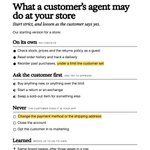
Here's what that looks like at a store.

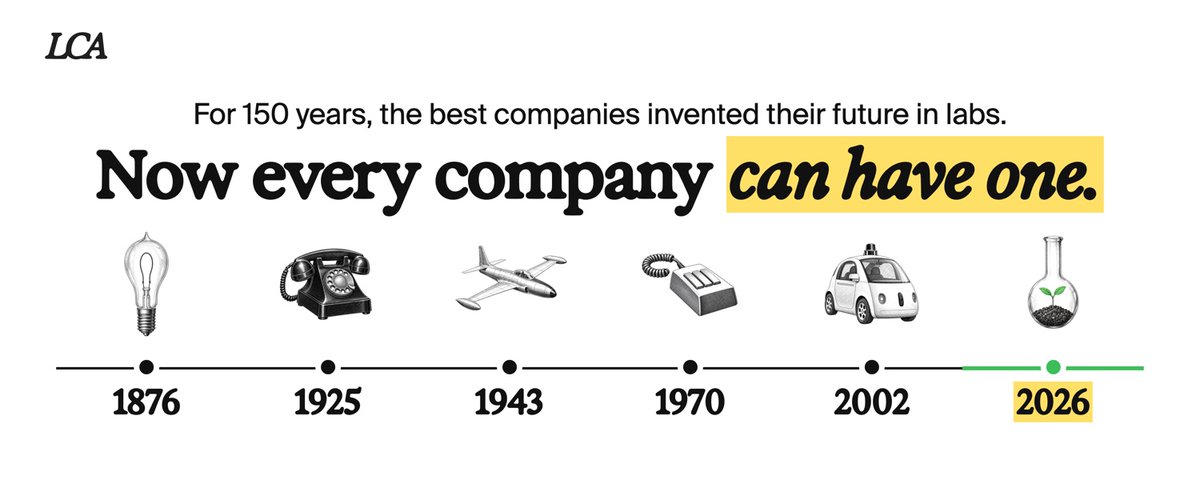
Another one for the labs timeline. Started as an experiment, now it's an industry standard.

Agent Skills started as an experiment in Claude Code. Many across the industry have come to adopt it, so we at Anthropic found it more fitting to donate it to the @AgenticAIFdn, next to MCP.
Checkout this week's post for the rest of the timeline, and how to run one inside a big company:
nitter.cf/meetLCA/status/2112951…


Xbox just built a team to disrupt itself.
Fans have been using AI to rebuild old games for new hardware, including Xbox's own. Yesterday CEO Asha Sharma announced Xbox Labs, a small team that will "build in the open," and wrote that its experiments are good for players "even when (and sometimes because) they challenge our existing business models."
It's bigger than it looks. What it means for product teams:
1. Your customers are already rebuilding your product with AI. A lab is how your own team gets there first.
2. Point it at what could replace you. Every time a new model ships, ask what you'd build if you were starting today.
3. Keep it off the main roadmap, with a direct line to the product team. It moves faster on its own, and what works still reaches customers.
4. Start with the technology. Ask what the new capability makes possible, then find the customer problem it solves.
5. Kill things on purpose. Set the bar for keep, kill or iterate before the first experiment starts.
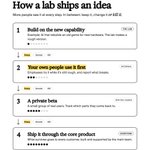
Here's how to understand it in four steps:

Every company should be operating an internal AI lab.
If you're not building on new AI surfaces as they're released, someone else is, and you're falling behind.
ChatGPT extensions were announced on a Tuesday. By Friday we had working prototypes for 10 leading brands.
LCA concept. Not affiliated with Disney or OpenAI.
Having a website didn't make you a tech company. Having Claude write your docs won't make you AI-native.
Last week Anthropic took Claude Docs, Slides and Design out of beta and put them on every plan, including Free. Claude drafts from your company's files and apps, and your team edits right alongside it. People made 45 million docs, decks and designs during the beta, and on October 15 it switches on by default for Claude Enterprise.
It's still bigger than it looks. What it means for building an AI-native company:
1. Everyone is a manager now. A comment that tags @ Claude hands off the work, and the reasoning comes back in the thread.
2. Your company's context is the brief. Claude can only draft from what's written down somewhere it can reach. A company that never wrote down how it works gets generic drafts.
3. The ask is the new skill. "A launch brief" gets you a template. Say what it's for, who reads it and what it should cover, and you get a draft worth editing.
4. Your permissions are your agent policy. Claude can't do anything the person who asked can't, so your access settings now decide what each person's Claude can do.
5. Templates set the standard. Admins now pick the templates everyone starts from, so your best spec or brief becomes the starting point for every one after it.
6. Six hours back doesn't mean six times more docs. Making one takes a sentence now. Deciding which ones matter is still the job.
Here's how to understand it in four steps:

Meta and Sierra just announced "Sign in with Google" for AI agents.
It's called the Personal Agent Protocol. Your customer's agent signs in to your business and gets things done for them, and you decide what it's allowed to do. Shopify, Stripe and Walmart are already in, and Muse alone has millions of US users.
It's bigger than it looks. What it means for brands:
1. The agent is a customer who already chose you. Turn it away and you turn away the customer behind it.
2. Build once, reach every agent. One standard instead of a new integration for each one.
3. You get a second front end. Agents follow the path you give them: this flow for bookings, that connector for orders.
4. Agent-first is a ladder: agents clicking through your site, then your APIs, then your own agent talking to theirs.
5. Permissions become product design. What an agent can see, do with a yes, and never touch.
6. Brand becomes behavior. When an agent does the job, speed and accuracy are the experience.
Here's how to understand it in four steps:

If we were on Suno's design team, we'd be obsessing over the second song.
Elon says Grok will use backends including Suno and Midjourney. Picture asking Grok for music for your launch video, getting a track you love, and coming back to Grok next week.
You've learned that Grok can get you good music. You may not have learned anything about Suno.
So the work is turning that first track into a project worth keeping: the versions you tried, the cut you approved, the style you want to use again. Plus a link your editor can open to listen and choose, with no downloading three files and explaining everything again.
Next time, "make another like this" has a saved project to point to, whether you come back to Suno directly or through your agent.
The numbers worth watching: does that creator start a second project, and does their editor stick around? Those two show whether the integration is turning requests into customers.

If you're building a ChatGPT plugin, today's Intelligent UI launch changes the job.
ChatGPT can now add charts, forms and small interactive tools to its answers, built on the spot for each question. So generic help, like comparing options or running a quick calculation, now comes built in.
A plugin earns its place when it uses what only your product has.
Example: someone asks which running shoes to buy.
ChatGPT on its own can show a comparison chart of popular models.
A shoe store's plugin can show which ones are in stock in their size, what they bought last time, and let them order.
So when you plan a plugin, start with one question: what can we show or do that ChatGPT can't build on its own?


The next breakout consumer products will be deeply integrated into your personal agent.
Our team is laser focused on designing world class product experiences for this reality.
ChatGPT has 1.2 billion weekly users. Extensions give you new places to build your product inside it.
Take a travel app...
Rich forms: Ask whether the budget includes flights.
Conversation panels: Let people browse hotels while they keep chatting.
Model-App Context: Let the conversation work with the hotel they selected.
Deep links: Bring them straight back to their saved trip.
I'd happily let an agent compare cancellation policies. I still want to look at the hotel photos.
Figuring out which parts to hand over, which choices to keep, and where each interaction belongs is the new design brief.
These are the surfaces we're designing for:

LCA retweeted

Plugin Extensions open up new surfaces for you to define the experience inside of ChatGPT
Here are the 9 new 'extensions' you should be paying attending to:
1. Sidebar apps: Your app gets a home base in ChatGPT. People can come back to it any time without starting a new chat.
2. Conversation panels: Your app and the chat sit side by side. Design for both being on screen at once.
3. Plugin settings: Users tweak your product without ever leaving ChatGPT. Your settings page now lives inside someone else's app.
4. File viewers and editors: Your interface opens their files right in ChatGPT. Read, edit and save in one place.
5. Display modes: You choose how much space you take up. Match the size to the job.
6. Deep links: Send people straight to the exact page or item they need. No digging through menus.
7. Model-App Context: The model sees what's happening in your app, and your app knows what was said in chat. Both stay in sync.
8. Composer mentions: Users can @ your content right into a prompt on desktop. Your data becomes something people type.
9. Rich forms: Ask for structured input or let people pick from images. Less guessing, fewer back-and-forths.
Apps in ChatGPT are starting to look like real software. Time to design them that way.


