






mirjahon retweeted

Claude Max olmoqchi boʻlsangizlar 50% chegirma qilib berishimiz haqida aytgandimmi?


mirjahon retweeted

2019-yilgi Artel TV'mni Claude Code bilan yangiladim 📺
Reklama qatori, Zeasn/Facebook yorliqlari va 10 ta keraksiz ilova olib tashlandi. O'rniga o'zbekcha bosh ekran: TV kanallar bir tugmada, Namangan ob-havosi, namoz vaqtlari, oilaviy rasmlar.
Root'siz.


mirjahon retweeted

THIS IS A PURE F*CKING GOLDMINE
Anthropic just shared one of the best tricks for Claude Code.
The idea: let Opus 5.5 write the plan as a script, and let a swarm of cheaper agents run it.
Bigger jobs and way fewer Opus tokens, because the script holds the plan and Opus only sees the final answer.
You just launch Claude Code like this:
claude --model opus --effort ultracode
here's the split:
→ Opus 5.5 turns your task into a workflow script
→ Haiku 5.5 agents scan every file in parallel
→ Sonnet 5.5 agents patch each fix in its own isolated copy
→ you stop burning Opus context on a hundred agent transcripts
Opus only shows up at three moments:
→ writing the workflow before the run
→ reading the verified results after it
→ signing off before anything ships
Opus plans. Haiku scans. Sonnet ships.
JEV engineering is the same move one layer down: the forks that need no thinker (which file, which tool, retry or stop) go to JEV in milliseconds, and the big models only see the ones that split
the full tree
> Opus 5.5 runs the main session and writes the workflow
> scan audits every file on Haiku 5.5
> edit patches each fix on Sonnet 5.5 in an isolated copy
> verify cross-checks every finding on Sonnet 5.5
> Opus 5.5 reads only what survived verification
> JEV routes micro-forks in milliseconds
paste the tree and this prompt into Claude Code ↓
"Rebuild my Claude Code setup around this tree:
1. Run the main session on Opus 5.5 with ultracode on.
2. In every workflow, run read-only scan stages on Haiku 5.5 and edit stages on Sonnet 5.5, each edit in its own isolated copy.
3. Add one rule to CLAUDE.md: every finding gets an independent verifier agent before it's reported, and fix loops stop after two rounds with no progress.
4. Route fast deterministic forks (tool choice, path selection, retries) through JEV.
Show me every change as a diff first. No edits until I say go."
↳ code.claude.com/docs/en/work…
save it, it'll come in handy.


mirjahon retweeted

If you're a designer, bookmark this.
1. scrolltide.co - 600+ design Prompts with full source code for 3D and scroll-driven sites
2. navbar.gallery - navbar inspiration
3. footer.design - better footers
4. cta.gallery - CTA inspiration
5. styles.refero.design - Real product design styles
6. supahero.io - Hero sections worth stealing
7. 3dicons.co - 3D icons for modern interfaces
8. glass.samasante.com - Glass UI components and effects
What did I miss?
mirjahon retweeted

Every week someone tells me they vibe-coded their app over the weekend and don't need developers anymore.
Before it touches a paying customer, make sure it includes:
> a schema someone designed, instead of one the AI improvised table by table
> login that still works when someone puts a plus sign in their email
> password reset links that expire and work once
> MFA, plus a recovery path for the user who lost their phone
> sessions that time out, and a way to kill every session for one user
> SSO for the enterprise customer who won't sign without it
> SAML, because that customer's IT team doesn't do magic links
> SCIM, so a fired employee loses access the moment IT offboards them
> roles and permissions deeper than "admin" and "everyone else"
> checks that stop user A from reading user B's data by changing one number in the URL
> tenant isolation, so one customer's bug never shows another customer's records
> an admin "log in as this user" button for support, with an audit trail on every use
> rate limits on login, so nobody can guess passwords at scale
> lockouts that stop attackers without locking out your CFO the night before the board meeting
> database migrations that run forward and roll back
> migrations that don't lock the main table at 2pm on a Tuesday
> indexes, because the query that was instant on 50 test rows times out on 5 million real ones
> connection pooling, so a traffic spike doesn't exhaust the database
> backups every night
> a restore from those backups, tested, because a backup you've never restored is a hope
> point-in-time recovery for the day someone runs a delete without a where clause
> soft deletes, so "I deleted it by accident" is a support ticket and not an incident
> validation on the server, not just in the form
> timezones stored right, so the 9am reminder doesn't fire at 4am
> the customer with an apostrophe in their last name
> emoji, accents and right-to-left text in every field
> money stored as integers, because 0.1 + 0.2 doesn't equal 0.3 in floating point
> currency, rounding and tax rules for every country you sell into
> a data model that survives your second customer asking for "one small change"
> idempotency keys, so a retried payment doesn't charge the card twice
> deduplication for the user who clicks submit four times
> pagination that still works on page 400
> exports, because sooner or later every customer wants their data in a spreadsheet
> imports that survive the CSV someone saved in 2009
> retention rules, and code that deletes what your contract says you'll delete
> secrets out of the code, out of the repo and out of the AI chat history
> rotating every key the AI pasted into a config file last month
> confirming every package the AI installed exists and is the one you meant
> dependency scanning, because the AI pulled in libraries nobody reviewed
> input sanitization everywhere a user can type
> protection against SQL injection, XSS, CSRF and the rest of the OWASP list
> file uploads that get scanned, size-limited and stored where they can't execute
> CORS rules that aren't "allow everything"
> security headers on every response
> encryption at rest and in transit
> least-privilege access for everyone, including the AI agent holding production credentials
> logs that record who did what, without recording passwords, tokens or card numbers
> a penetration test before your enterprise customer's security team runs their own
> answers to the security questionnaire every enterprise buyer sends, with evidence behind each one
> a disclosure process for the day a stranger emails you a vulnerability
> a plan for the day a laptop with production access gets stolen
> SOC 2, which means policies, evidence and an auditor, not a checkbox
> HIPAA, the moment a single patient record touches your system
> a BAA with every vendor that touches that data, including your AI model provider
> audit trails that show who viewed a record, not just who changed it
> PCI scope, and card numbers kept out of your database
> GDPR deletion requests that reach every table, backup and log
> data residency for the customer whose contract says EU only
> quarterly access reviews someone signs off on
> dev, staging and production environments that match each other
> infrastructure written as code, so the setup lives somewhere other than one person's memory
> a deploy pipeline that runs the tests before anything reaches customers
> one-click rollbacks, because Friday deploys happen
> zero-downtime deploys, because your customers don't have maintenance windows
> feature flags, so you can ship the code without shipping the feature
> autoscaling for the Monday morning spike
> a CDN, so the app loads fast in Singapore too
> DNS, SSL certificates, and renewals that don't expire on a Sunday
> background job queues, so slow work doesn't freeze the page
> retries with backoff, so one flaky API call doesn't become a lost order
> a dead-letter queue for the jobs that fail every retry
> cron jobs that don't run twice the day you add a second server
> caching, and clearing that cache when the data changes
> SPF, DKIM and DMARC, so your password resets don't land in spam
> bounce and complaint handling on every transactional email
> storage rules, so you stop paying to keep 2021's temp files
> cost alerts, so a runaway agent loop shows up the same day and not on the invoice (we learned this one for $1,382.59)
> a disaster recovery plan, written down and tested once a year
> a second region, if your contract promises uptime one region can't deliver
> structured logs you can search at 3am
> error tracking that groups the same bug instead of sending you 4,000 emails
> uptime checks from outside your own network
> alerts that page a human, tuned until they stop paging for nothing
> dashboards for latency, error rate and throughput
> tracing for one slow request across every service it touches
> an on-call rotation, and a person who picks up
> runbooks, so the engineer on call knows what "queue depth critical" means
> postmortems that change something
> a status page customers check before they email you
> unit tests written by someone who knows what the logic should do
> integration tests for every third-party API you depend on
> end-to-end tests for signup, checkout and the other flows that make you money
> load testing before the launch email goes out
> test data that looks like production without being production data
> regression tests, so fixing bug 41 doesn't bring back bug 12
> testing on the five-year-old laptop your biggest customer's ops team still uses
> accessibility compliance, because the enterprise contract requires it
> subscriptions, upgrades, downgrades and proration
> failed-payment retries and dunning emails
> invoices with the customer's PO number on them, because procurement won't pay without it
> sales tax and VAT
> refunds, credits and partial refunds
> usage metering that matches what you bill, to the cent
> annual contracts with custom terms your billing logic never planned for
> revenue reports your finance team can reconcile
> webhooks that verify signatures
> webhooks that retry, with a log of every failed delivery
> a versioned API, so you can change it without breaking your customers' integrations
> API keys customers can create and revoke
> API rate limits that protect you without blocking real integrations
> a plan for the day a third-party API changes its response format without telling you
> OAuth token refresh, because tokens expire at the worst possible moment
> a sandbox where customers can test their integration
> protection against prompt injection in every field that reaches the model
> customer and patient data kept out of prompts that leave your network
> a model spend cap per customer, so one heavy user can't run up your bill
> evals, so you find out when a model update makes your answers worse
> a fallback for the afternoon your model provider goes down
> a migration plan for the day your model gets deprecated
> prompt and output logs for debugging, minus whatever you're not allowed to keep
> a human approval step for anything the AI does that can't be undone
> pages that load on hotel wifi
> empty states, loading states and error states on every screen
> error messages a customer can act on, instead of "something went wrong"
> forms that keep what people typed when one field fails validation
> emails that render in every mail client your customers use
> notifications people can turn off
> undo
> keyboard navigation and screen reader support
> translations, with dates and numbers formatted for each locale
> a back button that does what people expect
> code a human can read
> code review on every change
> a branching strategy, so two people can work without overwriting each other
> monthly dependency upgrades, so you're never two major versions behind
> framework upgrades before the old version stops getting security patches
> deleting the dead code the AI left behind from its first three attempts
> splitting up the 2,000-line file the AI kept appending to
> architecture decisions written down, with the reasons
> a README that gets a new engineer running locally in under an hour
> documentation for whoever inherits this
> an admin panel for your ops team
> support tooling, so customer success can answer questions without pinging engineering
> a changelog customers can read
> terms and a privacy policy that match what the code does
> every account, domain and repo in the company's name, not the name of whoever built the prototype
> a bus factor higher than one
Oh, and besides keeping all of this working every day, forever… your vibe-coded app will still need people who know what they're doing:
> reading every line the AI wrote before it ships (a senior engineer)
> designing the data model before your second customer breaks it (a backend engineer)
> explaining why the AI's fix for one bug created two new ones (a senior engineer, again)
> deploys, rollbacks, servers and the cloud bill (a DevOps engineer)
> answering the page at 3am when payments stop (whoever's on call)
> patching the framework the week a vulnerability goes public (security)
> walking an auditor through how patient data moves (security and compliance)
> testing what the AI says it tested (QA)
> running a migration on a live database without losing a row (a backend engineer)
> saying no to the feature that breaks three others (a tech lead)
> turning "works on my laptop" into "works for every customer at once" (an architect)
> debugging the code when the AI that wrote it can't (a senior engineer)
> remembering why it's built this way, a year from now (someone who was there)
…wishing them the best 🫡
mirjahon retweeted

🚨 10 REPOS DE GITHUB QUE DEBERÍAN SER ILEGALES
(están destruyendo +50.000 millones de dólares en ingresos a grandes empresas)
GUÁRDALO.
1. yt-dlp
Descarga cualquier vídeo de YouTube, X, TikTok, Instagram y muchas otras plataformas.
YouTube Premium cobra 14 $ al mes por hacer menos que esto. Es 100 % gratuito.
Repo → github.com/yt-dlp/yt-dlp
2. Ollama
Ejecuta modelos de IA de nivel GPT-4 directamente en tu portátil. Sin costes de API.
Muchos desarrolladores gastan 500 $ al mes en OpenAI para tareas que Ollama puede hacer sin conexión por 0 $.
Repo → github.com/ollama/ollama
3. Fooocus
Generación de imágenes con calidad similar a Midjourney usando tu propia GPU.
Midjourney cuesta 30 $ al mes.
Fooocus permite generaciones ilimitadas de forma gratuita.
Repo → github.com/lllyasviel/Fooocu…
4. Whisper
El modelo de transcripción de OpenAI, liberado como código abierto.
Otter cobra 20 $ al mes por algo que Whisper hace gratis y en 99 idiomas.
Repo → github.com/openai/whisper
5. Plausible Analytics
La alternativa de código abierto y centrada en la privacidad a Google Analytics.
Google Analytics 360 cuesta hasta 150.000 $ al año para empresas.
Plausible, alojado por ti mismo, cuesta 0 $.
Repo → github.com/plausible/analyti…
6. AppFlowy
El Notion de código abierto. Notion cobra 20 $ por usuario al mes para equipos.
AppFlowy permite usuarios ilimitados en tu propio servidor de forma gratuita.
Repo → github.com/AppFlowy-IO/AppFl…
7. Penpot
La alternativa open source a Figma. Figma cobra 45 $ al mes por editor.
Penpot ofrece prácticamente la misma experiencia, autoalojada y gratis para siempre.
Repo → github.com/penpot/penpot
8. n8n
El Zapier de código abierto. Zapier Pro puede costar hasta 600 $ al mes para automatizaciones complejas.
n8n, autoalojado, permite automatizaciones ilimitadas por 0 $.
Repo → github.com/n8n-io/n8n
9. Cal.com
La alternativa open source a Calendly. Calendly Teams cuesta 16 $ por usuario al mes.
Cal.com es gratuito para particulares y de código abierto para equipos.
Repo → github.com/calcom/cal.com
10. Bitwarden
La alternativa de código abierto a 1Password.
Muchos gestores de contraseñas cobran unos 8 $ por usuario al mes.
Bitwarden ofrece una versión gratuita muy completa y es de código abierto.
Repo → github.com/bitwarden/server
Estos repos están destruyendo silenciosamente 50.000 millones de dólares en ingresos a grandes empresas cada año.
Ninguno de ellos es ilegal.
Guarda este hilo.
Compártelo con esa persona que sigue pagando por herramientas que llevan años teniendo alternativas gratuitas.
100 % gratis. 100 % código abierto.


mirjahon retweeted

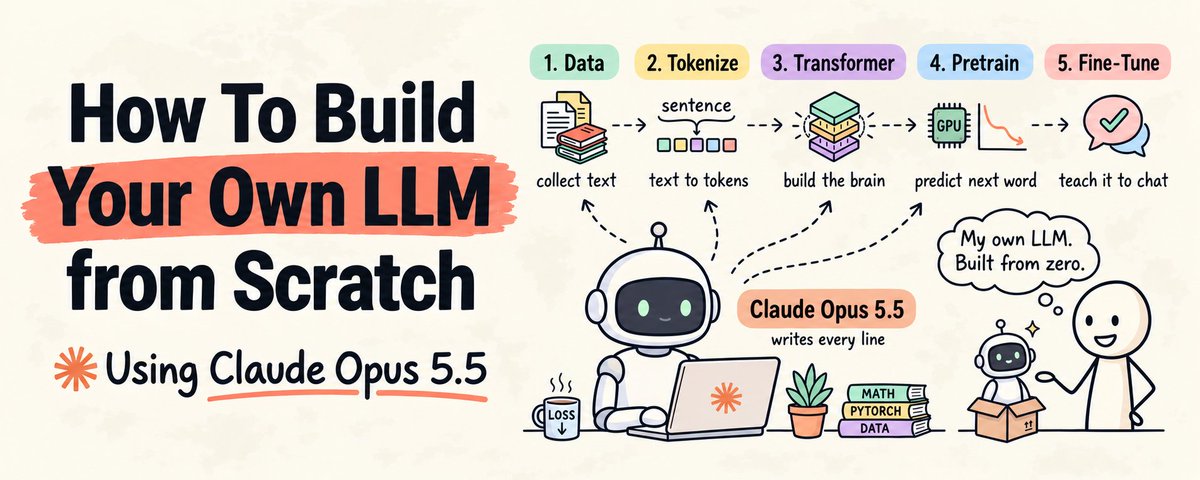
Anthropic pays $750,000+ a year for engineers who can build LLM architectures from scratch. Stanford taught the entire thing in 1 hour lecture & released it for free.
Bookmark & watch this today before someone takes it down ...


mirjahon retweeted

opus 5.5 is f**king gold.
drop this into Claude Opus 5.5 and it will build your first team of AI agents from scratch with roles, prompts, tools, and the full workflow for you
save and steal this now:



mirjahon retweeted

Every serious vibe coder should have bookmarked it.
25 vibe coding resources to keep yourself ahead of the competition.
1. jiro.build — design prompt library with 1200+ AI-ready design prompts to help you design beautiful websites fast with AI.
2. Minimal Gallery (minimal.gallery) — curated high-end sites to feed your agent
3. Kage (kage.design) — real UI inspiration mapped straight to prompts
4. Refero Styles (styles.refero.design) — 2,000+ real product styles with typography
5. Component Gallery (component.gallery) — 2,600+ examples of how top design systems solve the same element
6. AppShot Gallery (appshot.gallery) — real app screenshots for mobile
7. DESIGNmd (designmd.ai) — design systems as markdown your agent can read
8. VibePrompt (vibeprompts.dev) — ready-made prompts for dashboards and landing pages
9. 21st.dev (21st.dev) — component registry that plugs into agents via MCP
10. Kinetics (kinetics.colorion.co) — 150+ motion effects with React code and prompts
11. shadcn/ui (ui.shadcn.com) — still the gold standard for clean, reusable UI
12. Aceternity UI (ui.aceternity.com) — 200+ animated React/Tailwind components
13. Magic UI (magicui.design) — beautifully designed components for modern web apps
14. Motion Primitives (motion-primitives.com) — ready-to-use animation and interaction components
15. Uiverse (uiverse.io) — community-built UI elements and interactive components
16. UIAble (uiable.com) — a collection of ready-to-use UI components
17. mapcn (mapcn.dev) — map components, markers, routes, popups
18. MicroKit UI (microkit.co) — small micro-interactions that make interfaces feel polished
19. Liquid Glass (glass.samasante.com) — glass refraction components and effects
20. CSS Text Effects (text-effects.colorion.co) — creative CSS text animations and effects
21. Circle Loaders (circleloaders.dominikakissi.…) — creative loading animations and loaders
22. Gradient Buttons (gradientbuttons.colorion.co) — gradient button styles and effects
23. Kitbitz (kitbitz.art) — 2,000+ hand-drawn illustrations
24. 3Dicons (3dicons.co) — a library of free 3D icons for modern interfaces
25. Anime.js (animejs.com) — lightweight JavaScript animation library for the web
If you're building with AI, this list will save you hours.
Save it. 🔖


mirjahon retweeted

🚨 This 4-hour Anthropic course could replace hours of paid AI engineering content.
00:15 — How to prompt Claude properly
33:21 — Why Claude can seem “dumber” in your code
01:33:39 — How Anthropic uses Claude internally
02:50:56 — A simple fix to make Claude much smarter
And it’s completely FREE.
Watch it today.
Bookmark it for later.
Then actually build with what you learn. 🔖

mirjahon retweeted

GOOGLE CEO SUNDAR PICHAI: "IF YOU DON'T LEARN HOW TO ORCHESTRATE AGENTS NOW, YOU'LL SPEND 2027 CATCHING UP TO PEOPLE WHO STARTED TODAY."
30 minutes on why the best engineers stopped writing code line by line and started orchestrating agents instead.
Most people think building an agent requires an engineering degree.
It doesn't.
It requires one guide and one afternoon.
Watch the interview.
One guide. One afternoon. That's all it takes.
mirjahon retweeted

🚨ESTO ES UNA LOCURA
un dev chino acaba de soltar una herramienta gratis que te monta vídeos solos para tiktok, reels y youtube shorts
se llama MoneyPrinterTurbo
ya pasa de las 100.000 estrellas en github
y hay gente sacando +4.000$ al mes con canales faceless usando este sistema
así va:
1. le metes un tema o una palabra clave
2. la ia te escribe el guion, la voz y los subtítulos
3. busca las imágenes, edita el vídeo y te lo da listo
todo en un solo paso
guárdatela, seguro que le sacas mucho jugo
enlace abajo👇