

Founder & Manager, EURL Cyan'Obs Cyanobacteria, Phytoplankton Ecology
Rouen, France
Joined January 2014
- Tweets3.9K
- Following302
- Followers600
- Likes753





Nicolas Clercin retweeted

Today, the SecchiDisk.org #CitSci phytoplankton study begins its 14th year. It is now the World's largest marine #CitSci study in global extent. Take part, collect important data and help the Study continue to grow @natgeo @NoonsiteEditor @ybw

Nicolas Clercin retweeted

We are pleased to announce the recipients of the Naumann–Thienemann Medal. The medal is considered the highest honor that can be awarded internationally for outstanding scientific contributions to limnology.
Congratulations to Warwick F. Vincent, David Hamilton, & Judit Padisák.


Nicolas Clercin retweeted

🦠 Recent studies show that saxitoxin, a cyanotoxin produced by cyanobacteria, is impacting Lake Erie HABs. But it's not fully understood, and monitoring has begun to understand its origins and impacts.
Learn more ➡️ lakescientist.com/research-b…
PC: NOAA
@stonelab
@BGSU_Biology

ALT A green harmful algae bloom in Lake Erie from above, with text overlay. Text says, "Saxitoxin is a harmful but under-researched culprit of Lake Erie's harmful algal blooms. Now scientists are racing to understand where and how it forms.
Nicolas Clercin retweeted

Registration is LIVE for Innovations in HABs Mitigation! Join GLC & @CLEH2OAlliance on Aug 12 for a deep dive into the next generation of Harmful Algal Bloom tech. Learn about new approaches, technologies, & barriers/opportunities.
Don't miss out: clevelandwateralliance.org/e…

Nicolas Clercin retweeted

📢 The final #AquaticPollutants booklet is now available!
It brings together the results of 18 research projects addressing the risks posed by pollutants and pathogens in our water resources.
📄 Read the outcomes & download here: bit.ly/3YPTzUE
#WaterResearch

Nicolas Clercin retweeted

Last Thursday, April 10, 2025, I attended the E.U. CYANOACTION meeting, “Cyanobacterial Blooms: State-of-the-Art on Hydrogen Peroxide and Other Measures to Control Cyanobacteria.” Great lineup, great talks, and great discussions. 👊MARGA, Make Aquatic Research Great Again💪

Nicolas Clercin retweeted

The nanofiltration membrane allows water to travel through special pores while blocking the microcystins, according to a news release from the university. nwaonline.com/news/2025/mar/…

Nicolas Clercin retweeted
A New Way To Measure Phytoplankton And Cyanotoxin Producers In Large Rivers. wateronline.com/doc/a-new-wa…

Nicolas Clercin retweeted

Skyglow increases cyanobacteria abundance and organic matter cycling i... sciencedirect.com/science/ar…
Nicolas Clercin retweeted
Global elevation of algal bloom frequency in large lakes over the past two decades academic.oup.com/nsr/article…

Nicolas Clercin retweeted

Often science is annoying, but nice to enjoy the good #phage data when you get it

Nicolas Clercin retweeted

We have a fully funded PhD position out focusing on adaptation strategies in filamentous Cyanobacteria slu.se/en/about-slu/work-at-… please share to those potentially interested 😊
Nicolas Clercin retweeted

Latest pre-print from our lab at @UWaterloo using #AlphaFold for functional predictions of #cyanophage proteins:
AlphaFold 3 proteomic modelling reveals multiple photosystem structural homologs in freshwater cyanophages biorxiv.org/content/10.1101/… – at Kitchener, Ontario

Nicolas Clercin retweeted
Thanks for highlighting our work @JPhycology and also to our funders which includes the @PSAAlgae and @NSERC_CRSNG

COVID-19 highlighted the need for new treatments against viral infections. Could #cyanobacteria represent an untapped source of #antiviral activity? Read about how students from @jin_oceanvir’s lab tested strains of cyanobacteria against viruses: doi.org/10.1111/jpy.13425 (1/5)

ALT Methodology used to screen cyanobacterial cultures for antiviral activity.
Nicolas Clercin retweeted

How do you tell cryptic #cyanobacteria apart when barcoding lacks species-level resolution?
@dvorikus et al. suggest that population genomics can delimit challenging taxa. Discover how they identified two new Laspinema species in this #JPhycol article: doi.org/10.1111/jpy.13475

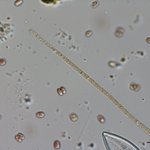
ALT Microphotographs of Laspinema olomoucense (a-c) and Laspinema palackyanum (d-f).
Nicolas Clercin retweeted

📢 For our Department of Plankton and Microbial Ecology at Lake Stechlin we are inviting applications for a #postdoc position in computational #ecology! karriere-igb.softgarden.io/j…
Nicolas Clercin retweeted

⚠️Algal blooms, caused by nutrient pollution, are harmful to lake ecosystems and dangerous to humans.
Brehob et al. (2024) use a #MachineLearning model to predict nutrient and chlorophyll-a concentrations in about 112,000 lakes in the US: doi.org/10.1029/2024EF004493
#AGUPubs

ALT New in Earth's Future: Estimates of Lake Nitrogen, Phosphorus, and Chlorophyll-a Concentrations to Characterize Harmful Algal Bloom Risk Across the United States by Brehob et al. (2024)
Nicolas Clercin retweeted

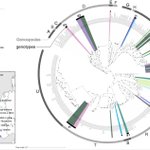
Pleased to share our new work on the distribution of chlorophyll f based (FaRLiP) #photosynthesis in #cyanobacteria
nature.com/articles/s43705-0…
@ISMEComms @DCPS_FU @FU_Berlin

Nicolas Clercin retweeted

And here we go!! The date and location of the next SEFS are out 🤩🤩

Details are out for the 14th Symposium for European Freshwater Sciences @SEFS14BOLU
21–25 July 2025 in Bolu, Türkiye
🐟💦🍻#SEFS14 @EFFS_EFYR
sefs14.com/

Nicolas Clercin retweeted

Advertisement for Student Recruitment
We are seeking motivated and passionate students to join our groundbreaking research project, "Elucidating and Predicting the Ecological Roles of Cyanopeptides in Four São Paulo State Public Water Supply Reservoirs".
This project is funded under the FAPESP Young Investigators Grants (Grant number: 23/00798-4) and spans from August 1, 2024, to July 31, 2029. The research is led by Prof. Mathias Ahii Chia at the Instituto de Biociências, Universidade de São Paulo (USP).
Available Positions
- PhD Students (3 positions)
- MSc Students (4 positions)
- Undergraduate Students (6 positions)
Project Overview
Brazil has faced recurring cyanobacterial blooms and elevated cyanotoxins in public water supplies. This project will focus on studying cyanopeptides, bioactive compounds produced during cyanobacterial blooms, across four major water reservoirs in São Paulo State (Barra Bonita, Bariri, Três Irmãos, and Nova Avanhandava). The goal is to develop predictive models for bloom formation and cyanopeptide production using advanced metagenomics, metatranscriptomics, and ecotoxicological analysis. Our findings will contribute to enhanced water quality monitoring and public health risk mitigation.
Key Collaborators
This project is supported by a team of renowned experts, including:
- Daniel Roelke
- Marcelo Luiz Martins Pompêo
- Matthew Harke
- Miquel Lurling
- Sandra Maria Feliciano de Oliveira e Azevedo
- Triantafyllos Kaloudis
- Viviane Moschini Carlos
What We Offer
- Cutting-edge research opportunities in microbial ecology, cyanobacterial blooms, and ecosystem monitoring
- Full access to state-of-the-art facilities at USP
- Interdisciplinary collaboration with leading international researchers
- Funding support for research and conference participation
Who Should Apply?
We are looking for students with strong backgrounds in Biological Sciences, particularly in Ecology, Environmental Sciences, Microbiology, and related fields. Experience in molecular biology, bioinformatics, water quality monitoring, and ecosystem ecology is a plus.
How to Apply
Interested students should send the following:
- A cover letter explaining your interest and relevant experience
- Curriculum vitae (CV)
- Academic transcripts
- Contact information for two academic references
Application Deadline: September 30, 2024
Send Applications to: [email protected]
Join us in advancing ecological science and contributing to the sustainability of public water resources in São Paulo State!
Principal Investigator:
Prof. Mathias Ahii Chia
Department of Ecology, Instituto de Biociências (IB), Universidade de São Paulo (USP), São Paulo, SP, Brazil
Website:
posecologia.ib.usp.br/ingres…
posecologia.ib.usp.br/progra…