

VP Product @mozilla. 4x exited Founder. Strong opinions. Basketball Dad. Chess enthusiast. AI tinkerer. PM geek. BJJ practitioner. Podcast addict. Builder.
Cupertino, CA
Joined August 2007
- Tweets6.4K
- Following1.1K
- Followers2.8K
- Likes30.7K



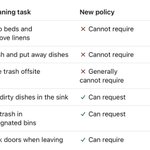


One thing I’m not loving about my neighborhood is that it’s increasingly feeling like a retirement community, with homeowners leaving Halloween candy outside on a table or chair for kids to self-serve. I feel like this totally changes the trick-or-treating experience, and it seems to have become normalized since COVID. Or maybe b/c it’s Saturday?
“Staying in shape” is a great way to frame it. This is precisely why I stopped automatic meeting notes and write my own content, just to make sure I maximally exercise my brain.

People tend to realize @Steve_Yegge was right 6-12 months later. Once I figured this out, I listen to him when he says stuff. Like this:
"Having a fit brain will be a key differentiator in the new era. Just do more of [writing], every day, to get in shape and stay in shape."
I guess I didn’t notice but the new thumbs-down button on comments on X is great b/c I can now one-click flag what are obviously AI-generated comments.
Seeing a lot of mentions that Wispr made a mistake by educating its users about Granola. Maybe that's true but here's my take.
I worked in the productivity category for ~12 years across two startups (calendaring and meeting notes), both acquired.
Productivity startups rarely make it to IPO. The few examples such as Dropbox and Asana, you could argue haven't been great from a public market stock perspective. The challenge is that you're constantly battling the heavyweights, specifically Google and Microsoft, who are going to build a good-enough alternative and bundle it for basically free. Of course, CIOs love this. No buyer wants to manage 10 different SKUs when they can pay $15/seat and get all of it.
Now consumers, sure, some will pay and this drove early Dropbox, Evernote, Calendly, Granola subs but you do hit a ceiling. Eventually, new subscriber growth struggles to keep up with churn because consumers ultimately gravitate to free.
So your only choice as a productivity startup is to use that initial wedge, which I often describe as identifying an icon that doesn't exist in the Google Apps dashboard, and then expand horizontally. And in fact, this is precisely why Dropbox, Slack, Zoom or even Notion all continue to build or acquire more of the productivity suite.
Unfortunately, it’s impossibly hard. The incumbents aren't sitting idle, and they have huge pricing power because of scale. Ultimately, as a startup in this category, as a founder, you have at least 1 exit window, maybe 2 if you're lucky.
For sure companies like Miro, Airtable and others have likely had an attractive exit window but the founders went for it. Unclear if all that additional grinding led to a better outcome for the team and founders.
FWIW, at one of my productivity startups, I ended up selling three years after receiving our first acquisition offer. Three more years of grinding, more venture capital, more stress, and ultimately I walked away with roughly the same amount of cash I would have had if I'd sold two years in.
So the obvious Q is why does productivity continue to get so much venture funding if so few of these companies ever get to IPO? First, productivity is one of those evergreen categories where investors often experience the pain themselves and that’s a huge advantage in fundraising. Second, you can still make money as an investor as long as the money raised and valuations don’t get out of control. Like with anything, if you raise too much money, then there aren’t enough buyers.
This category though, maybe sees more acquisitions than others and the reason for that is because practically every large enterprise software company has, at some point, aspired to build its own version of Google Apps because who doesn’t want to own the backbone of enterprise? Most of these buyers though discover that it takes billions and years and so they ultimately give up and the cycle repeats some years later with new leaders.
So full circle, what's the playbook for Wispr and Granola? Well, first, they're both going to expand horizontally as quickly as possible. Second, they're going to invest in team editions and sell into enterprise. This is really the only way.
Finally, I wouldn’t be surprised if both are already getting acquisition offers but I’m also sure the founders have taken some liquidity, and so they are going to go for it.
Thinking about this tweet again. There was a point where GMs could no longer comprehend chess moves.
The same transformation is beginning to happen with models and code. We may see systems designs that are so bespoke, that humans can't easily trace or reason them. We may see the stack being rebuilt for agents including the programming language itself, optimized around verification and speed vs readability.
Today, we see team members build custom front-ends to legacy enterprise software but there is nothing preventing them from just rebuilding the entire underlying stack.

Can’t help but wonder if we are in the DeepMind phase of AI coding and AlphaZero is only a matter of a few years away.
What’s interesting about that arc, is eventually, humans couldn’t comprehend the chess moves AlphaZero made which begs the Q of whether AI will eventually create bespoke system designs that are not easily human comprehensible.
Wispr having launched note taking a few months ago and now Granola launching dictation are good examples of why running multiple 2x2s w diff axis are helpful in thinking about strategy.
It’s pretty clear they are leaning on their native desktop install base w rich OS permission privileges as a wedge and so the natural next Q, what other prosumer workflows require a native desktop app and this might signal where they swim next.
Just received an out of office email but with a link to chat with their digital twin, if urgent 🤔 I’m not sure what I think about this.


It’s wild to think that within the next few years, the masses may no longer think of Google as a search company.
Not condoning this and definitely not sure how this all materialized but watching Alexander (Muse) vs Tibo (OpenAI) and now Sridhar (Snowflake) vs Ali (Databricks) go at it on X has been quite entertaining.
TIL, level 4 autonomy like w Waymo, Zoox or the Cybercab are liable if they cause an accident. That massively increases the stakes.
People talking about technical debt w code but I’m dealing w terminal debt, literally don’t want to restart the browser or computer b/c that means I have to resume some sessions and restart some servers + agentic workflows.
There are a lot of takes that agentic commerce is just hype. What many forget is that commerce is two-sided. Yes, Amazon is blocking because it impacts their ad revenue but if you’re a hotel owner, for sure you’d want to save that 15-25% commission from OTAs like Expedia.
Caught up with a buddy deep in the French and Italian software industries and much of the discussion was about software sovereignty. The meta-takeaway, there is a real shift towards countries wanting to own their own software. This is like another version of what is happening with the web that is becoming more closed versus open. I don't think we yet know what the ramifications of each country building their own variation of Office or Google Apps is but it's definitely happening.
Lots of peeps, including self, will consume video content on their phone rather than turn on a TV, even if the remote is in their lap.
The JTBD for a TV has evolved. It’s a social viewing device or for ambient background noise. The question is what does it look like in 5 years?
I’ve spoken about this with a few early stage VCs in the past weeks. Many funds are not trying to build a business. They are funding co’s for them to spend on marketing and to chase AI celebs to drive markups and then liquidity via secondaries. It’s a delicate house of cards that could collapse when late-stage capital dries-up.
All said, one investor reminded me that money is made in bubbles. Unfortunately, many early stage funds remain disciplined about investing in durable businesses and may miss this entire cycle for better or worse.
