

وماذا عليك لو ذهبوا هُم بالدنيا، وأنتَ ذهبت بالقرآن؟ | AI Researcher @ KAUST - AI Threat Researcher @ WhiteMatter - Kaggle Competitions Master
Joined October 2013
- Tweets1.8K
- Following393
- Followers2.1K
- Likes3.8K





Pinned Tweet
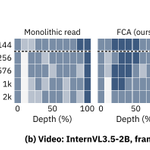
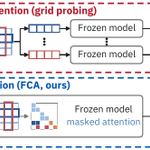
🔴New Paper: Factorized Context Attention (FCA)
A plug-and-play block-sparse attention pattern for your existing LLM or VLM.
✅ Extends the reach over 10× past the model's trained context window, at comparable or better accuracy than full attention, without training.
✅ Fast: up to 3× faster than full attention on long inputs
✅ Interpretable: shows which blocks the answer came from
✅ Cacheable: the input is encoded once, every follow-up question reuses it
🧵...

🤔 What this means: training-free reach beyond the context window now comes in two flavors, so you can pick by your hardware, from a small GPU to a large server.
1️⃣ Long context on a closed model, or tight memory on a small GPU? → Emulate it: gives the extended reach with a tiny KV cache footprint, but slow.
2️⃣ Long context on open weights with memory to spare? → Run it natively with FCA: gives the same extended reach, fast, at the KV cache cost of standard attention.

1
1
179
📄 Paper: arxiv.org/abs/2611.32423
💻 Code: github.com/mohammad2012191/F…
Huge thanks to the team: Manar Eyad, Yara Alzahrani @viarxu , Fatimah Albesher, Duaa M. Tahir @dualingyou, and supervisors Dr. Tanveer Hussain & Prof. @ProfNaeemKhan.
Special thanks to @KAUST_Academy and @Dr_S_Albarakati for their incredible support 🫡

Mohamed retweeted

Hot take:
RL is SUPER overrated.
basically every single time literally ever that we saw big important jumps in capability it was pretraining breakthroughs and basically every single terrible awful quality in models like gpt-image-2.6 or like gpt-6.2 is RL and distilled slop
In @iclr_conf ICLR/ @NeurIPSConf NeurIPS, a pattern that I see appearing in AI-generated reviews is:
1) restating the paper's limitations as weaknesses to give a low score, or
2) nitpicking small, negligible details or failure cases and treating them as major flaws to invalidate the contributions and justify a bad score.
The obvious solution from the author's perspective is easy. Just:
1) never state real limitations in the paper, and
2) never discuss failure cases or trade-offs
which I don't think qualifies as real science...
if u want a powerful model to classify whether the request coming from the user to your company's llm is malicious, just use Claude models api, if they refused to reply --> refuse to reply lol
2
9
911
Mohamed retweeted

Hi all, I have a new result I'm excited to share. It turns out that *all existing implementations* of softmax and cross-entropy (that's JAX, PyTorch, textbooks, etc) have a subtle bug --- two bugs, actually. A simple rewrite fixes both, and eliminates "slingshots" when grokking:
Mohamed retweeted

1/9 Current optimizers are static during training. What if the optimizer could think and react while the network trains?
We let an agent watch the training dynamics and rewrite the optimizer's source code as training goes: a reactive optimizer.
In every language and image setting we tried that has no tuned recipe, it matches or beats the best recipe one can one-shot, and it guards against loss spikes and overfitting by itself. In the near future, optimization decisions may belong to agents, not humans.
📝 xingjianbai.com/reactive-opt…
💻 Try it on your task: github.com/xingjian-bai/opal
🧵

قبل سنة تقريباً نشرت AI Specialization Roadmap عن أساسيات الـAI، واليوم أنشر الجزء الثاني: المهارات اللي تساعدك تنتقل من الأساسيات للـindustry. أتمنى تنال إعجابكم :)
mohammad2012191.github.io/AI…

Mohamed retweeted

1/
During OLMo3-32B pre-training, accuracy on an arithmetic diagnostic hits 81% at 2.17T tokens, collapses to 0% at 2.19T, and jumps back to 81.7% at 2.21T.
All while validation loss decreases smoothly.
The phenomenon: mode-hopping. 🧵

Let's make KV cache great again :)
What if you could run your LLM on almost arbitrarily long text without caring about the KV cache, and still match a full read?
⬇️ New preprint:
Periscope: Extending Frozen Language Models Beyond Their Context Window
🔴 tl;dr: a new training-free inference method that relies on short local and strided reads to approximate the global context. A frozen model served at a window of W tokens can now read texts of W²/c tokens (e.g., a 27B model reads 4.5M tokens on one 80GB GPU) with the KV cache size of only a few chunks, at accuracy comparable to reading everything.
(image: results on LongBench v2)

🔵What this means: memory for a long read is set by the model's weights, not by the text. A model that fits your GPU can read texts that GPU could never cache in one pass.
🔵That could unlock serving small models at far longer context on cards that today stop at the window.
1
1
172
📄 Paper: arxiv.org/abs/2610.04047
💻 Code: github.com/mohammad2012191/P…
Huge thanks to the team: Anas Obayd, Raed Rashid, Abdulrahman Alghamdi @Abdu_6h, Abdulrahman Mousa, Abdullah Mahmoud, and supervisors Dr. Tanveer Hussain & Prof. @ProfNaeemKhan.
Special thanks to @KAUST_Academy and @Dr_S_Albarakati for their incredible support 🫡

1
193