

Micro-Agency Founder, Product Designer. 🍪 I bring over a decade of experience in product design, design strategy and leadership. https://nitter.cf/t.co/YMM52smq4F
Brighton, England
Joined August 2008
- Tweets3.8K
- Following909
- Followers750
- Likes3.3K



Using @claudeai brings me back to a time when I was so enthralled by the opportunities technology offered creative outputs.

84
When it comes to dashboard design, agents offer an opportunity for SaaS companies. A big UX issue has always evolved around user trust, explainability, cognitive load and discoverability. Agents on the dashboard can help users understand and interpret information which supports the users objectives.
2
70
Today was fun. I got @claudeai to pull a design from the @figma canvas, build a local and fully functional React version of the design, which was further edited and customised with @paper shaders then having @claudeai build this into a functional preview inside @framer with the custom agent so it can look really nice inside a slider on the actual website :D
82
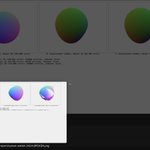
Working on a custom displacement shader component and actually discovered a @webkit bug. Time to file a bug report!

1
81
What happened to @Apple MacOS that requires you to login with password every time you update your Mac!? I'm pretty sure this wasn't the case before Tahoe.
1
77

Richard Nash retweeted

‼️🚨 BREAKING: An AI found a Linux kernel zero-day that roots every distribution since 2017. The exploit fits in 732 bytes of Python. Patch your kernel ASAP.
The vulnerability is CVE-2026-31431, nicknamed "Copy Fail," disclosed today by Theori. It has been sitting quietly in the Linux kernel for nine years.
Most Linux privilege-escalation bugs are picky. They need a precise timing window (a "race"), or specific kernel addresses leaked from somewhere, or careful tuning per distribution. Copy Fail needs none of that. It is a straight-line logic mistake that works on the first try, every time, on every mainstream Linux box.
The attacker just needs a normal user account on the machine. From there, the script asks the kernel to do some encryption work, abuses how that work is wired up, and ends up writing 4 bytes into a memory area called the "page cache" (Linux's high-speed copy of files in RAM). Those 4 bytes can be aimed at any program the system trusts, like /usr/bin/su, the shortcut to becoming root.
Result: the next time anyone runs that program, it lets the attacker in as root.
What should worry most: the corruption never touches the file on disk. It only exists in Linux's in-memory copy of that file. If you imaged the hard drive afterwards, the on-disk file would match the official package hash exactly. Reboot the machine, or just put it under memory pressure (any normal system load that needs the RAM), and the cached copy reloads fresh from disk.
Containers do not help either. The page cache is shared across the whole host, so a process inside a container can use this bug to compromise the underlying server and reach into other tenants.
The original sin was a 2017 "in-place optimization" in a kernel crypto module called algif_aead. It was meant to make encryption slightly faster. The change broke a critical safety assumption, and nobody noticed for nine years. That bug then rode every kernel update from 2017 to today.
This vulnerability affects the following:
🔴 Shared servers (dev boxes, jump hosts, build servers): any user becomes root
🔴 Kubernetes and container clusters: one compromised pod escapes to the host
🔴 CI runners (GitHub Actions, GitLab, Jenkins): a malicious pull request becomes root on the runner
🔴 Cloud platforms running user code (notebooks, agent sandboxes, serverless functions): a tenant becomes host root
Timeline:
🔴 March 23, 2026: reported to the Linux kernel security team
🔴 April 1: patch committed to mainline (commit a664bf3d603d)
🔴 April 22: CVE assigned
🔴 April 29: public disclosure
Mitigation: update your kernel to a build that includes mainline commit a664bf3d603d. If you cannot patch immediately, turn off the vulnerable module:
echo "install algif_aead /bin/false" > /etc/modprobe.d/disable-algif.conf
rmmod algif_aead 2>/dev/null || true
For environments that run untrusted code (containers, sandboxes, CI runners), block access to the kernel's AF_ALG crypto interface entirely, even after patching. Almost nothing legitimate needs it, and blocking it shuts the door on this whole class of bug...


Lots of click-bait design is dead, @figma is dead, AI is the evil design overlord. Blah blah…
Focus on the human elements. Empathy, taste, strategy. AI is a tool, LLM models don’t replace things tangible to humans.
AI has its biggest impact on the ‘doing layers’ so if all you focus on is output, then I feel you’ll experience disruption.
This is a really exciting time in the industry of which I don’t feel I’ve felt since like the early 2000’s.
1
67
I think the time has finally come @Adobe. Increasing the price of my subscription while offering a diminishing presence in my design stack.
I’ve been putting this off for so long, but I just don’t feel paying more for what is already an expensive offering, when the value is eroded by other tools.

1
103
Well RIP Mac Pro, I’m gonna miss you. Think I’m gonna keep my Mac Pro chassis into the future. It’s just an amazing bit of industrial design.
46
Richard Nash retweeted

Know good design?
Know what makes models tick?
Want to give Ai Models taste?
Jump in, the water is latent.
job-boards.greenhouse.io/fig…

I've been using AI as part of my UX and research practice for two years. Recently I started to shift from @OpenAI to @AnthropicAI tools. More interesting than I expected, tbh.
Writing was the first place I saw the difference. That loop started with @OpenAI — I'd write tens of thousands of words and bring the tools in to refine and co-edit. Not efficient. But it mapped the territory and helped me understand where the real risks and opportunities were.
What @AnthropicAI tools do differently is build self-reinforcing methodology. Research leads to synthesis. Synthesis generates rules from that research, user input, and tonal-data. The tools sense-check against those rules. Human and tool review and refine. The tool reinforces its own guidance through human-agent retrospective.
With the right oversight, the loop improves on itself.
1
53
Recently I’ve been investing in research to help Claude Code frame how I want it work with specific tasks. Goal is to have series of these frameworks and memory to help pass various task through an update design process lens.
73
Taking Pretext a bit further in this custom @framer component where we've got a Canvas area very much like say Miro or Figjam. The sticky notes, and the text, reflow and resize base on user interaction.
1
1
129