




2027世界展望启示录,来自《经济学人》年度特刊。

Dan setelah memberikan berbagai macam scene, mereka menutupnya dengan Kamera Film.
Sadarkah semuanya sudah disiapkan?
Do you realize that it’s all staged?
Dan Predictive Progamming The Economist selalu terjadi, meski ada sedikit meleset, itupun ditunda bukan tidak terjadi
(2/2)


112


保持现金,等待机会。

Our world is at a turning point, and like every turning point in history, the people living through it don’t know it yet.
In 1937, Berliners still went to work every morning.
I‘m not saying WW3. But I do think we’re at the start of a global reengineering. Things are breaking one after another, and Earth Online just loaded its next main quest:
THE GREAT REPRICING.
The economy gets worse from here. By the end of 2027, this week will feel like a light tickle.
A lot of people are scared, and I understand why. But I‘m very, very, VERY excited. And you should be too.
If you’ve spent years feeling late to everything, priced out of the house, late to Bitcoin, late to AI, watching the same people win every round while you did everything “right”, there‘s a reason.
In calm times, whoever already has money and access just keeps compounding, and working harder rarely gets you a seat.
Chaos is when the seats open back up.
I bought my first Bitcoin in 2013, when most people had never heard of it. At the time I had no idea how insanely big it would become. It felt risky and even a little embarrassing to explain.
By the time it felt obvious, the cheap seats were gone. I can feel that same kind of moment starting again.
If you’ve ever really loved someone, you know the fastest way to hate a person is to love them first. Nobody else can hurt you that deeply, because nobody else ever got that close.
Disaster and opportunity live that close too, and most people only find out which one they were holding after it‘s gone.
Stagflation gave us Microsoft and Apple. The Great Depression gave us HP. The 2008 crash gave us Airbnb, Uber and Bitcoin.
While the world was locked inside during the pandemic, OpenAI released GPT-3 and Anthropic was founded. Every one of them made its move while everyone else was scared.
In more than a decade of trading, I’ve been liquidated three times. Each time I was sure it was the end of me. And each time, I came back stronger in every way that counts, including my account. I made back far more than I ever lost. If I had believed those moments were the end, the person writing this wouldn‘t exist.
Now the whole world is heading into its own version of that moment.
And I don’t think this window stays open long. My guess is about two years. Building at the frontier already takes billions of dollars of compute, and whoever owns the models, the chips, and the data gets stronger every quarter.
As AI keeps compounding for the people who already control it, the wall around them gets taller, and no amount of talent gets you over it.
Maybe I‘m wrong about how fast, and it’s four or five years instead of two. But I‘d bet this is one of the last big reshuffles in the next few decades where an outsider can still break in.
So use it. If you can build, build.
If you don’t know how to build, get your ass off that bed and learn, because in this era anyone can.
If you trade, keep cash ready, stay patient, and buy when everyone else is desperate to sell. And if you short, do it carefully, because no bear market only goes down and the bounces are brutal. Or do both. There‘s still time to get that cash ready.
Every disaster has a door in it.
Most people only see the fire.
YOU👏WALK👏THROUGH👏IT👏
3
10
6,656


老赵 retweeted

I'm calmly observing the market for now.
As I've repeatedly emphasized, I don't believe this is a time to rush into making investment decisions.
I've already established a detailed investment plan and specific criteria for navigating the market following the U.S. midterm elections.
However, looking at the situation objectively, the market appears to be developing increasingly close to the most negative scenario I had anticipated.
If that's the case, there's even less reason to rush. Instead, I believe we need to approach the market with a much longer time horizon than initially expected.
1. U.S. dollar is behaving very differently from previous Bitcoin cycles.
The dollar is clearly moving in a different direction compared to previous Bitcoin bull cycles.
More importantly, it's difficult to dismiss the dollar's current rise as merely a short-term rebound.
The dollar has broken above a trading range that had been forming for more than 500 days.
As I often emphasize, once a trend is established, it rarely reverses easily.
This is especially true when the trend emerges from a breakout following such a prolonged period of consolidation.
2. ETF and OTC buy-side liquidity have still not recovered.
Cumulative net flows into Bitcoin ETFs remain negative for the year.
This indicates that sustained buying pressure and accumulation through ETFs have yet to materialize.
At the same time, OTC buy-side liquidity remains severely constrained.
When the OTC market lacks sufficient buying liquidity to absorb selling pressure, that selling activity is more likely to shift toward exchanges.
And when that happens, it can translate into direct selling pressure on the market.
What concerns me is that we're already seeing this pattern unfold in the actual data.
3. My biggest concern remains the continued withdrawal of Binance whales.
The selling and withdrawal activity among Binance whales is increasingly resembling the pattern we witnessed in 2022.
What makes this particularly concerning is that the trend is still ongoing, with no clear signs of stopping.
I believe that if this whale exodus continues, the risk of hidden problems emerging in the market could increase significantly.
We saw something similar in 2022.
Back then, whales began exiting the market first, and only afterward did major events emerge that triggered significant market-wide disruptions.
Of course, this doesn't mean the same events will necessarily repeat this time.
However, it's difficult to ignore the fact that we're once again observing a liquidity withdrawal pattern similar to the one that preceded major market shocks in the past.
Ultimately, I believe this is a time to focus less on the possibility of short-term price rebounds and more on how long the liquidity squeeze could persist, and whether these warning signals might eventually develop into a broader market shock.
I've already established my criteria for responding to the market, and I'm continuing to monitor developments based on those criteria.
If market conditions are deteriorating more than expected, then I'm prepared to wait even longer.
Rather than forcing trades or rushing to find opportunities, I believe it's far more important to remain patient and wait for clear signs of market stabilization and a genuine recovery in liquidity.


Today, I want to take a step back and examine the Bitcoin market from a macroeconomic perspective.
It may be a relatively conventional approach, but given the severe liquidity constraints currently facing Bitcoin, I believe it's important to revisit the broader macro environment.
Let me start with my conclusion.
"The Bitcoin market has still not gone through sufficient accumulation, and liquidity conditions continue to deteriorate. At this point, we can only hope the market avoids a major shock. Even if it does, a much longer period of sideways consolidation may be necessary than many expect."
As I've repeatedly discussed in my previous analyses, Bitcoin's internal liquidity conditions are extremely concerning.
Buy-side liquidity continues to weaken, and the market is experiencing a significant liquidity squeeze.
Against this backdrop, I want to examine the relationship between the U.S. dollar and Bitcoin's market cycles.
This may be familiar territory for anyone who has spent some time studying financial markets.
Generally speaking, the U.S. dollar is closely tied to global liquidity conditions.
Looking back at Bitcoin's historical cycles, we have never seen Bitcoin sustain a full-fledged bull market while the dollar was in a strong upward trend.
The bearish cycle that began in 2025 has not been particularly different in this regard.
But that brings us to the most important question.
"Are we really at the point where the U.S. dollar is about to enter a sustained downtrend?"
To me, this is one of the most critical questions when assessing the current market.
Let's look at the historical cycles objectively.
In previous cycles, Bitcoin went through a prolonged bear market before entering a major bullish phase as the U.S. dollar began a sustained decline.
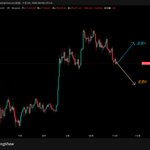
(Image 1, green boxes)
But the current situation is fundamentally different.
Rather than entering a downtrend, the dollar is showing signs of establishing a strong upward trend.
(Image 1, red box)
This is the most important difference between previous bullish cycles and the market environment we face today.
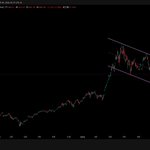
Now, take a look at Image 2.
The U.S. dollar has broken above a trading range that had been forming for more than 500 days.
There is something I frequently emphasize in my market analysis:
"Once a trend is established, it rarely reverses easily."
This is because of trend persistence.
And this is not a trend that developed over a few weeks or months.
We are looking at a breakout from a consolidation range that lasted more than 500 days.
That makes this development particularly important.
Even if the dollar eventually reverses and begins declining again, the process could take considerably longer than many investors anticipate.
We also need to consider the broader macroeconomic environment.
Interest rate hikes began in the third quarter of this year, while the political and economic environment surrounding the U.S. midterm elections has hardly been favorable for the crypto market.
Meanwhile, selling pressure from Bitcoin mining companies is another major concern.
Bitcoin selling activity among mining companies reached historically elevated levels during the third and fourth quarters of this year.
At the same time, many mining companies have been shifting their business models toward AI data centers.
Under these circumstances, can we realistically expect substantial new liquidity to flow into Bitcoin?
At this point, I find it difficult to be confident that it will.
Ultimately, Bitcoin needs a new catalyst and a compelling narrative capable of attracting fresh capital.
Personally, I believe one of the strongest narratives Bitcoin could have is its role as "Digital Gold."
But there has been an interesting shift here as well.
One of the companies that most aggressively promoted Bitcoin as digital gold was Strategy.
Back in 2022, Strategy frequently emphasized Bitcoin's identity as "Digital Gold."
However, beginning in 2025, the company increasingly shifted its messaging toward concepts such as "Credit" and "Digital Capital," rather than emphasizing Bitcoin primarily as digital gold.
Think about what that means.
Even Strategy, one of the most influential companies capable of driving the digital gold narrative, is now emphasizing a different narrative.
And now, with today's confirmation of its exclusion from the MSCI index, uncertainty surrounding the market has increased even further.
So let me ask the question again.
"Is liquidity in the Bitcoin market actually recovering?"
Bitcoin has become far more deeply integrated into the traditional financial system than ever before.
Through spot ETFs and growing institutional participation, Bitcoin is increasingly held within the portfolios of traditional financial institutions.
As a result, its market behavior has become more closely connected to macroeconomic conditions and movements in traditional financial markets.
In other words, Bitcoin is now more exposed to the broader macro environment, not less.
Yet today, Bitcoin's internal liquidity remains weak, while external macroeconomic conditions are far from supportive.
Under these circumstances, I find it difficult to see how Bitcoin could simply defy the broader macro environment and independently enter a powerful bullish cycle.
For Bitcoin to begin a genuine, sustained bull market, new liquidity needs to enter the market.
That is the fundamental requirement.
And this brings me back to my current assessment.
Right now, the priority should be hoping that the market can get through this period without experiencing a major shock.
But even if we manage to avoid a significant disruption, unwinding excessive leverage and resolving the current liquidity imbalances could require a much longer period of consolidation and accumulation than many investors expect.
If investors are expecting Bitcoin to quickly return to a steep upward trajectory from here, I think they may be setting themselves up for considerable disappointment.
This is also why I intend to approach my next Bitcoin purchases with a much longer time horizon.
Rather than rushing back into the market, I want to carefully assess how liquidity conditions develop and whether the market has gone through a sufficient accumulation process.
I understand that my current outlook may sound pessimistic, or even discouraging.
But the purpose of market analysis is not to consistently deliver an optimistic outlook.
It is to objectively assess the environment we are operating in and develop an investment strategy that reflects those conditions.
I simply do not believe this is the right time to approach the Bitcoin market aggressively.
There is no need to rush.
For now, I believe patience is more important than chasing a potential rebound.
I would rather wait for liquidity to recover, allow the market enough time to accumulate, and position myself when a more favorable opportunity emerges.


AI可以用信用卡支付了,AI代理用加密支付的叙事,被证伪了吗

Now your dot can securely complete purchases on your behalf—with your approval.
With ChatGPT Wallet, agents pay without access to your actual card details. Every purchase requires a security check.
ChatGPT Wallet is rolling out starting today to dots, for Pro subscribers in the US.
openai.com/index/introducing…
1
1
254


这让我想起一个段子。
一个人说他很聪明,但就是很穷。
就像是ETH很有潜力,但就是涨不起来。
if you bought $20000 worth of $ETH in 2021
congrats, now you still have $20000 worth of ETH in 2026
👏👏👏

1
5
415


