

Group leader and assistant director @astar_gis, Prof @SveucilisteZG, AI in Genomics
Singapore
Joined December 2008
- Tweets1.9K
- Following282
- Followers2.4K
- Likes6.8K






Pinned Tweet
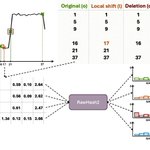
HERRO has been published in @Nature !!
nature.com/articles/s41586-0…
This achievement is a result of the great work by @domstanojevic, with contributions from @DehuiLin, @sergeynurk, and @PaolaFlorezdeS
We are entering the era of high-quality genome assemblies supported by AI. This is just the beginning.

Mile Sikic retweeted

We'll be spending a lot more time trying to understand the outputs of language models. A few thoughts, tips & tricks:
Writing. Something I've had success with: Ask your LLM to explain something in ASD-STE100, it's a controlled language specification originally developed for aerospace maintenance documentation. LLMs well-versed in this language and it comes with heavy constraints on clean writing style that I often find a lot more readable. Sometimes I've tried to soften it a bit e.g. ask for "80% of the way to ASD-STE100" because the spec is quite stringent. But even better:
Diagrams / images. Instead of writing, ask your LLM to create a diagram. These can be a lot easier to process, parse, and understand. But even better:
Web pages. Ask for output "in HTML" to get a beautiful, interactive webpage. LLMs are getting really good at frontend and can create beautiful experiences, animations, etc. But even better:
Explainer videos. The output format I am most bullish on is fully custom / bespoke explainer videos generated on any arbitrary topic. Experiment with things like "Create a 3b1b style video explainer on X. Use my ElevenLabs API key for audio narration". (you'd need an API key for the latter or you can ask your LLM to find you decent free alternatives that use your local compute). This is actually starting to work!
In summary:
- As LLMs get better, they will do more and more of the legwork autonomously, and a lot more of our work will rise up the abstractions into oversight and understanding.
- Luckily, LLMs can help here too because as intelligence and code are increasingly abundant, you can ask for large, custom, discardable software artifacts (e.g. web apps, video explainers) that would have never made sense to create before. Push the boundaries here and you'll be surprised.

Mile Sikic retweeted

1/ Most genes and variants matter somewhere but look silent in any one cell model. Can we build conditions that reveal phenotypes? With @kanishkadey, we engineer cell states to expose hidden disease biology and trace how genetic risk reaches disease genes. biorxiv.org/content/10.64898…

ALT Visual abstract: activating TFs singly and in pairs engineers new cell states, and the Mosaic model learns how TFs combine. Findings: hidden AMD risk variants, state-dependent convergence, and chromatin priming.
Mile Sikic retweeted

Just a few quick things.
1. Nice rigorous study of the importance of being careful with performance metrics and taking into account data issues.
2. This should be done BEFOFE one fits big models & make lots of big claims. Nevertheless better late than never. 2/

The "Single-cell foundation models don't work for perturbation prediction" narrative was a measurement problem.
Our new paper is out in @NatureBiotech : "Deep Learning Perturbation Models Can Outperform Baselines on Calibrated Metrics"
Last year, several papers concluded that deep learning perturbation models couldn't beat simple baselines, a finding that cast doubt on the entire Virtual Cell direction.
We asked a different question: can the metrics used in those comparisons reliably tell a good prediction from a bad one?
Often, they can't.
Common metrics like MSE and control-referenced Pearson Δ frequently rank uninformative baselines above positive controls. With calibrated alternatives (eg, WMSE, weighted R²Δ, NIR), deep learning models do outperform mean, control, and linear baselines.
The data matters too. Norman19 is approximately 96% additive, and models see less than 1% of possible gene combinations during training. The ceiling for beating an additive baseline is nearly zero, and the training signal for non-additive interactions is almost absent. Some dataset rankings aren't model rankings, but just noise!
To address this, we developed the Dynamic Range Fraction (DRF): a measure of metric calibration. Before trusting a model ranking, verify that your benchmark can detect a useful prediction at all.
The models aren't shiny toys. The field just needed better rulers.
Paper: nature.com/articles/s41587-0…
Code: github.com/shiftbioscience/P…
Huge congratulations to the first authors @Henrymiller2012 and Gabriel Mejia, and the team of Shift Bio!


We need more projects like apertus-ai.org/ which come from academia. Open source and open data are more valuable than ever

Mile Sikic retweeted

RNASSTR is out! Check out this article on our RNA secondary structure dataset, which leverages Rfam to build a larger corpus with structure-aware train/test splits for RNA secondary structure prediction models.
innovativegenomics.org/news/…

Mile Sikic retweeted
I am really not sure what Anthropic is trying to achieve here. Showing us great benchmark scores for Fable 5/5.1 for bio applications in their internal evals but making the model essentially unusable. Absolutely ridiculous strategy. Not even a trusted users option?!?


Mile Sikic retweeted

An underappreciated impact of AI on biology is that an enormous, I mean ENORMOUS, number of skeletons buried in genomics papers are all about to burst out of their Supplementary Materials.

Mile Sikic retweeted

If you are working on an important bioinformatics tool, I encourage you to apply to our AI for science program for Claude credits. Link in 🧵


A great study by @NiranjanTW and team. It shows no consistent association between BMI and gut microbiome. Type of studies we need to see more often.

Are there robust associations between the gut microbiome and obesity?
We explored this extensively with populations-scale metagenomic data for >800 South-East Asians in the HELIOS cohort @macadology
medrxiv.org/content/10.64898…

Mile Sikic retweeted

@ginaelnesr and I are excited to release makeshift -- a lightweight package to lower the barrier for using NMR dynamics data in ML. We hope this can pave the way for more NMR-based models like Dyna-1!
Preprint: biorxiv.org/content/10.64898…
Docs: makeshift-docs.readthedocs.i…

Can we cure most human diseases in the next 5–10 years? Absolutely not.
Is it still the right thing to aim at and invest in? Absolutely yes

2/2 Second, on the messaging around AI. I do not agree that my messaging has been disproportionately negative. In fact it has been about equally balanced between risks and benefits: I’ve written one major essay about each, and even in interviews where I discuss the risks, I make sure to frequently mention the incredible benefits as well as proposing possible solutions to the risks (short clips from my interviews that end up on social media tend to be disproportionately negative, as that gets clicks). In fact, I wrote Machines of Loving Grace because I didn’t feel the AI industry was painting an inspiring enough picture of how the technology could radically transform the world for the better. The bulk of the essay is devoted to refuting skepticism of AI’s potential in health and biology, and showing why I think it will actually be possible to cure most human disease in ~5-10 years, as crazy as it may sound to ordinary people and frankly to biologists as well (I used to be one!). And, if you read my most recent essay (Policy on the AI Exponential), I discuss concrete proposals for how to streamline the FDA process to make sure the deluge of AI-accelerated drugs isn’t slowed down by the regulatory process. I feel the urgency here: I lost my father to Hepatitis C only a few years before the development of direct-acting antivirals (sofosbuvir), which cure 95% of patients and probably would have cured him.
I do agree that the public has a negative view of AI (and that this is a big problem), but I don’t think it is primarily caused by me or any other AI leader warning about AI’s risks. I think it is fundamentally a crisis of trust. I think that ordinary people don’t trust companies, governments, or the tech industry and always suspect that we are cooking up some new way to screw them over. The causes of this go back decades and AI is just the latest iteration of it. I don’t think that a glitzy marketing campaign with a positive spin (which some have advocated that Anthropic do) is the way to win back that trust — at this point, saying that AI will cure cancer is more a cliche than it is inspiring, and most people think it is deceptive. The thing that will work is *actually curing cancer*. I think by far the most accurate criticism of AI companies including Anthropic is that we haven’t yet delivered on our big promises to benefit the world. That is totally on us, and I think it’s the criticism you should be making, instead of all this stuff about messaging and marketing.
We are however doing our best to fix this: Anthropic is ramping up its efforts very quickly in biology and medicine, and we hope to have incredible results in the coming years and some early glimmers in the coming months. When we’ve actually accomplished something real, the whole world will hear about it, as loudly as possible, you have my word on that. But until then I don’t want to make empty promises, and in the meantime I feel compelled to speak honestly about the very real risks of AI and how to address them. Honesty is the right thing on the merits, and in terms of public credibility and trust it is no worse than, and may in fact be better than, an approach that ignores or distracts from risks which people instinctively understand are real.
Mile Sikic retweeted

Just published: "The batch effect that flipped a landmark study". Check it out and subscribe to get everything I'm making.
divingintogeneticsandgenomic…

Mile Sikic retweeted

Frontier models are still not very good at real-world biological reasoning.
Today we’re releasing our work on BenchBench-Protocol, a benchmark built around real biological tasks. Opus 5 performs best, but we find that even frontier LLMs still make surprisingly simple reasoning errors on these tasks.
Unlike most benchmarks, we construct the tasks from actual work being done in the lab. We think this gives a better picture of how useful these models are in practice—and may better reflect why LLMs still don’t feel especially capable to many working biologists.
The tasks are still limited and don’t capture the full complexity of how biologists work, but we think this is an important step toward evaluating models on the kinds of problems scientists actually encounter.
The most surprising result to me was that the performance of open-weight models was as good many closed-source frontier models. Distillation? Open-weight models are also training on biology tasks? I'm still not sure...
Read it yourself here: benchling.com/blog/can-llms-…

Mile Sikic retweeted

We can finally talk about it:
We found a way to extract hidden reasoning of frontier models using a vulnerability in the APIs of every frontier AI company.
We verified that our reasoning token count matches billed API thinking tokens 1:1 for most of the prompts we queried.

Mile Sikic retweeted
Dyna-1 is now published in @Nature! Since this preprint thread 18 months ago, there's prospective experimental validation and more!
nature.com/articles/s41586-0…
Many congratulations to coauthors @ginaelnesr @DorotheeKern and the whole team!

Protein dynamics was the first research to enchant me >10yrs ago, but I left in PhD bc I couldnt find big expt data to evaluate models.
Today w @ginaelnesr, I'm thrilled to share the big dynamics data I've been dreaming of, and the mdl we trained: Dyna-1.
rb.gy/de5axp

Mile Sikic retweeted

Today in @Nature we are excited to share the final version of Dyna-1 and *all* of the datasets we curated! New to the manuscript is prospective experimental validation. Congrats to @HWaymentSteele @DorotheeKern @sokrypton and team!!!
🔗nature.com/articles/s41586-0…
📑rdcu.be/fy2Ax

After many years of stubbornly staying in academia, wanting to work on something meaningful despite the lower salary and many parallel duties, I am happy to see that the most brilliant minds are now moving to AI for science, trying to solve hard problems in AI itself but also in science. We have a once-in-a-century opportunity to make progress with this number of people and capital.
If you want to join us working on hard problems in AI in biology, contact me.
We are primarily looking for recent BSc, MSc, or PhD graduates in computer science, math, or physics.
Mile Sikic retweeted

🚀Please help share widely! We're excited to launch the new #AI4BIO #Fellows Program @SCSatCMU to recruit exceptional early-career scientists pursuing bold, independent research at the intersection of AI and biology.
Fellows will be supported by The Center for AI-Driven Biomedical Research (#AI4BIO) @SCSatCMU and co-mentored by two CMU School of Computer Science faculty members, with opportunities spanning AI models, computational biology, and autonomous science, including engagement with the CMU AI Science Foundry (ai-science-foundry.cmu.edu/).
We are looking for truly exceptional candidates who want to help define new directions for AI-driven biomedical discovery.
📅 Apply by November 15, 2026.
🧬 Program information: cmu.edu/ai4bio/apply/index.h…
🤖 Application via Interfolio: apply.interfolio.com/190197
