

Future computer engineer, currently retarded
127.0.0.1
Joined December 2024
- Tweets526
- Following97
- Followers11
- Likes24.1K







nabdev.org retweeted

My malware setup at home is beginning to become absurd. Like, it's actually ridiculous.
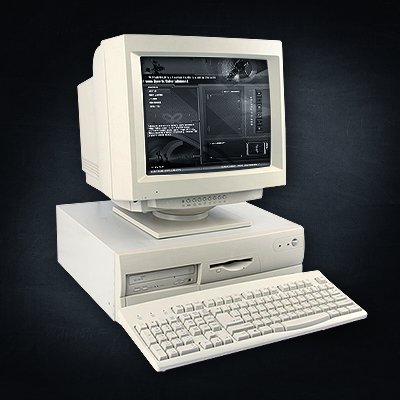
Right now I've got some goofy cheapo desk, and three monitors on it. However, I need to get a longer desk which supports more monitors, an additional computer for a storage server for my goop collection, and (ideally) another machine for a local malware analysis sandbox for emulation.
It is ridiculous bro, what am I even doing anymore with all this goop

nabdev.org retweeted

Or… what if we gave you $100 in Codex credits if you tell us what you love about GPT-5.6 Sol or why you switched?
Tweet it, claim your gift, enjoy more usage. First 10k get the free tokens!
switch-to-codex.openai.chatg…










nabdev.org retweeted
Don't talk to "normies" (as the kids call it these days) about cybersecurity. It is the worst decision you'll ever make.
nabdev.org retweeted

“Do I need to learn how to code?”
Look it’s not about the ability to code as an end result. It’s abt the overwhelming curiosity.
How could you look at a script and not have an unbearable urge to tinker with it, to swap out a string for another, to want to make your own version?
nabdev.org retweeted
One thing noobie scoobies don't seem to understand is that malware is literally just software. Understandably, that seems kind of obvious, it's in the name — 'malicious software'. But it seems less obvious to some that, in order to write malware, you apply the exact same principles, techniques, and structures that legitimate software uses.
Malware is regular ol' programming with some sprinkles of weird stuff. These weird things are documented and shared. Some try to find new weird things.
When people ask what language is best for malware... it's kind of like asking 'what's the best ice cream flavor?'. It's entirely subjective. Everyone will tell you something different. You'll notice a lot of people will prefer Chocolate or Vanilla, you may encounter some who like Raspberry Banana Sprinkle Jam-Blam Blast, or Minty Schminty SpongeBob Sticks Bombs, but at the end of the day it's all still ice cream.
In it's most simple form, all malware techniques are things legitimate software may do.
Ransomware?
- Step 1. Enumerate files in a directory
- Step 2. Lock and encrypt files
Information Stealers?
- Step 1. Enumerate files in a directory
- Step 2. Upload files somewhere
RATs?
- Step 1. Make program run at start
- Step 2. Execute commands (cmd, powershell, other programs)
- Step 3. Upload files somewhere
Loaders?
- Step 1. Download file from somewhere
- Step 2. Run file
Everything the malware does is just an expansion of what is explained above.
Want to find new malware techniques? Find new ways to execute a process, find new ways to enumerate files in a directory, file new ways to upload files somewhere, find new ways to download files from somewhere, find new ways to write to files or delete files, etc.
How do you do this? Read. Read everything. Blogs, Windows documentation, StackOverflow, Wikipedia, our website. Look at every DLL you find on your computer in Ida or Ghidra, just open stuff and look around. Look at other peoples work and see if you can expand on it and find something new.
tl;dr learn to code, then learn weird stuff