

Godfrey D. Stobbe Professor of Bioinformatics at U of Michigan. Trained as a theoretical physicist, now focusing on proteomics and proteogenomics.
Ann Arbor, MI
Joined January 2019
- Tweets1.6K
- Following289
- Followers5.1K
- Likes2K




Pinned Tweet
Friends, #FragPipe 22 has been released, and it's a big update! diaTracer enables spectrum-centric analysis of diaPASEF data. Skyline integration. Koina server for more deep-learning prediction options. DDA+ mode for ddaPASEF. DIA glycoproteomics and new chemoproteomics workflows

Alexey Nesvizhskii retweeted

1/ 🚨 New preprint!
We present ProteomeGenerator3 — an end-to-end proteogenomics framework combining long-read RNAseq + multi-dimensional proteomics to uncover hidden cancer proteoforms
👉biorxiv.org/content/10.1101/…

Alexey Nesvizhskii retweeted

It was a great pleasure to teach #FragPipe at the Biological Proteomics for Beginners workshop at #UCSD, sponsored by Thermo Fisher Scientific. We had a fantastic group of grad students, postdocs, and professors. Yes, I even got to teach UCSD professors how to do proteomics 😁


Alexey Nesvizhskii retweeted

If you work on SILAC proteomics and want to know the best data analysis parameters and pros & cons of different softwares, check out our recent publication!
mcponline.org/article/S1535-…

Alexey Nesvizhskii retweeted

I'm excited to share that our latest research, "Sensitive neoantigen discovery by real-time mutanome-guided immunopeptidomics," has just been published in Nature Communications! nature.com/articles/s41467-0…

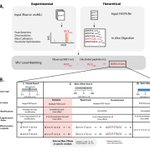
Conventional proteomics searches struggle with many modifications and open searches may be difficult to interpret. We introduce a "detailed" mass offset search in #MSFragger boosting interpretability and localization especially in complex cases like FPOP: biorxiv.org/content/10.1101/…

Alexey Nesvizhskii retweeted

Integrating Alternative Fragmentation Techniques into Standard LC-MS Workflows Using a Single Deep Learning Model Enhances Proteome ... biorxiv.org/content/10.1101/… #biorxiv_sysbio

Alexey Nesvizhskii retweeted
See Kasia Kulej #USHUPO2025 poster on Decoding tumor-specific proteomes with integrative proteogenomics using ProteomeGenerator3 (plus comparison of DIA-NN, Spectronaut and MSFragger)

DDA is still great for many applications, and #MSFragger-DDA+ improves peptide identification rates via full isolation window search. Huge boosts in IDs, including Astral DDA! Fully integrated in #FragPipe, simply annotate your DDA files as DDA+ and RUN. nature.com/articles/s41467-0…

Alexey Nesvizhskii retweeted

Tim Griffin, @nesvilab and Bing Zhang, will have a panel discussion on 'MS-Based #Immunopeptidomics: Challenges and Opportunities in Immuno-Oncology Research' at the #USHUPO2025 conference on 23rd Feb. ushupoconference.org/agenda#…
Our #diaTracer manuscript is out! 10 years ago we established the concept of library-free, direct DIA analysis with DIA-Umpire. DiaTracer now makes it possible to analyze any diaPASEF data, including PTM, semi-tryptic, nonspecific, and even open searches! nature.com/articles/s41467-0…
Alexey Nesvizhskii retweeted

.@KaiPeiLi @nesvilab @fcyucn present diaTracer, a spectrum-centric tool for diaPASEF data, enabling direct peptide identification and quantification without spectral libraries. #BiotechNatureComms
nature.com/articles/s41467-0…
Alexey Nesvizhskii retweeted

Big news in QUANTITATIVE proteomics! Researchers from @UMich & @MonashUni have launched FragPipe-Analyst: a user-friendly, web-based tool to complement the popular FragPipe platform. Upload files, analyze, & visualize data with ease. #Precisionmedicine
proteomics.cancer.gov/news_a…

Spent a great day in Barcelona at the EMBO Targeted Proteomics course hosted by @sabidolab, talking about our DIA tools and helping his team with a hands-on tutorial on FragPipe, FragPipe-Analyst, and Skyline integration, from installation and mzML files to pathway-level results.


Alexey Nesvizhskii retweeted

Great to see them apply the proteome-wide profiling method for electrophile reactivity and selectivity that we developed together with @nesvilab in Fragpipe in this exciting system. chemrxiv.org/engage/chemrxiv…
Ok, my friends led, I followed. A few clicks, and here we go. Loaded the first photo I found on the disk (note to myself to change it later, way too serious). But 0 followers!! Now I know the feel of social isolation! Help me out there. I will not be leaving X entirely, not yet.

Very nice paper in Science, showing that N-glycosylation can also function as a degradation signal, similar to Ubiq: science.org/doi/10.1126/scie…. Glad to see the authors used our #FragPipe/#MSFragger-Glyco “Glyco-N-LFQ” workflow for quantitative glycoproteomics data analysis.

Assessment of Data-Independent Acquisition Mass Spectrometry (DIA-MS) for the Identification of Single Amino Acid Variants mdpi.com/3029520. Glad to see #FragPipe/#MSFragger showing the most conservative and effective performance (lowest false discovery match ratio (FDMR))

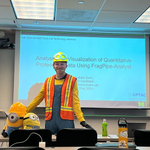
If your presentation falls on Halloween, do it in style! Here is Yi (Leo) Hsiao, Bioinformatics Ph.D. student in the lab, presenting his FragPipe-Analyst tool at today's "Tools and Technology" seminar series at the University of Michigan. #FragPipe medschool.umich.edu/events/t…

Another great collaboration with the Keri Backus' lab, where we implemented a two stage search in #FragPipe to identify gain-of-cys mutations and variants proximal to reference cysteines. Two-stage searches can be useful for many applications, and they ensure group-specific FDR.

Excited to share our chemoproteogenomics story now out in its final form in @NatureComms. Congrats to first author Heta Desai @heta_desai17! nature.com/articles/s41467-0…
