

AI UGC Creator | Tech • SaaS • Apps | Ads | Author
Joined December 2011
- Tweets1.6K
- Following330
- Followers165
- Likes726





Nigel Etisong retweeted
🎬 Before Choosing a YouTube Niche, Watch This!
3 channels and 1+ year taught me: Audience value matters more than views.
Discover 2027 monetization updates and my Explore → Test → Measure → Adapt strategy.
▶️ youtu.be/KBicUmgHYIE
Nigel Etisong retweeted

All Paid Courses (Free for First 4500 People)
𝗣𝗮𝗶𝗱 𝗖𝗼𝘂𝗿𝘀𝗲 𝗙𝗥𝗘𝗘 (PART - 1)
1. Artificial Intelligence
2. Machine Learning
3. Prompt Engineering
4. Claude,Chatgpt,Grok
5. Data Analytics
6. AWS Certified
7. Data Science
8. BIG DATA
9. Python
10. Ethical Hacking
(72 Hours only )
Like + RT + comment ' Drive '
Must Follow me so I can DM you.


Nigel Etisong retweeted

Trump said we're going to "run" Venezuela and "fix" their oil infrastructure.
Fix it for WHO? Exxon? Halliburton?
These corporate blood suckers never miss a war but never fight one either. I'll be DAMNED if we let this happen again... NOT ON MY WATCH.


Nigel Etisong retweeted

This is the best invention that saves people quickly in emergency situations.
Nigel Etisong retweeted

A swarm of vultures was dragging a starving lion cub through the dirt and then
Nigel Etisong retweeted

"I wanted God to know that even though I was going through the worst of times I still recognize him as being something greater than myself."
Nigel Etisong retweeted
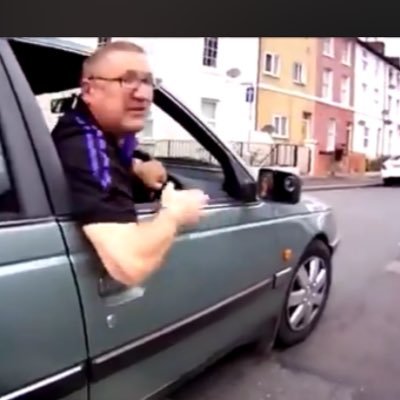
I love it when people wake up and remember that they have free will nitter.cf/HumansNoContext/status…
Nigel Etisong retweeted

#WATCH Jeffrey Sachs Blasts US Power Grab Over Venezuela, Maduro Capture at Historic UN Meeting
🇺🇸 US military interventions in foreign countries since WWII (incomplete list):
🇮🇷 Iran: 1946
🇨🇳 China: 1946 - 1949
🇬🇷 Greece: 1947 - 1949
🇮🇹 Italy: 1948
🇵🇭 Philippines: 1948 - 1954
🇰🇵 Korea: 1950 - 1953
🇮🇷 Iran: 1953
🇻🇳 Vietnam: 1954
🇬🇹 Guatemala: 1954
🇱🇧 Lebanon: 1958
🇵🇦 Panama: 1958
🇭🇹 Haiti: 1959
🇨🇩 Congo: 1960
🇻🇳 Vietnam: 1960 - 1964
🇨🇺 Cuba: 1961
🇨🇺 Cuba: 1962
🇱🇦 Laos: 1962
🇪🇨 Ecuador: 1963
🇵🇦 Panama: 1964
🇧🇷 Brazil: 1964
🇻🇳 Vietnam: 1965 - 1975
🇮🇩 Indonesia: 1965
🇨🇩 Congo: 1965
🇩🇴 Dominican Republic: 1965
🇱🇦 Laos: 1965 - 1973
🇬🇭 Ghana: 1966
🇬🇹 Guatemala: 1966 - 1967
🇰🇭 Cambodia: 1969 - 1975
🇴🇲 Oman: 1970
🇱🇦 Laos: 1971 - 1973
🇨🇱 Chile: 1973
🇰🇭 Cambodia: 1975
🇦🇴 Angola: 1976 - 1992
🇮🇷 Iran: 1980
🇱🇾 Libya: 1981
🇸🇻 El Salvador: 1981 - 1992
🇳🇮 Nicaragua: 1981 - 1990
🇱🇧 Lebanon: 1982 - 1984
🇬🇩 Grenada: 1983
🇭🇳 Honduras: 1983 - 1989
🇮🇷 Iran: 1984
🇱🇾 Libya: 1986
🇧🇴 Bolivia: 1986
🇮🇷 Iran: 1987 - 1988
🇱🇾 Libya: 1989
🇵🇭 Philippines: 1989
🇵🇦 Panama: 1989 - 1990
🇱🇷 Liberia: 1990
🇮🇶 Iraq: 1990 - 1991
🇮🇶 Iraq: 1991 - 2003
🇭🇹 Haiti: 1991
🇸🇴 Somalia: 1992 - 1994
Yugoslavia: 1992 - 1994
🇧🇦 Bosnia: 1993 - 1995
🇭🇹 Haiti: 1994 - 1996
🇭🇷 Croatia: 1995
🇨🇩 Zaire (Congo): 1996 - 1997
🇱🇷 Liberia: 1997
🇸🇩 Sudan: 1998
🇦🇫 Afghanistan: 1998
🇮🇶 Iraq: 1998
Yugoslavia: 1999
🇲🇰 Macedonia: 2001
🇦🇫 Afghanistan: 2001
🇮🇶 Iraq: 2003
🇮🇶 Iraq: 2003-present
🇭🇹 Haiti: 2004
🇸🇾 Syria: 2011-present
🇺🇦 Ukraine: 2014-present
🇻🇪 Venezuela: 2026
The UN Security Council witnessed a rare, explosive intervention as economist Jeffrey Sachs delivered a sweeping warning on Venezuela. Speaking during an emergency session, Sachs framed the crisis as a test of international law itself, not leadership politics. He traced decades of U.S. regime-change actions, questioned the legality of force and sanctions, and warned of catastrophic consequences if UN rules collapse in a nuclear age.
Since 1947, United States foreign policy has repeatedly employed force, covert action, and political manipulation to bring about regime change in other countries. This is a matter of carefully documented historical record. In her book Covert Regime Change (2018), political scientist Lindsey O’Rourke documents 70 attempted US regime-change operations between 1947 and 1989 alone.
These practices did not end with the Cold War. Since 1989, major United States regime-change operations undertaken without authorization by the Security Council have included, among the most consequential: Iraq (2003), Libya (2011), Syria (from 2011), Honduras (2009), Ukraine (2014), and Venezuela (from 2002 onward).
The methods employed are well established and well documented. They include open warfare; covert intelligence operations; instigation of unrest; support for armed groups; manipulation of mass and social media; bribery of military and civilian officials; targeted assassinations; false-flag operations; and economic warfare aimed at collapsing civilian life.
These measures are illegal under the UN Charter, and they typically result is ongoing violence, lethal conflict, political instability, and deep suffering of the civilian population.
The case of Venezuela
The recent United States record with respect to Venezuela is clear.
In April 2002, the United States knew of and approved an attempted coup against the Venezuelan government.
In the 2010s, the United States funded civil society groups actively engaged in anti-government protests, notably in 2014. When the government cracked down on the protests, the US followed with a series of sanctions. In 2015, President Barrack Obama declared Venezuela to be “an unusual and extraordinary threat to the national security and foreign policy of the United States.”
In 2017, at a dinner with Latin American leaders on the margins of the UN General Assembly, President Trump openly discussed the option of the US invading Venezuela to overthrow the government.
During 2017 to 2020, the US imposed sweeping sanctions on the state oil company. Oil production fell by 75 percent from 2016 to 2020, and real GDP per capita (PPP) declined by 62 percent.
The UN General Assembly has repeatedly voted overwhelmingly against such unilateral coercive measures. Under international law, only the Security Council has the authority to impose such sanctions.
On 23 January 2019, the United States unilaterally recognized Juan Guaidó as “interim president” of Venezuela and on 28 January 2019 froze approximately $7 billion of Venezuelan sovereign assets held abroad and gave Guaidó authority over certain assets.
These actions form part of a continuous United States regime-change effort spanning more than two decades.
Recent United States global escalation
In the past year, the United States has carried out bombing operations in seven countries, none of which were authorized by the Security Council and none of which were undertaken in lawful self-defense under the Charter. The targeted countries include Iran, Iraq, Nigeria, Somalia, Syria, Yemen, and now Venezuela.
In the past month, President Trump has issued direct threats against at least six UN member states, including Colombia, Denmark, Iran, Mexico, Nigeria and of course Venezuela. These threats are summarized in Annex I to this statement.
What is at stake today
Members of the Council are not called upon to judge Nicolás Maduro.
They are not called upon to assess whether the recent United States attack and ongoing naval quarantine of Venezuela result in freedom or in subjugation.
Members of the Council are called upon to defend international law, and specifically the United Nations Charter.
The realist school of international relations, articulated most brilliantly by John Mearsheimer, accurately describes the condition of international anarchy as “the tragedy of great power politics.” Realism is therefore a description of geopolitics, not a solution for peace. Its own conclusion is that international anarchy leads to tragedy.
In the aftermath of World War I, the League of Nations was created to end the tragedy through the application of international law. Yet the world’s leading nations failed to defend international law in the 1930s, leading to renewed global war.
The United Nations emerged from that catastrophe as humanity’s second great effort to place international law above anarchy. In the words of the Charter, the UN was created “to save succeeding generations from the scourge of war, which twice in our lifetime has brought untold sorrow to mankind.”
Given that we are in the nuclear age, failure cannot be repeated. Humanity would perish. There would be no third chance.
Measures required of the Security Council
To fulfill its responsibilities under the Charter, the Security Council should immediately affirm the following actions:
The United States shall immediately cease and desist from all explicit and implicit threats or use of force against Venezuela.
The United States shall terminate its naval quarantine and all related coercive military measures undertaken in the absence of authorization by the Security Council.
The United States shall immediately withdraw its military forces from within and along the perimeter of Venezuela, including intelligence, naval, air, and other forward-deployed assets positioned for coercive purposes.
Venezuela shall adhere to the UN Charter and to the human rights protected in the Universal Declaration of Human Rights.
The Secretary-General shall immediately appoint a Special Envoy, mandated to engage relevant Venezuelan and international stakeholders and to report back to the Security Council within fourteen days with recommendations consistent with the Charter of the United Nations, and the Security Council shall remain urgently seized of this matter.
All Member States shall refrain from unilateral threats, coercive measures, or armed actions undertaken outside the authority of the Security Council, in strict conformity with the Charter.
In Closing
Mr. President, Distinguished Members,
Peace and the survival of humanity depend on whether the United Nations Charter remains a living instrument of international law or is allowed to wither into irrelevance.
That is the choice before this Council today.
Thank you.

Nigel Etisong retweeted

When a 21st-floor apartment caught fire, neighbors didn’t freeze, they took action. They LIFTED a car blocking the fire truck so firefighters could get through. 👏
Humans can truly be beautiful ❤️
Nigel Etisong retweeted

I can’t watch this wonder kid alone. Give him 15 more years to become a global star.
Nigel Etisong retweeted

My question to Nigerian President Tinubu - how dare you take credit for return of the abductees? What rescue mission did you command without kidnappers apprehended or terrorists arrested? Were they asleep because you paid them off - you walking embodiment of a political corpse.
Nigel Etisong retweeted

Do you know? Over 14,000,000 $G1 tokens were distributed to our community in the Christmas Airdrop! 🎁
It was our way of saying thank you for your incredible support. We're proud to have you all here! 🙌
Keep Grinding — our TGE this January is set to be massive. Stay tuned! 🚀


Nigel Etisong retweeted
Welcome to the #YesUniverse! 🌌
YesCoin is proud to announce the initiation of our “ X Plan”, partnering with @ton_blockchain ecosystem projects.
Let's "Put Crypto In Every Pocket,Pave The Way For A Decentralized Future Together !"💎
#YesCoinXPlan #Yescoin #YesUniverse

