

Data Engineering leader @Netflix
Fremont, CA
Joined June 2009
- Tweets111
- Following1.3K
- Followers169
- Likes556
Nihit Kaul (He/Him) retweeted

Love her deep melodious voice. Such thoughtful lyrics.
A wonderful Song @dedicated to our Beloved PM.
Please share it widely. nitter.cf/TechSavvy_6/status/211…
Nihit Kaul (He/Him) retweeted

A lot of otherwise smart people on Twitter seem 100% convinced AI risks are all fake and stupid and part of some marketing ploy. What is surprising is that some of these people seemingly also believe that AI’s positive uses are on an incredible trajectory of increasing capability with no end in sight. VC Twitter is particularly infected by this pattern. It’s not really coherent.
Most positive use cases for AI have a corresponding “dark version”. If you are super human at coding, you are also super human at hacking. If you are superhuman at structural engineering you are likely superhuman at finding structural flaws to knock buildings down. If you are superhuman at designing drugs, you are superhuman at designing novel undetectable poisons. If you can cure viruses, you can create them. Some of these “dark versions” are not so bad, and some are actually pretty scary. Either way these are real societal and technical problems that need to be solved to get the good stuff and avoid the bad stuff. We’re experiencing the first of these with coding and computer security which is the most advanced, but that won’t be the last. I think we’ll be able to solve these problems, but they aren’t solved yet and if you believe in continued AI progress they are surely coming.
But “bad people using AI” is not the only problem. Uncontrolled AI autonomously doing bad things, despite sounding kind of nutty, is also something we should be concerned about. AI “killing us all” is not the most likely outcome, but the chance of a major civilization-wide catastrophe doesn’t have to be very high for it to be a concern. Again, this is only a problem if capabilities advance to a point that AI can do really crazy things on their own, which hasn’t happened yet, but I think the Hugging Face incident is a good example of the outline of how things can go wrong when capabilities outpace alignment. We should be glad that the only available bad thing right now is hacking, which isn’t all that bad. It’s clear that as you get to superhuman capabilities you need a level of alignment and control that is correspondingly superhuman. Humans have plenty of misalignment problems themselves (serial killers, mass shooters, tyrants, etc), but it’s a manageable problem because most humans can’t do that much damage and we’ve developed systems to prevent dangerous humans from getting too much power.
Talking about these issues is just common sense. It’s not a sign of some kind of neuroticism or pessimism. These are just hard problems that it’s very important to solve for AI to have a positive impact. I’m pretty confident we will solve them. But we haven’t solved them yet, and to my mind we are clearly on a trajectory of rapidly increasing capabilities which means this is important. Mocking people who are worried about this or talking about it, without anything substantive to say about how we can be sure these problems won’t arise, is not really a very helpful contribution.
Nihit Kaul (He/Him) retweeted

We're publishing our most detailed threat intelligence report to date.
It covers how people tried to misuse Claude—for cyberattacks, influence operations, surveillance, biology, and building weapons—and how we found and stopped them.
We disrupted every operation in the report, and used the lessons from them to strengthen our safeguards. Where appropriate, we also shared what we found with authorities and other AI companies.
These cases are not typical: we’re highlighting some of the most sophisticated misuse we’ve seen. But they’re especially important to discuss, because they show us where AI misuse is headed, where our safeguards work, and where they need to improve.
We’re publishing this report so others can spot the same activity on their own platforms, and so we can give the public a clearer view of how emerging threats develop.
Read the report: anthropic.com/threat-intelli…

Nihit Kaul (He/Him) retweeted

We’re sharing a solution to the Navier-Stokes Millennium Prize Problem, one of the deepest problems at the frontier of mathematics.
The proof was produced by a group of agents, using an OpenAI next-generation model significantly more capable than GPT-6 Astra.
The problem concerns whether the description of smooth three-dimensional fluid motion modeled by the Navier-Stokes equations can break down. It has remained unresolved for roughly 90 years.

Nihit Kaul (He/Him) retweeted
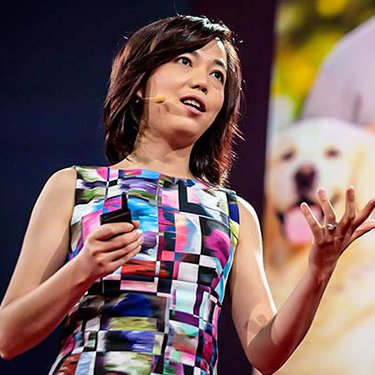
I'm so excited that our @theworldlabs team has achieved a major milestone today! Introducing Atlas - a first of its kind multimodal world model trained from scratch! 🚀
Atlas is capable of generating frames with pixel-perfect camera control, reconstructing large scenes from as few as one single input image, simulating space-time by reframing videos, natively outputting 3D spaces from one or more input images, composing multiple posed images into a consistent 3d world, and more! This is the best camera conditioned world model ever, opening doors to many possible use cases from VFX to robotics. I'm so so so proud of our team!♥️

Nihit Kaul (He/Him) retweeted

If you use GitHub (especially if you pay for it!!) consider doing this *immediately*
Settings -> Privacy -> Disallow GitHub to train their models on your code.
GitHub opted *everyone* into training. No matter if you pay for the service (like I do). WTH
github.com/settings/copilot/…






Nihit Kaul (He/Him) retweeted
Within software architecture, few people shaped the industry as much as @Grady_Booch. Safe to say he's a true legend.
In today's The Pragmatic Engineer Podcast episode, he shares fascinating stories, insights, observations.
Listen or watch the full episode:
- YouTube: youtu.be/u7WaC429YcU
- Spotify, Apple, or web: newsletter.pragmaticengineer…
Thank you to our wonderful sponsors:
🌟 WorkOS — The modern identity platform for B2B SaaS. Learn more at workos.com/
🌟Sevalla — Deploy anything from preview environments to Docker images. Check it out at sevalla.com/?utm_source=prag…
🌟Chronosphere — The observability platform built for control. Get details at chronosphere.io/pragmatic
---
3 of my takeaways from this fascinating conversation:
1. Surprising: The US Department of Defense and the military built some of the most complicated software systems in the 70s and 80s.
In the 70s, these organizations probably had the most code to deal with - globally! - and things like distributed computing were pioneered thanks to these use cases.
2. The three axes of software architecture
Grady argues that when talking about software architecture, we should look at these three dimensions: ceremony, risk and complexity.
3. The economics of software and software architecture are always connected
Machine time was very expensive in the 1960s and 1970s, and software had to be written from scratch. Good architecture meant writing highly performant code to utilize these rather limited machines.
However, these days, machine time has gotten very cheap, and there are also plenty of “building blocks” at our disposal: from frameworks to cloud services. Software architecture is frequently still connected with cost: to decide on what services and technologies to use, taking the cost aspect into account!
I hope you enjoy this conversation - together with a history overview of the last 50 years in software - as much as I did! Thanks a lot @Grady_Booch

Nihit Kaul (He/Him) retweeted

Netflix will be hosting the Data Engineering Open Forum on April 18th: a full-day in-person conference at our Los Gatos office!
If you are interested in speaking at the conference, please fill out the CFP form:
bit.ly/netflix-deopenforum-2…
#data #Forum
Nihit Kaul (He/Him) retweeted

FUNGUS IN SPACE!!! 🍄🚀
Equal parts cosmic horror and nature being metal, let's talk about the lichen that grew on the OUTSIDE of the International Space Station!
Get your tea and curl up, because I PROMISE you wanna hear about these fungal cosmonauts 🧑🚀
🧵

ALT Image of Xanthoria elegans, also known as Rusavskia elegans, commonly known as Sunburst Lichen, growing on a rock. It's bright orange!

ALT Image from the ISS: Looking out of the 'Cupola,' an observation window of the ISS built by the European Space Agency. The dome weighs over 1800kg and is equipped with shutters in case of contact with micrometeorites and debris. PHOTOGRAPH BY PAOLO NESPOLI AND ROLAND MILLER
Nihit Kaul (He/Him) retweeted
Discover Netflix's Incremental Processing Solution (IPS) using Netflix Maestro & Apache Iceberg. IPS results in cost-effective data processing, data accuracy, data Freshness & handled backfills, key to addressing our core business needs. #dataengineering
netflixtechblog.com/incremen…

Nihit Kaul (He/Him) retweeted
Dive into the intelligence of Psyberg’s two operational modes, powering Netflix’s data pipelines. Whether Stateful or Stateless, learn how we ensure accuracy and timeliness in our data processing. #DataEngineering
netflixtechblog.com/2-diving…

Nihit Kaul (He/Him) retweeted
Discover how Netflix's Membership and Finance Data Engineering team tackles the challenges of incremental data processing with late-arriving data using Psyberg, an innovative incremental processing framework developed in-house! #TechBlog #Netflix #Data
netflixtechblog.com/1-stream…

Nihit Kaul (He/Him) retweeted

The school system failed us.
Here are 7 subjects every kid should learn that they didn’t teach us in school:
1) Meditation

Nihit Kaul (He/Him) retweeted

Like seemingly everyone on this app I have plenty of opinions about Twitter > X and figure now is a good time to open up a bit about my experience at the company.
I tweeted for years into the void for the love of it like many of you, but after selling my startup to Twitter in 2020 I finally got to see it from the inside. Up close it was both amazing and terrible, like so many other companies and things in life.
As someone with a maniacal sense of urgency built into me, Twitter often felt siloed and bureaucratic. Dumb power plays, reorgs and team name changes for the sake of someone’s ego were distractions that occurred too regularly.
You couldn’t just be a builder — you also needed to be a politician.
I was shocked by how old and bespoke the infrastructure was, but there was little will to think beyond quarterly earnings calls because we were all beholden to the masters of mDAU and revenue growth as a public company. It often felt like things were held together with duct tape and glue, and that many people had just accepted that a small product change could take months or quarters to build.
Management had become bloated to accommodate career growth and the company culture felt too soft and entitled for my own taste. Healthy debate and criticism was replaced by a default refrain of “no, that can’t be done” or “another team owns that so don’t touch it”.
Teams could spend months building a feature and then some last-minute kerfuffle meant it’d get killed for being too risky.
Just talking directly to customers could turn into a turf war and create deadlocks between functions.
I recall one such episode where a teammate spent a month trying to get clearance to reach out to some creators. He went through 3 layers of management and 6 different functional teams. In the end 4 executives were involved in the approval. It was insanity, and unfortunately I saw several top performers get burnt out and demoralized after exhausting experiences like that.
Most people were good at their jobs but it was nearly impossible to fire poor performers — instead they got shuffled around to other teams because few managers had the will or resources to figure out how to get them out.
A high performance culture pulls everyone up, but the opposite weighs everyone down. Twitter often felt like a place that kept squandering its own potential, which was sad and frustrating to see. The person who was best at cutting through the BS and inspiring a vision during my tenure was Kayvon Beykpour, but he wasn’t fully empowered to run the company since he wasn’t the CEO.
Despite those real issues, I was lucky enough to work with some of the most talented people in the business at Twitter in product, design, engineering, research, legal, BD, trust & safety, marketing, PR and more. Often it was a small cross-functional team of intrinsically motivated people who made the biggest impact by challenging some core assumption. Those teams were very fun to be on but they felt like the exception rather than the rule.
The months of waiting for the deal to close in 2022 were particularly slow and painful; it felt like leadership hid behind lawyers and legal language as all answers about the company’s future notoriously included the phrase “fiduciary duty”. Colleagues openly talked about how Twitter was being sold because leadership didn’t have conviction in their own plan or ability to fix longstanding problems.
Although I didn’t know much about Elon I was cautiously optimistic – I saw him as the guy who built incredible and enduring companies like Tesla and SpaceX, so perhaps his private ownership could shake things up and breathe new life into the company.
My take on what’s happened since then is full of lived nuance.
When people ask why I stayed it’s easy to answer: optimism, curiosity, personal growth and money.
From the beginning I saw that some changes Elon was going to make were smart and others were stupid, but when I’m on a team I uphold the philosophy of “praise in public and criticize in private”. I was far from a silent wallflower. I shared my opinions openly and pushed back often, both before and after the acquisition.
I made peace with the fact that I didn’t have psychological safety at Twitter 2.0 and that meant I could be fired at any moment, and for no reason at all. I watched it happen repeatedly and saw how negatively it impacted team morale. Although I couldn’t change the situation I did my best to shine a light on folks who were doing important work while being an emotionally supportive leader for those who were struggling to adapt to the more brutalist and hardcore culture.
In person Elon is oddly charming and he’s genuinely funny. He also has personality quirks like telling the same stories and jokes over and over. The challenge is his personality and demeanor can turn on a dime going from excited to angry. Since it was hard to read what mood he might be in and what his reaction would be to any given thing, people quickly became afraid of being called into meetings or having to share negative news with him.
At times it felt like the inner circle was too zealous and fanatical in their unwavering support of everything he said. When individuals encouraged me to be careful about what I said I politely thanked them and said I would not be taking their advice. I had no interest in adding to a culture of fear or walking on eggshells around Elon. Either he would respect me for being real or he could fire me. Either outcome was okay.
I quickly learned that product and business decisions were nearly always the result of him following his gut instinct, and he didn’t seem compelled to seek out or rely on a lot of data or expertise to inform it. That was particularly frustrating for me since I believed I had useful institutional knowledge that could help him make better decisions. Instead he'd poll Twitter, ask a friend, or even ask his biographer for product advice. At times it seemed he trusted random feedback more than the people in the room who spent their lives dedicated to tackling the problem at hand. I never figured out why and remain puzzled by it.
I don’t think things had to be as difficult or dramatic as they turned out to be but I can’t say I’d bet against Elon or count him out. He’s smart and has enough money to make a lot of mistakes and then course correct when things go awry. As the largest shareholder he can tank the value in the short-term, but eventually he’ll need things to turn around.
His focus on speed is incredible and he’s obviously not afraid of blowing things up, but now the real measure will be how it get reconstructed and if enough people want the new everything app he is building.
I learned a ton from watching Elon up close – the good, the bad and the ugly. His boldness, passion and storytelling is inspiring, but his lack of process and empathy is painful.
Elon has an exceptional talent for tackling hard physics-based problems but products that facilitate human connection and communication require a different type of social-emotional intelligence.
Social networks are hard to kill but they’re not immune from death spirals. Only time will tell what the outcome will be but I hope X finds its footing because competition is good for consumers.
In the meantime, I have a lot of empathy for the employees who are working tirelessly behind the scenes, the advertisers who want a stable platform to sell their stuff on, and the customers who are experiencing chaotic updates. It’s been a madhouse.
Twitter moved at the speed of molasses and suffered from bureaucracy but now X is run by a mercurial leader whose instinct is driven by the unique and undoubtedly weird experience of being the biggest voice on the platform.
Many of you know me from the sleeping bag incident where I slept on a conference room floor, so I figure, let’s talk about that too.
Going viral was an odd and interesting experience. I was attacked by people on the left and called a billionaire bootlicker, while simultaneously being attacked by people on the right for being a working mom who was demonized as an example of a woman choosing her career over her family.
Thankfully I can laugh at myself and I don’t take armchair keyboard ideologues too seriously. Being the main character on the timeline, even for a few minutes, requires a thick skin and a strong sense of self.
The real story is pretty simple. I was given a nearly impossible deadline for his first project and as the product lead I would never ask anyone to do anything I wasn’t willing to do myself. So I worked round the clock alongside an amazing team spanning many timezones, and we delivered it on schedule – truly against the odds. It was intense but also fun.
Those first few months were wildly crazy but I wanted to be there and I have no regrets.
Showing up and giving it your all should, in most cases, be celebrated. Obviously you can’t work at that pace forever but there are moments where bursts are mission critical. I’ve pulled many all-nighters in my career and also when I was a student for something that mattered to me. I don’t regret putting in long hours or being ambitious, and feel proud of how far I’ve come from where I started thanks in part to that type of work ethic.
I think of life as a game, and being at Twitter after the acquisition was like playing life at Level 10 on Hard Mode. Since I like taking on difficult challenges I found it interesting and rewarding because I was growing and learning so rapidly.
I realize our society today trends toward polarization but when it comes to this app, its owner, and its future, I am neither a fangirl nor a hater — I’m an optimistic pragmatist.
This may really irritate the internet but you cannot pigeonhole me into some radical position of either loving or hating every change that’s occurred. I escaped my fundamentalist upbringing and am a free thinker these days. Everyone can be seen as both a hero or a villain, depending on who is telling what angle of the story. Elon doesn’t deserve to be venerated or vilified. He’s a complicated person with an unfathomable amount of financial and geopolitical power which is why humanity needs him to err on the side of goodness, rather than political divisiveness and pettiness.
I disagree with many of his decisions and am surprised by his willingness to burn so much down, but with enough money and time, something new & innovative may emerge.
I hope it does.
Sometimes I get asked about how I felt when I got laid off, and the truth is it was the best gift I’ve ever received. Sure the headlines and punchlines wrote themselves but I was battle hardened by then. I knew that I’d worked in a way where I could walk out with my head held high. I have no bitterness about the Product Management team being dismantled, and it made sense for me to exit as nearly all of the remaining PMs were let go.
Going on a sabbatical afterward has been exactly what I needed to decompress and I’m finally feeling rested and relaxed. I’m a creative and a builder, so sooner than later I’ll jump back into a high intensity company but I’m grateful for this season of thinking, reading, traveling and being with people I love.
After having time to reflect I believe more than ever that the very best outcomes flow from great leadership that combines the head and the heart.
I’d be remiss if I didn’t note that in all of this there is also a cautionary tale for anyone who succeeds at something — which is that the higher you climb, the smaller your world becomes. It’s a strange paradox but the richest and most powerful people are also some of the most isolated.
I found myself frequently looking at Elon and seeing a person who seemed quite alone because his time and energy was so purely devoted to work, which is not the model of a life I want to live.
Money and fame can create psychological prisons which may worsen mental health conditions. We’ve all seen high profile cases of celebrities who end up with some combination of depression, paranoia, delusions of grandeur, mania and/or erratic behavior.
Living in an echo chamber is dangerous and being at the top makes a person even more susceptible to being surrounded by yes people when nearly everyone around you is on the payroll and somehow stands to benefit from being in your orbit. Figuring out how to keep “better angels” around in the form of family, friends, and teammates is critical to staying on the rails and enduring intense ups and downs. Everyone needs to hear hard truths sometimes and if you fire all the people who speak up then the reality distortion field may just turn into a vortex.
I was drawn to Twitter because I’m obsessed with the problem of loneliness and connection between people. I find it fascinating & troubling that humans are getting lonelier as we simultaneously create a world that’s both safer and wealthier. I don’t believe that trade-off has to exist, which is why I keep returning to that theme in my personal and professional life.
I realize this is too long of a tweet but Twitter was a weird and special place on the internet, and I’m grateful to have played a teeny tiny role in its story and evolution.
I’m here for whatever comes next — on this app and in new places. Consumer social is very much alive and at a fascinating juncture, so I’ll be watching and participating and sharing hot takes because I don’t want to, and probably can’t, turn that part of me off.
Perhaps X becomes a resounding success. Or it fails epically.
Either way, I expect it will continue to be a very entertaining ride.
🫡
Nihit Kaul (He/Him) retweeted

US one of 17 countries practicing ‘modern slavery’ with forced labor: report msn.com/en-us/news/politics/…
Nihit Kaul (He/Him) retweeted

When an incarcerated person is injured or needs medical care, Alabama prisons withhold info from their families, sometimes for weeks. This could be easily fixed, argues the writer of this VOICE FROM THE INSIDE column from Donaldson Prison.
bethshelburne.substack.com/p…