𐌌𐌀𐌂𐋅𐌉𐌍𐌄 𐌌𐌀𐌍
Berlin, Germany
Joined March 2015
- Tweets3.4K
- Following1.6K
- Followers861
- Likes823



Emmanuel Nosa Evbuomwan retweeted

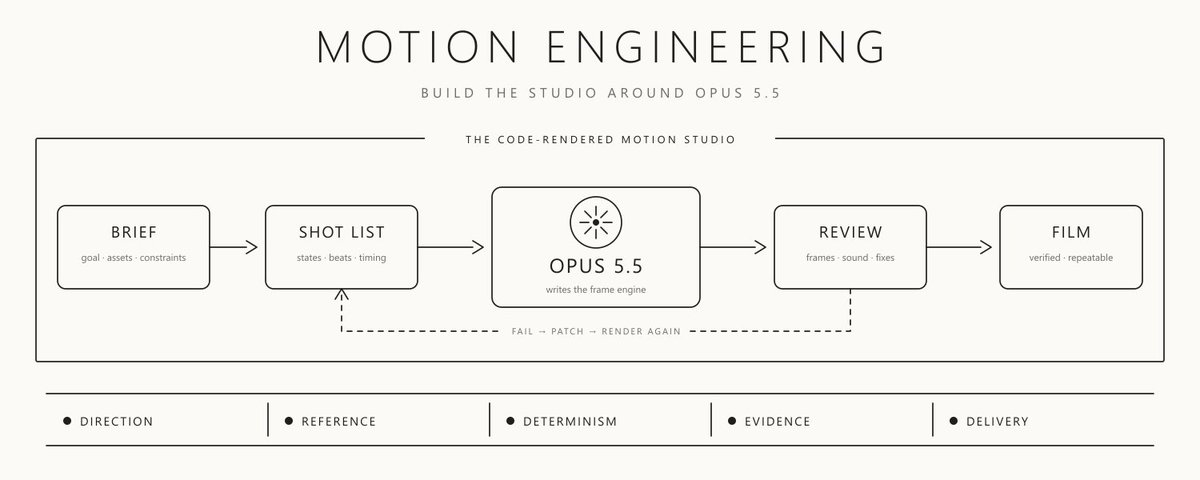
Holy sh*t, Opus 5.5 replaced Logic Pro and FL Studio
It's f*cking insane…
Drop the PDF below into Opus 5.5 and see what it makes
Then read the full guide on motion design in the article below ↓

Emmanuel Nosa Evbuomwan retweeted

Anthropic is furious: this secret tool can replicate any existing app x10 faster for free
there's an open-source tool with 352k stars on GitHub that lets an AI agent take apart any app you have on your machine and explain exactly how a feature works. no source code needed.
it's called REA. Reverse Engineer Anything.
one line:
npx rea-agents setup
then you just ask Claude Code:
"Understand how search works in the Notes app, show me the evidence, and build a similar feature for my project."
and it does it.
-> native binaries, through Ghidra, Hopper or IDA
-> JavaScript and Electron apps
-> .NET apps
-> websites
it runs locally. it shows its evidence. then it writes the code.
that feature your team spent 8 months on? someone's agent can read how it works over lunch.
so let's be honest about what this means:
your moat was never the code. it was that copying you took effort.
that effort just went to zero.
the only things left that can't be cloned: your users, your speed, and your taste.
and if your product dies because someone could see how it works, it was already dead.
the repo is below. founders, you're going to hate this one
github.com/morluto/rea
save, share, and try later


Emmanuel Nosa Evbuomwan retweeted

i built an entire AI trading terminal with Grok Bot. then i let it run
$19.63 → $1,257.22
and i recorded the whole thing live
let me show you what happens when you stop asking AI to talk about trading and actually put it to work
the entire terminal was built with Grok Bot. not just the trading logic, but the agents, the interface, the dashboard, the visual design, the whole system
i described what i wanted to build, and Grok Bot helped turn that idea into a working trading terminal
6 AI agents operating inside one environment:
NOVA
ORION
VELA
KADE
NYX
ZARA
each with its own identity, all running inside the same terminal
here's what happens when the system goes live
a dashboard tracking balance, profit and performance in real time
an equity curve showing how the account evolves
an activity feed displaying trading decisions and execution logs as they happen
multiple agents operating within one unified environment
no static mockup. no fake dashboard screenshots
this is the terminal running on screen, with the balance and activity feed updating live
and here's the part that matters
the account started with just $19.63
by the end of the recording, it had reached $1,257.22
that's an increase of $1,237.59 during the session
i recorded the process so you can see the system running instead of just taking my word for it
the equity curve moved. the activity feed updated. the agents kept working
and the entire terminal, from the agent system to the dashboard and interface, was built with Grok Bot
that's what makes this interesting to me
we're moving beyond AI that simply tells you what it would do
we're building systems that can operate inside real environments, make decisions and execute a defined strategy
AI agents are becoming tools you can actually build, deploy and watch in action
i'm documenting the process as i build and experiment
want to build a bot like this yourself?
bookmark this post and follow me for more


Emmanuel Nosa Evbuomwan retweeted

you can call me crazy but.. it's now obvious:
grok bot + jev is going to create more millionaires in 2026 than crypto ever did.
idea → grokbot → jev decisions → grokbot execution → $$$$$
don’t scroll past this if it hits your timeline.
just send this article to grok bot.
connect it to jev.
thank me later.


Emmanuel Nosa Evbuomwan retweeted
Anthropic engineers showed how to build agents that run for days with graph engineering
"More than 30% of our code is already written by agentic graphs. That's why we ship so fast"
In this 40-minute workshop, they break down the full stack:
Agents → Graphs → Harness → Memory → Sub-agents
This is worth more than most $1000 vibecoding courses
Bookmark and watch the workshop today
Then read the full article below


Emmanuel Nosa Evbuomwan retweeted

Google Brain founder, Andrew Ng:
"Prompting will be dead in 6 months. Loops and graphs are replacing it."
in 100 minutes at Stanford he shows how to build agents that finish the work and sharpen themselves
LLMs → Agents → Loops → Graphs
the first 15 minutes go past where most $500 AI courses stop
most people are still learning prompts while the leverage moved two layers up
same model, same tokens, and the only thing that changes is the shape you run it in
watch the lecture today, then save the full graph engineering guide below

Emmanuel Nosa Evbuomwan retweeted

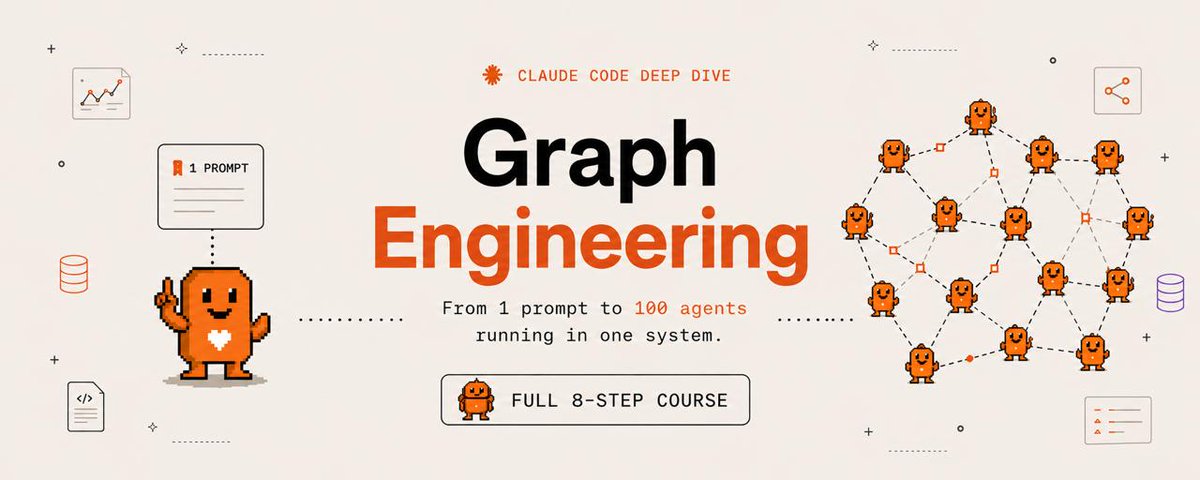
Two Anthropic seniors just made Karpathy's loop 1000x better with "Graph Engineering" - dropped 11-page PDF
the shift: the agentic systems got 1000x better the moment you wired agents into a graph
here's the playbook in 6 steps:
step 1 → build one loop: generate, critique, revise - one self-review cycle beats a smarter model with none
step 2 → add tools: search, code execution, database - thinking without tools is hallucinating
step 3 → go parallel: spin up agents in separate worktrees - same repo, different branches, no conflicts
step 4 → add a graph: agents write findings as typed nodes and edges - not transcripts - every claim keeps its source
step 5 → ground your evaluator: it checks claims against graph edges, not vibes - "Triple not found" beats "seems off"
step 6 → the graph survives every session - your agents stop rebuilding context from scratch
the result: Karpathy ran 1 agent in 1 direction - this system runs 1,000 with shared memory - same model, it's the architecture
read this 11-page PDF and paste it into your Claude - you won't regret it
bookmark - then read the article on building graphs from scratch ↓


Emmanuel Nosa Evbuomwan retweeted

A senior Anthropic engineer just dropped 11-page PDF on "Loop Engineering" for agentic systems.
The shift: you stop prompting the agent. You build the system that prompts it instead.
Schedule → Discover → Build → Verify → Repeat
Every loop runs one turn, five moves:
• Discovery: it finds its own work - failing CI, open issues, recent commits - instead of being handed a list.
• Handoff: each task gets an isolated git worktree so parallel agents don't collide.
• Verification: a second agent, told to assume the code is broken, reviews the first. The "thing that can say no."
• Persistence: results get written to disk, never left in a context window that gets flushed.
• Scheduling: an automation wakes it on a timer. That's what makes it a loop.
The key insight: an agent grading its own work always praises it.
This 11-page PDF changed how I'm building agentic systems today.
Read it now, then explore the article below.


Emmanuel Nosa Evbuomwan retweeted

the magic number is 82ms.
that's how fast Sonic 3.5 starts speaking. ElevenLabs Turbo takes 250ms+. roughly 3x slower.
your brain can detect milliseconds of silence. that awkward "bot pause" is how you know you're talking to AI.
watch this. there is no pause.
Emmanuel Nosa Evbuomwan retweeted
Anthropic CEO:
"We use Claude Code across all stages of product development cycle. That's how we ship so fast."
In a 1-hour interview, Dario Amodei reveals how the fastest-growing AI company runs on its own model.
"Claude + loops + routines + dynamic workflows" - that's the secret.
Watch this interview or read the article on the same setup below.
Emmanuel Nosa Evbuomwan retweeted

A single 𝗖𝗟𝗔𝗨𝗗𝗘.𝗺𝗱 file just hit 15K GitHub stars.
(derived from Karpathy's coding rules)
Andrej Karpathy observed that LLMs make the same predictable mistakes when writing code: over-engineering, ignoring existing patterns, and adding dependencies you never asked for.
If you've used AI coding assistants, you've hit all of these.
But here's the thing:
If the mistakes are predictable, you can prevent them with the right instructions.
That's exactly what this 𝗖𝗟𝗔𝗨𝗗𝗘.𝗺𝗱 does. You drop one markdown file into your repo, and it gives Claude Code a structured set of behavioral guidelines for your entire project.
This is a big deal.
- Built entirely around prompt engineering for AI coding assistants
- No framework, no complex tooling, just one .md file that shapes behavior
Developers are moving past "use AI to write code" and into "engineer the AI's behavior so the code is actually good."
The Claude Code ecosystem is growing fast, and the best tools in it aren't always software. Sometimes they're just well-crafted instructions.
100% open-source.
I've shared a link to the GitHub repo in the next tweet!

Emmanuel Nosa Evbuomwan retweeted

4. A young boy that had just stolen his father’s car and crashed it, takes one last puff on his cigarette before facing the consequences, 1974.



Emmanuel Nosa Evbuomwan retweeted
Watch Starship's eighth flight test nitter.cf/i/broadcasts/1lPKqMQbA…

Emmanuel Nosa Evbuomwan retweeted

Blue Ghost was the first private lunar lander to not crash or fall over.
sciencenews.org/article/moon…