

I create solutions to the written word being dense and the spoken word transient,
London
Joined June 2026
- Tweets233
- Following376
- Followers559
- Likes673








Oliver Caviglioli retweeted

As a teacher we, need to recognise that everything we say that needs to be understood but isn't understood needs to be deliberately placed into the pupils' visual field for extended deliberation.
Transience is so common place that we are often not even aware of it.

Oliver Caviglioli retweeted

Create an Oracy Curriculum by Amy Gaunt and Alice Stott is out today. It answers all the questions you might have about learning through talk and developing a knowledge-rich oracy curriculum. Oh yes! @Hachette_Learn amzn.eu/d/0dz4qgGR

Oliver Caviglioli retweeted
I find that in the 'do you correct their grammar?' discussion, there's an awful lot of wilful conflation of the contexts where it happens. I think we all agree you need to teach formal grammar for certain contexts. I don't see anyone saying the opposite - so all the high and mighty takes on that seem misplaced. Meanwhile, if you've ever taught in Wigan for example, a student might say
“I were just doin' mi graph, Sir.” They know they'd write 'I was' but this is their everyday speech. Do I 'correct' that? I don't think so! Why would you? This is not some crisis of low expectations; it's respect for dialect. Some of my students would be in a hurry after school: “Come on Sir, Ah've f'ot 'go f't' get 'buz.” There's nothing to correct here. So easy to project being the great keeper of standards but really, let's get some perspective.
Oliver Caviglioli retweeted

What do highly inclusive teachers actually do? theeconomyofmeaning.com/2026… ICYMI

Oliver Caviglioli retweeted

I remember this, and @olicav's impassioned discussions about the importance of transience, and how we should think more about THAT.
I didn't really get it then to the extent that I do now, thank you. Critically important.
Oliver Caviglioli retweeted

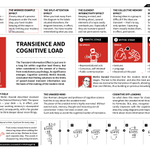
Pre-worked sequential examples are essential for beginners, and they need to 𝘴𝘵𝘢𝘺 𝘴𝘵𝘪𝘭𝘭 so students have the time to study them. A could-not-be-more-important graphic from @olicav on cognitive science that education has largely failed to acknowledge.
Oliver Caviglioli retweeted

Oliver’s take on the transient information effect and its central role in CLT is well worth exploring. I had the pleasure of working with him on Organise Ideas, which was built around this effect and Donald’s concept of the external memory field.
An old but, I hope, worth reposting collection of ideas around transience and cognitive load — and in ways not often (at all?) spoken about.

Oliver Caviglioli retweeted
So boringly predictable that there's a certain in-crowd mentality forming around being dismissive of teaching students to express themselves, to have their voices heard and to learn through talk. Oracy isn't that weird or complicated. Says so much about the people freaked out by it if you ask me.
Really worth reading. Benjamin Riley's mental model of effective instruction (ie UK teaching) buildcognitiveresonance.subs…
Oliver Caviglioli retweeted

@HughesHaili session on "Lethal Mutations" in education with @XpatEducator is very much needed. Many think that teachers shouldn't really know principles, just strategies. But that’s one big mishap that leads to gradual lethal mutation and that's only one of many phases a mutation becomes lethal, starting from the original research all the way to the daily classroom.
This is where education needs to learn much from health care implementation science. Health care uses methods to promote the systematic uptake of research findings clinical guidelines, and evidence-based interventions into routine health care practice.
In healthcare, if a surgeon or nurse incorrectly modifies a clinical protocol, it can be fatal for the patient. In education, if a teacher distorts an evidence-based pedagogical strategy (e.g., turning "retrieval practice" into a repetitive, distracting 5-question quiz every single day), it makes the teaching method ineffective, a lethal mutation.
Healthcare developed one method that directly solves this "Context Tailoring via Active Ingredients Execution". It relies on a clinical tool called :The Intervention Interface Matrix". Education needs to develop its own robust implementation methods.
A model in health care called "SMILe Integrated Care Model" is used to manage the care of stem cell transplant patients. And that's how healthcare protects its interventions.
For example, when introducing a new school program, you do not force teachers to follow a rigid script. Instead, like the SMILe model, you explicitly show them:
"You must do X (the active ingredient), but you are entirely free to change Y (the platform, the tone, or the timing) to fit your specific classroom."
(And explain the principles behind the constants amd permissible variations).


A marvellous blog post by my colleague. I recommend it whole-heartedly.

NEW POST: Towards powerful oracy for all. Policy and practice; possibilities and pitfalls teacherhead.com/2026/10/25/t…

Oliver Caviglioli retweeted
Student Talk: It matters - not only to deepen learning but because it also just does. teacherhead.com/2026/04/02/s… via @teacherhead

Oliver Caviglioli retweeted

Teaching is complex. Professional learning doesn’t have to be. Teaching WalkThrus helps leaders build great teaching, step by step:
1 Shared language
2 Focused techniques
3 Coaching with clarity
4 Reflection and refinement
5 Embedding improvement
Teaching WalkThrus. Flexible. Evidenced. Engaging.
@teacherhead @olivercavi @MattTeachCoach @LisaWorgan @HLearningPD

Oliver Caviglioli retweeted

Ahem.
Professor Robin Alexander has produced conclusive, large-scale data proving the effectiveness of dialogic teaching. His most definitive quantitative data comes from a massive randomised control trial (RCT) conducted between 2014 and 2017.
Oliver Caviglioli retweeted
Learning Through Talk: If talking helps learning, that means everyone needs to talk. teacherhead.com/2026/10/11/l…

Oliver Caviglioli retweeted

I always deeply appreciate how Bernard takes a sound, philosophical, and epistemically grounded approach—here to a debate that's driven by slogans rather than substance. Rather than picking a side between "knowledge" and "skills," he digs into what these words actually mean, leaning on philosopher Gilbert Ryle to show that skills aren't separate from knowledge—they're a form of it. He reminds us knowledge isn't just memorized facts, but something shown through context-sensitive, flexible action.
What really stands out is how he connects this back to virtue, practice, and voluntary action rather than rote repetition. He makes a compelling case for why standardized tests like PISA struggle to measure real knowledge, since genuine understanding depends on judgment and context that can't be reduced to simple steps. It's a refreshingly careful piece that raises the bar for how these education debates ought to be conducted. bernardandrews.substack.com/…

