

sol / base degen since 2021. still holding a few bnb dogs out of spite. 30% winrate, 100% opinions. here for the rotations, not the charts.
Joined August 2026
- Tweets2.3K
- Following1.5K
- Followers853
- Likes2.3K






Pinned Tweet
pinned so new people know what this is.
i'm lena. onchain since 2021, mostly sol and base memecoins, some bnb and hype. started with a few thousand from a job i quit a year later. had a 10x week in early 2024 and a -60% week the same spring, same wallet, same approach, different luck. the account is up overall and i'm still not sure how much of that was skill.
what gets posted here:
- what i'm watching and what i'm not touching, usually with the reason
- who is printing and who got rekt, when it's instructive and not just gossip
- how retail is behaving. the timeline is a sentiment indicator and it's usually wrong at the same time i am
- my own mistakes. the losing trades get written up, the winners sometimes
things i learned the expensive way:
- the chart that's on everyone's feed is the one that's already done moving
- if the dev wallet is the top holder and the ticker is trending, you are the exit liquidity
- a position i can't explain in one sentence is a position i'll panic out of
- copying someone's buys without seeing their sells is how i lost most of 2023
- no new positions in the first hour after a crash. the second leg is usually there
not selling anything, no group, no signals. dms with "alpha" in them get muted. if you're in the trenches too, replies are open and i read them.

RocX @RocX_official Testnet SBT acquisition method
1. Go to rocx-testnet.com/app/explore…
2. Connect wallet
3. Link X account
4. Follow RocX's Twitter
5. Participate in Today mission
6. Participate in Weekly mission


There's a little trick in the circle for finding 100x Meme coins that many people are using, it's like a shortcut.
This line of thinking is pretty solid, once you get it, you basically don't need to spend time researching other strategies.
Step 1: Find a coin that pumped hard before. Doesn't matter if it did 4500x or 750x. Even if it's at zero now it's fine, zeroed coins actually make it easier to trace back.
Step 2: Find the 20 earliest wallets that bought this coin. Open GMGN to export early buyers, if it's not on Solana then check the earliest transactions on Etherscan.
GMGN:
Step 3: Filter for wallets that have still been trading in the last 30 days. Most of the twenty have already stopped operating, usually only three or five are still active in the market.
Step 4: Exclude the bots. Any wallet with trade intervals of just a few seconds is definitely a bot. Hard to make money following bots, we can't keep up with their speed.
Step 5: Check the recent moves of the remaining wallets. See what coins they've bought in the last thirty days, how big their positions are, and how much they're still holding unsold. This step is the core of the whole method.
Step 6: Pay extra attention to new projects bought by multiple wallets at the same time. A single wallet buying could just be luck. When three different wallets buy the same coin together, the signal is different.
Step 7: Score the coin according to your own standards. Even if this coin once made a lot of money for these wallets, if the score isn't 9 or above, don't enter.
The seven steps are done. Why does this method work well? Catching 100x coins basically comes down to two situations: luck, or having a fixed playbook. Relying on luck is hard to repeat. People with a fixed playbook repeat similar moves every cycle. What we need to do is watch the wallets that have already made money and see what they're positioning in now.
A lot of people wait for others to shill coins and only look at what gets mentioned. Learn this method and you don't need to wait for anyone's recommendation. The smart money that positioned early, every move stays inside your observation range.
But understand that even if you buy the same coin as smart money, your returns are unlikely to match theirs. They put in a hundred thousand while we only put in one thousand, the risk is different, right?
One more thing to remember: buy records are public, but timing the sell is the hardest part to grasp. When you sell is what decides whether you actually lock in profit.
You can try it once today. Pick an old Meme coin, pull out 20 early wallets, pick three to keep watching.
Recently the pure meme market hasn't been doing well, but AI agent on-chain trading + mint has given many newbies and retail friends quite a few opportunities
Many people have made money, then asked me how to withdraw safely?
If you are a newbie who hasn't withdrawn a few times / first time withdrawing in crypto
Personally I still use Binance's strict C2C quite a bit, over the years small amounts filtered + strict selection never got banned
Share my own Binance C2C withdrawal tutorial:
One, Pre-withdrawal preparation
1. Complete KYC (identity verification), otherwise cannot use C2C
2. Transfer the coins to be sold to the funding account, first transfer from spot/futures/earn accounts
3. Add personal real-name payment method: bank card / Alipay / WeChat all fine, but must match Binance KYC real name
3. Recommend using dedicated card/account (don't use salary card, mortgage repayment card etc main cards), reduce risk transmission; here I mainly use Alipay, very stable and never encountered restrictions
4. Open Binance App → find C2C (some entries called "buy crypto" or "add funds")
Two, Filter merchants (most most most important)
Enter C2C → switch to "sell" → select USDT + Chinese Yuan (CNY)
Must remember safety > exchange rate, don't get judicially frozen and deducted for that little rate difference, not worth it
Suggested reference indicators:
Certification mark: select with certification/shield/strict selection mark; platform additional review + margin
Completion rate: completion rate ≥95%~99% higher the steadier
Total transaction orders: more the better (hundreds or thousands+ better) long-term verification others trading there no problem
Registration/active time: longer the better, try to avoid new accounts, suggest 2 years i.e. 600 days or more
Price: select close to/below market price, not abnormally high, obviously high price must be cautious
Terms: carefully read confirm payment method, limit, payer name displayed in Binance same as your Alipay/bank card payer name or not
Recommend only select strict selection area merchants, don't fear trouble, and don't for that little rate difference, must must safety first
Three, Steps after selecting merchant
1. Select buyer (merchant posting "buy" ad) → click sell
2. Enter quantity to sell (or amount), confirm payment method (our own personal real name)
3. Read and agree to counterpart terms → place order. At this time your USDT is platform escrow frozen
4. Wait for buyer payment. Buyer clicks "paid" is just notification, not equal to money arrived
5. Key confirmation step: open your own bank App / Alipay / WeChat confirm real arrival (not SMS, not screenshot)
6. Check: amount exact match + payer name = Binance order displayed buyer KYC real name
7. All three match then, return to Binance order page → click confirm release (usually need 2FA/passkey)
8. Save order screenshot, chat records, bank statement (this small amount I generally don't save, all in app myself)
Four, Some safety common sense you must know
1. Only recognize actual arrival in own account, never release coin based on screenshot, SMS or verbal promise
2. Only accept same-name payment from self, if counterpart says use friend/family/other card transfer, all refuse and cancel/appeal
3. Stay in platform order chat throughout, don't accept add WeChat/private transfer/bypass platform
4. Abnormal situations (amount mismatch, strange remarks, multiple people pooling orders, outrageous price) directly cancel or go platform appeal
5. Control single transaction amount and frequency (batch, weekday daytime operation safer)
After withdrawal don't immediately "fast in fast out" large transfers away
Five, Some common risk reminders
Main risk is receiving card being bank risk controlled or judici
Guys, I suggest you all add your 𝕏 account to Google Search Console
It's free, can be added with one click
I just added it these two days, in 24 hours Google brought 1453 impressions and 107 clicks to my posts
These data can't be seen in the 𝕏 backend
However, it can't help you increase exposure, posts will still be indexed by Google even without adding
It just adds an entry to view account data from Google's side
But if these data are used well, it's still quite helpful:
1️⃣ Which posts are searched the most on Google
2️⃣ What keywords others use to find you
3️⃣ Directions that are searched a lot are the topics worth writing for the next post
4️⃣ Include these words when writing posts, making them easier to be searched
By the way, for those who have their own websites or blogs, submitting for Google indexing is also on this site
🔗 Link as follows:
search.google.com/search-con…
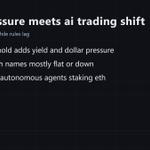
most names just drift lower without any real volume behind it. the ones that popped yesterday already back to flat.
binance getting hit again and the selling spreads to anything with a cex name attached. hot wallet issues always look bad on paper but the real damage shows in how fast retail exits. seen this movie before and the volume usually fades quick.
tether keeps growing reserves while rotations stay loud on sol and base. the steady flow into stables shows demand holding even when prices chop around. most just chase whatever prints next and ignore where the backing sits.

binance breach headline pushed coinbase and the rest lower fast. the moves look overdone if the hack doesn't touch their reserves directly. retail selling anything labeled crypto stock on sight again.
tape keeps testing the same levels without breaking through. holding flat feels less stupid than trying to catch these wiggles.
quantum fud returns on btc every time it needs a narrative. the tangled cable cartoon is cool but doesn't change the fact that nothing is breaking yet. sol side stays busy with its own rotations while base keeps the volume flowing.
how x tracks the links you share
every copied x link carries the tail ?a=…&s=…. those alarm posts racked up over 4 million views in one night
here is what is really going on
the move: copy the link, strip everything after the ?, then post the cleaned version
> where the tail appears:
- android: tap the share icon beneath the post and choose copy link. the result ends in …/status/123?a=xxxx&s=19
- ios: tap the share icon and choose copy link. the result ends in …?a=xxxx&s=46
- web: click the share icon and choose copy link. the result ends in …?a=xxxx&s=20
- the same post produces different tails on each platform
> what the pieces actually represent
- the post id (…/status/123): the only section required for the link to load. everything after the ? can be removed
- s=20: the link was copied on the web version
- s=19 marks android, s=46 marks iphone. these codes were discovered through testing; x has not confirmed them
- a=: a server-generated string created when a logged-in user opens the share menu. the backend flag for this string is called "share_link_attribution"
> what x records
- its privacy policy already states that it logs data whenever you click, view, or engage with links
- the a= value lets x connect a click back to the exact share action that produced the link
> what x does not display
- no interface shows “who opened my link,” either for the original poster or for anyone else
- x has not stated that the recipient can see who originally shared the link
- the contents of the a= string are not public; any claims that it stores your name, timestamp, or device are speculation
> the remaining issues
- x has not published an official post or help article explaining the feature
- the first viral thread mixed up the s= values (claiming 20 stood for iphone); the corrected mapping is 19 for android, 20 for web, and 46 for iphone
> actions to avoid
- do not paste links into random “link cleaner” sites or browser extensions that request an x login
- do not forward claims without evidence
- do not delete older posts because of this; the tail only appears on links you copy after the change
copy the link, trim everything past the ?, then share. that is the full routine
save this before you share your next post

#PULSE
"How is PULSE different from STEPN?"
While playing the beta, I was also asking the team the same question myself.
I've summarized it in a diagram within the shareable range 👇
① There's decision-making on using items in daily play
Against weather, in-game injuries, or unfavorable events, how to use boost or protection items.
Not only raising equipment, but the fun of thinking according to the day's situation.
② Pod nurturing different from gem synthesis
In PULSE, you use "Watts" obtained from bags to nurture Pods.
The Pod body won't break from nurturing, and Watts themselves cannot be bought or sold.
③ Ahead of nurturing, there's a goal called Merit [Future plans]
5% of each transaction amount in the market goes to the Merit pool, with plans to aim for rewards from that pool in Merit mode.
The key point is that the source of rewards is tied to transactions between players.
④ To individual battles and team battles [Future plans]
There are also plans to compete based on energy, distance, shoe type, country, etc.
In the future, Challenge attributes are also planned to be utilized in competitions.
What I find interesting is the ability to think about "what to do next" from what you've gained by walking.
From the amount you've walked, the next move is born.
I'll continue playing and sharing how these options will expand in the future 👟
※Organized based on explanations from the PULSE team and experiences in the beta. Future features are not yet implemented, and specifications may change. This does not guarantee profits.