

28. always compounding. l/s equity. no forced selling is the mantra
Joined May 2019
- Tweets10.4K
- Following2.3K
- Followers1.1K
- Likes25.2K





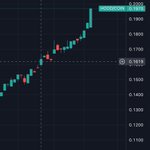
Can’t see how cybersecurity deserves their multiples. If AI is good enough is a major bear case for semis causing single digits to teens multiples, how is it not the same for cybersecurity stocks?
70
There’s a tendency to remain bearish longer than it’s welcomed even after a huge drawdown - maybe due to the allure of being non-consensus, or schadenfreude at work when you win while watching everyone else lose their pants. Be aware of this bias
65
My working theory is that this Jensen news is orchestrated by Democrats and Anthropic. Will explain more below.
1
85


Onlitario retweeted

♦️Bir adam babaannesini yapay zeka ile filmin içine yerleştirdi. Kendini film sahnesinde gören babaanne şok oldu.
Onlitario retweeted

Many of you don't understand how serious this is, so let me break it down.
In computer science there is a famous kind of puzzle called 3-SAT. You are given a long list of yes-or-no switches and a set of rules about how they must be arranged, and you have to find a combination that satisfies every rule. The obvious way to solve it is to try every combination, but each new switch doubles the number of possibilities, so a puzzle with a few hundred switches would take longer than the age of the universe to brute force.
For decades, the smartest people in the field found clever tricks that made this a little faster, but every trick still hit the same wall: the time required kept exploding as the puzzle grew.
About 25 years ago, two computer scientists, Russell Impagliazzo and Ramamohan Paturi, working with Francis Zane, turned that wall into a formal idea.
They proposed the Exponential Time Hypothesis, which says this explosion is not a failure of human cleverness but a law of nature. No algorithm, however brilliant, will ever solve 3-SAT without the time blowing up exponentially. Nobody could prove it, but almost everyone believed it, and it became one of the foundations of modern computer science.
Researchers used it as a measuring stick. If you could show that solving some other problem quickly would also crack 3-SAT quickly, you had shown that problem was hopelessly hard too. Hundreds of papers, across scheduling, graphs, logic and much more, rest on this one assumption.
Now an internal AI model at OpenAI claims to have broken it. It says it found an algorithm that solves these puzzles meaningfully faster than the hypothesis allows, and it has checked the proof in a computer verification system called Lean.
And here is the remarkable part: the very people who proposed the hypothesis, Impagliazzo and Paturi, along with MIT's Ryan Williams, are now leading the public review of whether a machine has disproved their own idea.
So what happens next? If the disproof holds, a large part of theoretical computer science has to be revisited.
Every result that said "this problem cannot be solved faster, assuming ETH" loses its foundation, and researchers will have to work out which of those walls were real and which were simply where we stopped looking. It does not mean everything becomes easy. The new algorithm is still slow in absolute terms and this is not the famous P versus NP problem being solved.
But it means our map of what is possible was wrong in a place we were very confident about, and it was an AI that redrew it. If the disproof fails, the hypothesis survives and the field breathes out, but we will still have watched an AI produce serious, checkable work on one of the deepest questions in the discipline, closely enough that the founders of the idea had to take it seriously. Either way, something has shifted.


Onlitario retweeted

As a pilot for 20 years I have questions:
- where are the cabin crew here?
- where are the oxygen masks that automatically drop during a rapid emergency descent?
- how did the Capt manage to open the door while being stabbed?
- Omani pilots were not allowed to fly to Israel, why was he allowed?
- how did the offending pilot get a weapon onboard?
- why has this happened so close to elections?
- how are passengers walking around while apparently in a nosedive?
- who else was injured? Nose dives cause significant g force incidents
- why is there two perfectly positioned people recording the incident and not helping?
- why did a plumber take control and not the 2 pilots onboard who would certainly know when an aircraft was in a nosedive?
- why was the plumber speaking in English to Bibi after the flight
- why was he still in his blood soaked clothes 8 hours after the incident
False Flags have been a very effective mechanism to influence public opinion
Hitler burnt down the Reichstag just before his parliament elections and he won the election…changing the course of history.
A full and independent investigation should be carried out here.
Hopefully independent journalist will be allowed to view this too.

#WATCH: Israeli passengers rush the cockpit to rescue their Flydubai flight after the copilot attempted to hijack it.


Onlitario retweeted

US TSY SEC. BESSENT ON AI AND CHINA:
“Nothing would matter if China pulled away on AI.”
“Iron Dome and US defense wouldn’t matter if China wins AI.”
“The American people must understand what AI does for them.”
“We can’t pause on AI. China won’t pause.”
Bessent also repeated that hyperscalers “did a bad job on AI communication.”


Onlitario retweeted

AI is improving knowledge work faster than most of Wall St appreciates imho. From my own use, it keeps gettin better and faster. Things particularly improve when you make models / agents argue with each other in front of a judge w/ verifier agents. This is all anecdotal, but the gap versus a few months ago is notable to me.
The catch, and I’ve harped on this in the past, is the tools are as good as the curated context (including what services / research you connect)
“Give me the bull case on MU” gets you a meh answer on the chat bot. Point the same model with a harness, curated “source of truth” (curated sources), persistent memory of key debates / work you’ve already done and the output is miles better.
As an example of recent workflow, I had Claude build a “ Refresher”, a living html doc per name / theme for everything I own. It has the basic thesis, a change log since it was last read, estimate changes, valuation, and my leans on the top few debates on the name based on prior work / IBs / emails etc. And where I have no recorded view the model proposes a lean and labels it as its own until I sign off.
The build itself was agents all the way down. 3 agents debated the format, a four-analyst council reviewed each initial doc, all in front of a judge. Most impressively, much of this was done in parallel (ultracode!) in a few hours.
It’s simply never been easier to curious and wild to think this wasn’t possible a year ago.
Onlitario retweeted

In many areas of life, effort leads to reward. If you study harder, you get better grades. If you practice longer, you can become a better athlete. If you work more hours, you may get a promotion.
The stock market is not one of those places. Instead, you can be rewarded immensely for doing almost nothing.
Herb Wertheim’s early investment in Heico is an incredible example. It is, by almost any measure, one of the greatest Sidecar investments in history.
Wertheim understood something powerful: wealth compounds when your money starts working through other people’s effort. He said:
"You take what you earn… and invest it in other people’s labor."
Most people spend their lives selling their own time, exchanging hours for dollars. While admirable, there is no scale. Wertheim realized the key is to find people who are smarter, more driven, and more obsessed than you, and simply ride on their coattails.
In 1992, he began building a position in Heico when it was a penny stock. An optometrist by trade, running an aerospace company was not in the cards for him. But he didn’t need to. He could just buy a slice of the work being done by the Mendelson family.
Laurans Mendelson, along with his sons Eric and Victor, took over Heico in 1990. They devoted their careers to the company. They lived and breathed aerospace parts, 24/7. They navigated evolving regulatory and competitive landscapes and several recessions. They managed the day-to-day operational grind and made the tough decisions. They built one of the world’s great companies.
While the Mendelsons did the heavy lifting, Wertheim was along for the ride.
And here is the kicker: Today, Wertheim’s stake in Heico is worth $1.2 billion. Remarkably, this is as much as the shares owned by the late Laurans Mendelson himself.
Again, the man who simply bought the stock wound up in the same place as the man who spent thirty-plus years building the company.
This should not be possible and highlights one of the most counterintuitive parts of investing: You are rewarded not for effort but for the quality of your decisions.
The market doesn't know if you did 1,000 channel checks. It doesn't care if you spent 100 hours researching a stock or five minutes. All that matters is if you are right.
It is easy to feel the need to do something to justify our returns. So we have too many opinions, over-trade and constantly tinker with our portfolios. In doing so, we miss the opportunity to build generational wealth by making one or two great decisions and having enough self-awareness to get out of our own way.
Onlitario retweeted

As much as we love to dunk on “corporate life”, it installs a tempo in your life and forces scarcity.
We often hear: “If I didn’t have my job, I’d recover 50 hours a week. Imagine everything I could build/read/train/do.” But then people leave their job, and somehow accomplish less than in the 3h of spare time they had every day. Coffee takes 45 mins, gym becomes 2 hours, lunch becomes an event, grocery shopping for a whole afternoon, you read the random article instead of skimming it, fall into 3 rabbit holes, and suddenly the day is over.
I'm experiencing the opposite in my 80h week job. Yes it's very intense, but weirdly it's the period I've been the most productive on my side hustles/quests outside of work. As if it was not only consuming my time, but also producing the intensity that makes the rest of my time productive (45 min workout, write/work on something for an hour, read stuff on the go, book trips/admin in 10 mins, basically going straight to the essential).
Obviously having more time and chilling a bit is great, but having a hard constraint forces you to focus on the essential, and especially good for ADHD people like me who would otherwise strike in all directions and fall into every possible rabbit hole.
People think quitting their job will give them the exact same urgency + 50 extra hours. Reality is it changes the tempo of everything else too.

Being on sabbatical has messed with my sense of time and productivity.
The sense of urgency at work seemed to compress the entire day more than I was appreciating. Wake up quickly, commute efficiently, squeeze email replies into the coffee line or elevator. Wolf down dinner, fit a hard workout into 45 minutes, skim interesting articles you stumble across, keep tabs on a dozen different Slack threads, then still find time to rush through a chapter of personal reading before knocking out.
I assumed that removing the work block would add 8-12 productive hours back to each day, but it never seemed to work like that for me.
On sabbatical, you're a bit slower to get up in the morning. You sit with your coffee for a while. You actually read that random article in your inbox all the way through. You linger over a nice breakfast, then find yourself out in the sun not really doing anything for five minutes or half an hour. You read 30-50 pages of your current book and actually sit with it, maybe chasing down a few tangents or references along the way. A bit of life admin, a slow trip to the grocery store, a dinner built around some new recipe, then some time winding down for bed.
Before you know it, the day is just sort of over, and all you did was read 40 pages, send some emails, and eat two nice meals. You maybe didn't even get around to meditating despite having basically no formal claims on your time.
I had an instinctive revulsion to this at first, like I’d made a sort of negative-sum exchange. I spent a while cargo-culting the tempo of work into an empty calendar, trying to recreate that same sense of urgency and forward motion. But without an actual forcing function, it never really took. I knew the deadlines were fake, and the day kept expanding around them anyway.
I eventually stopped fighting it and accepted that removing work from the equation had just sort of inflated everything else in my life: slower meals, slower reading, slower conversations, more time wandering or doing nothing in particular. I’m still often confused at the end of the day, unsure of where the time went, but I’ve mostly stopped treating that as a problem to solve and instead view it as the inherent tempo of the season I’m in.
There's something illegible about what I'm getting out of this season. I can feel myself paying finer-grained attention throughout the day, even if there's no clean metric at the end of it to tally against. Maybe six months of lingering slightly too long in the tomato aisle at Berkeley Bowl is slowly beating the Protestant work ethic out of me.