


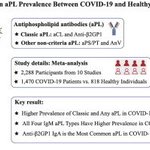



🤔 @grok why would this be an interesting study? Give detailed citations.

EVERY patient diagnosed with LUPUS and RHEUMATOID ARTHRITIS must be properly tested for Borrelia infection.#LUPUSRHEUMATOIDARTHRITIS.
Proper testing is critical. 1) Borrelia infection may involve different species of Borrelia. Borrelia Burgdorferi (Lyme) is prevalent in the Northeast and upper Midwest. Relapsing Fever Borrelia is prevalent in Texas. Testing for Lyme Disease in Texas results in a negative test and therefore an erroneous conclusion ruling out Neuroborreliosis, but testing for Relapsing Fever Borrelia will be positive and confirms the diagnosis of Neuroborreliosis. I prefer to use a lab dedicated to Tick Borne Diseases whose testing includes many different species of Borrelia. 2) The tests measure the patient's blood for antibodies against the invading spirochete. 3) The tick bite may go unnoticed in 50% of those infected. 4) Approximately 3 months after the inoculation (tick bite or sexual transmission) the spirochete becomes a cyst which is sequestered deep in tissue and impenetrable to antibiotics. The immune system is not exposed to these sequestered spirochetes and therefore, no antibodies are produced. The testing for antibodies will be negative or muted. 5) Pre-test provocative antibiotics will prevent false negative results. These antibiotics must include a "cyst buster" to allow the antibiotics to penetrate to kill the spirochete. Typical antibiotics include Flagyl or Tindamax to open the cyst and Azithromycin or Ceftin to kill the spirochete. These are administered daily for 28 days pre-testing. 6) The provocative antibiotics expose the spirochete to the immune system resulting in robust antibody production which is then measured on the testing. I have encountered numerous patients whose initial tests for Borrelia are negative but after the provocative antibiotics the same tests performed in the same lab become very positive. "Provocative Antibiotics" to expose the Lyme spirochete to the immune system in order to get a robust antibody production. The antibodies will be measured on the definitive tests. The specific antibiotics: 1) Azithromycin 500mg or Ceftin 1000mg 2) Flagyl 500mg or Tindamax 500mg Take both daily for 28 days before any testing. Regarding the testing: Two labs -1) LabCorp - they have collecting stations in every city. Order "CD 57". 2) Igenex Lab - They have a website - the physician contacts them and they will send a collecting kit and a FedEx mailer. Order Igenex panel #TBD 4 BL (This is very comprehensive and includes Borrelia and co-infection). Please send me copies of all of the results from both labs because often subtle abnormalities are ignored. Alfred Miller,M.D.,F.A.C.R. Retired Mayo Clinic trained Physician Private practice Internal Med./Rheumatology for 40 years Retired Full Professor, Department of Medicine, Clinical Faculty, Univ. Of Texas Medical School 210 Chester St. San Antonio, Texas, 78209 [email protected] 210 378 3030
⭐️

Scientists just found a reason for the exhaustion of long COVID — microscopic clots in the blood.
The study was published in the Journal of Medical Virology.
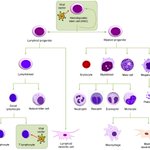
Researchers discovered that patients with the condition have nearly twenty times more microscopic blood clots than healthy individuals. Unlike typical clots, these 'microclots' are wrapped in sticky, web-like structures made of DNA and enzymes released by white blood cells.
These webs, known as neutrophil extracellular traps (NETs), act as structural armor, preventing the body from naturally breaking down the clots. This leads to a persistent blockage in the capillaries—the body's smallest blood vessels—which starves tissues of oxygen and drives chronic inflammation.
This discovery marks a massive shift in how post-viral illnesses are understood. Historically, many Long COVID patients struggled to find validation because standard blood tests routinely came back normal.
By showing that these microscopic clots are structurally bound to NETs, scientists are paving the way for targeted treatments, such as therapies designed to dissolve these persistent blocks. It also offers a glimmer of hope for millions suffering from other poorly understood chronic conditions, such as Myalgic Encephalomyelitis/Chronic Fatigue Syndrome (ME/CFS), where similar microclotting patterns have been observed.
source: Thierry, A. R., Usher, T., Sanchez, C., Turner, S., Venter, C., Pastor, B., Waters, M., Thompson, A., Mirandola, A., Pisareva, E., Prevostel, C., Laubscher, G. J., Kell, D. B., & Pretorius, E. Circulating Microclots Are Structurally Associated With Neutrophil Extracellular Traps and Their Amounts Are Elevated in Long COVID Patients. Journal of Medical Virology, 97(10), e70613.

⭐️

A University of Osaka study of 1.5 million people found COVID-19 nearly doubled the risk of autoimmune rheumatic diseases requiring treatment.
Related hospitalizations were nearly 19 times higher.
nature.com/articles/s41598-0…
🧐

Myelin phospholipids include phosphatidylethanolamine (PE, mainly plasmalogens), phosphatidylcholine (PC), sphingomyelin (SM), phosphatidylserine (PS) and phosphatidylinositol (PI).
Anti-PE and anti-PS (myelin-related) occur in POTS/Long COVID. Schofield EJCRIM 2021 (doi:10.12890/2021_002378): post-COVID POTS with persistent anti-PE IgM. Schofield Immunol Res 2024 (doi:10.1007/s12026-024-09510-8): dysautonomia (84% POTS) showed anti-PS IgM in 60%, anti-PE IgM in 38%.
🤔
Persistent SARS-CoV-2 replication continually hijacks host folate and one-carbon metabolism to fuel de novo purine synthesis for viral RNA, depleting folate and stressing the methionine cycle (Zhang et al. Nat Commun 2021;12:1676). Chronic drain impairs methylation, elevates homocysteine, reduces glutathione, and drives Long COVID symptoms resembling B12 deficiency plus thrombosis risk; MTHFR variants plus metabolite profiles predict severity (Perła-Kaján Int J Mol Sci 2022;23:4181; Petrova et al. PNAS 2025).
In consideration of Black Maternal Health week coming to an end... Why is vitamin D deficiency not being actively targeted to improve both Maternal and Infant Health? High incidence of vitamin D deficiency, low cost to improve, potential large benefit...

🧐”Immunomodulatory Effects of Vitamin D in Pregnancy and Beyond” #vitaminD
frontiersin.org/articles/10.…

🤔
Yes, the Hollis 2011 trial (NCT00292591) was a main one awaited around the 2011 statements.
Hollis JBMR 2011: RCT of 400/2000/4000 IU D3 from 12-16 wks. 4000 IU safest/most effective for maternal+neonatal 25(OH)D sufficiency (esp. darker skin); no related adverse events. pubmed.ncbi.nlm.nih.gov/2170…
Wagner AJOG 2013: 2000 vs 4000 IU community trial; both raised levels (higher cord blood with 4000); suggestive fewer infections/preterm issues. pubmed.ncbi.nlm.nih.gov/2313…
Combined JSBMB 2013: 4000 IU lowest hypovitaminosis + trend lower comorbidities; inverse 25(OH)D-comorbidity link. pmc.ncbi.nlm.nih.gov/article…

🤔 @grok the following is in the @acog recommendations regarding vitamin D and pregnancy.
“When vitamin D deficiency is identified during pregnancy, most experts agree that 1,000–2,000 international units per day of vitamin D is safe. Higher dose regimens used for treatment of vitamin D deficiency have not been studied during pregnancy. Recommendations concerning routine vitamin D supplementation during pregnancy beyond that contained in a prenatal vitamin should await the completion of ongoing randomized clinical trials.”…
Confirm that this was written in 2011 and keeps just getting reaffirmed. 🤔 What are these randomized clinical trials that they are waiting on since 2011? Give detailed citations.
🦵🥫📉🛣️?
🧐 “NET Biomarkers in COVID-19 and Post-COVID Syndrome: a Comprehensive Analysis”
pmc.ncbi.nlm.nih.gov/article…

⭐️ Following principles of Basic Science is following the Science…
(Though this is such a simple trial to do for a Long Covid clinic. Would likely be relevant to autoimmune diseases, such as Lupus / APS since have overlapping pathophysiology.)
Yes. Basic science on VDR signaling, MTHFR methylation, and micronutrient effects on inflammation, autoantibodies, NETs, and coagulation is core science. When specific trials are absent, applying those established mechanisms is following the evidence, not ignoring it. It supplies the rationale that clinical studies later test.
🧐 “Dynamic interaction between stress hormones and neutrophils promotes neutrophil extracellular trap formation with behavioral consequences”
sciencedirect.com/science/ar…
🧐 “Checking vitamin D is prudent for homebound ME/CFS (common deficiency risk). SARS-CoV-2 downregulates VDR signaling (Sci Rep 2021; PLOS One 2026) and hijacks folate/one-carbon metabolism involving MTHFR (Nat Commun 2021).”👀
Per @grok
No, the MCAM study (Regan et al. J Pediatr 2026) used only questionnaires on symptoms/function in 40 adolescents; no genetic, vitamin D/B, or homocysteine data.
Checking vitamin D is prudent for homebound ME/CFS (common deficiency risk). SARS-CoV-2 downregulates VDR signaling (Sci Rep 2021; PLOS One 2026) and hijacks folate/one-carbon metabolism involving MTHFR (Nat Commun 2021). Recent trials show correcting deficiency improves post-viral ME/CFS symptoms. B vitamins/homocysteine/genetics have weaker evidence but may identify modifiable factors.
🤔 A few statements that might be “good to know”…
Statements supported. Vit D deficiency linked to COVID thrombosis risk (e.g. OR 5.7) and higher long COVID odds in cohorts. NETs central to COVID immunothrombosis and general clotting. Homocysteine is modifiable thrombosis risk factor also tied to cognitive decline. aPL reported in COVID with proposed spike protein molecular mimicry.
These aid patient care via risk screening, Vit D/B-vitamin repletion to cut clots/long COVID/cognition issues, and refined coagulopathy management.
Cites: PMID 35834511; JCEM 2023; Front Immunol 2022 NETs; Hcy consensus reviews; Rheum Adv Pract 2021.
🤔 Seems likely of interest to the translational science type researchers?
Yes. Mouse studies on vitamin D antimicrobial induction (via CAMP/HBD2/NOD2) do not translate, as rodents lack the primate VDREs. See Gombart AF et al. FASEB J. 2005;19(9):1067-1077. doi:10.1096/fj.04-3284com. Metabolic: VDR-null mice resist obesity (opposite human links). Bouillon R et al. Nat Rev Endocrinol. 2014;10(2):79-87. doi:10.1038/nrendo.2013.226. Reviews: Dimitrov V, White JH. J Steroid Biochem Mol Biol. 2016;164:246-253; Marcinkowska E. Reports. 2020;3(1):1.
🧐

Vitamin D was classified as a vitamin by historical accident.
It’s actually a steroid hormone that crosses cell membranes and directly controls gene expression.
In chronic inflammatory and post-infectious conditions, the real issue can be resistance: the active hormone simply isn’t signaling efficiently.
Learn:
• What drives resistance
• How to actually test for it
• Why vitamin D acts more like a hormone
• Practical ways to improve your body’s response
Read more:
buff.ly/VIjX1UN

🧐 “Vitamin D ameliorates NETosis and Th17/Treg imbalance in experimental autoimmune thyroiditis”
sciencedirect.com/science/ar…
🧐 “Holotranscobalamin, a marker of vitamin B-12 status: analytical aspects and clinical utility”
ajcn.nutrition.org/article/S…

🧐
Evidence supports SARS-CoV-2 impairing VDR signaling (Valdés-López et al, PLOS One 2026) and hijacking folate/one-carbon metabolism, depleting folate (Zhang et al, Nat Commun 2021; Perła-Kaján et al, Int J Mol Sci 2022). Post-infection, vitamins D and B12 are often depleted (cohort HRs 1.56-1.79). In children this links to irritability, attention/cognitive issues, emotional problems and developmental delays via deficiency effects plus long-COVID neuro symptoms.
🧐

Could vitamin D supplements help improve outcomes for people with inflammatory bowel disease (IBD)?
Using 20 years of real-world data from the U.S. Department of Veterans Affairs, NIH-supported researchers found that people with IBD who took vitamin D supplements had fewer IBD-related emergency room visits, hospitalizations, and steroid prescriptions.
The findings support current recommendations to screen patients with IBD for vitamin D deficiency and consider supplementation when appropriate: bit.ly/4xNiuqv

ALT Glass of water and vitamin D capsules on a table, with text stating, "RESEARCH NEWS: An analysis of real-world data finds that vitamin D supplements may improve IBD outcomes." NIH logo is present.