
The only people I would care to be with now are artists and people who have suffered: those who know what beauty is, and those who know what sorrow is. Wilde
Joined November 2009
- Tweets19.2K
- Following27K
- Followers26.2K
- Likes124



Aquí mi participación de ayer en El Financiero TV, sobre el tsunami azul:

#ElFinancieroTV | Los estadounidenses hablaron claro en las Elecciones Intermedias, están hartos de los aranceles, de la guerra en Irán que encarece el combustible y de las redadas crueles contra los migrantes: columnista José Manuel Valiñas (@planettaoficial).
@OmarCepedaCastr
1
69
José Manuel Valiñas retweeted

#ElFinancieroTV | Los estadounidenses hablaron claro en las Elecciones Intermedias, están hartos de los aranceles, de la guerra en Irán que encarece el combustible y de las redadas crueles contra los migrantes: columnista José Manuel Valiñas (@planettaoficial).
@OmarCepedaCastr
Les comparto mi columna de hoy en El Universal sobre la ultraderecha en Alemania:
eluniversal.com.mx/opinion/j…

Les comparto mi participación en @ElFinancieroTv sobre el cambio de poder en Colombia:
1
1
147
Los invito a todos a la charla que voy a dar mañana a las 7:30 de la noche por Zoom. Mándenme DM y les digo cómo participar. Es un momento histórico el que estamos viviendo, aquí se va a definir el futuro de México. Seamos parte de la conversación...

1
82
José Manuel Valiñas retweeted

Argentina’s behavioral crisis in the World Cup final has brought to light traits many of us in Latin America have internalized and that we need to come to terms with.
In many countries, emotional self-control and the ability to admit mistakes are seen as virtues. A behavioral problem in parts of Latin America is that there are social circles where the opposite is often celebrated.
This is the idea that someone who remains in control of their emotions is a coward or, depending on the situation, a traitor.
If someone offends you, your family, your team, the reaction that is celebrated in these circles is not restraint but flipping the table. The more berserk you go, the more you show that you care. That is a harmful value to hold, and also, one that many of us once shared. I certainly had it internalized when I left Chile 20+ years ago. In fact, I’ve spent much of my adult life trying to unlearn what I grew up believing was the socially acceptable behavior.
The second trait is an unwillingness to admit mistakes. You can always find an excuse, move the goalposts, or, once again, start a fight instead of publicly accepting that you’ve made a mistake. Admitting fault is a sign of weakness. Defending a losing position is a symbol of courage or, in sports, a test of loyalty.
Together, these two traits are behavioral dynamite. People explode because they cannot admit fault, and double down. Instead of learning from their mistakes, they become prisoners of them.
I grew up watching football with my father. When I was 10 or so, I was learning what was right and wrong from the way he interpreted the game. This included behavior both on and off the field. Only later in life did I realize that every penalty he called for, or contested, had little to do with the play itself. Whether a call was fair depended entirely on which team benefited. He was happy if his team received a nonexistent penalty or an opposing player got an undeserved red card.
These traits are among the things that pushed me away from the continent. They are certainly not exclusive to Latin America or the Southern Cone. I’ve encountered them in people all over the world. In an important sense, these are behaviors that all of us exhibit as children. What strikes me as unusual from the place I am from is having been part of social circles where these behaviors were not seen as flaws of character but as virtues to be admired, celebrated, and enforced.
These excessive forms of pride are not conducive to learning. They make it psychologically difficult to update one’s beliefs, accept responsibility, or improve. Although they become particularly visible in sports, they are by no means confined to them.
Something I am proud to have learned is to apologize quickly and often. Not because it is too difficult, but because it was like learning a new language at old age. That doesn’t mean becoming a pushover. But I’ve learned that a man who never apologizes cannot be a man of integrity, because we all make mistakes.
Argentina’s behavior on and off the field during the World Cup final was, to me, a particularly blatant expression of values that many people continue to defend. In some circles, these attitudes have become intertwined with ideas of national identity and loyalty. Yet they are shackles that ultimately limit our development, not because they make us lose a football match, but because they make it harder for us to learn from our mistakes.
The right thing to do now is the least likely: offer an honest apology. If my interpretation is even partially correct, we are more likely to see the opposite. Never back down. Never apologize. Never control your emotions. There is such a thing as having the wrong values. I hope that one day we can do better.
José Manuel Valiñas retweeted

NVIDIA CEO, Jensen Huang:
"Nobody writes prompts anymore. The new job is to write and handle loops."
This is the shift that's going to define the rest of 2026.
53 minutes of pure insight from one of the richest men on earth.
Watch it, then read the full guide on how to actually use loops below.


José Manuel Valiñas retweeted

𝐄𝐥 𝐬𝐞𝐧𝐭𝐢𝐦𝐢𝐞𝐧𝐭𝐨 𝐧𝐨 𝐜𝐨𝐧𝐨𝐜𝐞 𝐝𝐞 𝐞𝐱𝐩𝐞𝐫𝐢𝐞𝐧𝐜𝐢𝐚... ❤️🩹🥹
@albertolati demuestra que por más eventos y conocimiento que se tenga, ver a tu selección cantar el himno en casa durante un #Mundial, siempre te va a tocar el corazón
¡Hoy va por México, por Beto y por los millones que comparten la ilsuión! 🇲🇽
José Manuel Valiñas retweeted
#ElFinancieroTV | No podemos estar optimistas ante el acuerdo de paz entre Estados Unidos e Irán porque Trump dijo 37 veces que ya iba a terminar la guerra y no concluyó, comentó José Manuel Valiñas (@planettaoficial), analista de temas internacionales.
📺: @OmarCepedaCastr
Les comparto mi columna de hoy en @eleconomista
eleconomista.com.mx/opinion/…
¿Saben que en 1980 Estados Unidos lanzó una operación especial en #Irán para rescatar a los rehenes secuestrados y la catástrofe fue mayúscula? Aquí mi artículo en @El_Universal_Mx :
eluniversal.com.mx/opinion/j…
1
77
Aquí la segunda parte de la entrevista que tuve con El Financiero TV:
#ElFinancieroTV | No quiere decir que el estrecho de Ormuz esté cerrado físicamente, pero nadie se atreve a pasar porque le puede caer un misil iraní, comentó José Manuel Valiñas (@planettaoficial), periodista y analista internacional.
📺: @OmarCepedaCastr
83
Les comparto mi participación en El Financiero TV del viernes
#ElFinancieroTV | Donald Trump prometió que no se iba a meter en guerras; el conflicto en Medio Oriente le afecta a su narrativa, señaló José Manuel Valiñas (@planettaoficial), periodista y analista internacional.
📺: @OmarCepedaCastr
50
José Manuel Valiñas retweeted
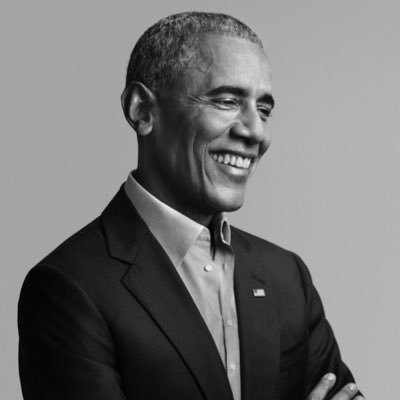
Reverend Jesse Jackson called on each of us to be heralds of change, to be messengers of hope; to step forward and say “Send me” wherever we have a chance to make an impact.
How fortunate we were that Jesse Jackson answered that call. What a great debt we owe to him.
Les comparto mi artículo sobre la posibilidad de una nueva guerra:
eleconomista.com.mx/opinion/…

1
53

Hoy a las 8:30 en el Canal del Congreso, estaremos hablando sobre la próxima cumbre del G-20, que tiene muchas particularidades interesantes
1
54
Hoy en el Canal del Congreso estaremos hablando sobre la cumbre del G-20. Espero que nos acompañen

1
47
Amigos, les comparto mi columna en El Economista, sobre el fenómeno Zohran Mamdani, que es todo un huracán... ¡un tsunami político!
eleconomista.com.mx/opinion/…
3
63