

The platform bridging the gap between Node.js developers, operators, and wider business. So you can focus on building 🚀
Joined April 2022
- Tweets1.2K
- Following116
- Followers3.4K
- Likes1.5K






Platformatic retweeted

What Deno Gave Node.js nitter.cf/i/broadcasts/1dxYlaZzn…
Platformatic retweeted

A belief worth correcting:
"we run it in a worker thread, so it's isolated."
A worker thread only isolates the event loop. It does nothing to restrict authority. By default, your worker has full access to the filesystem, network, environment, and process, just like the parent. You changed the location, not the permissions.
Order matters. Permissions must drop before the guest code compiles or imports. If you wait, you create a window where your code has more authority than you planned. That gap is all it takes.
Without checking, can you list every API your dynamic code can access right now?

ALT Introducing secure-eval-worker
Platformatic retweeted
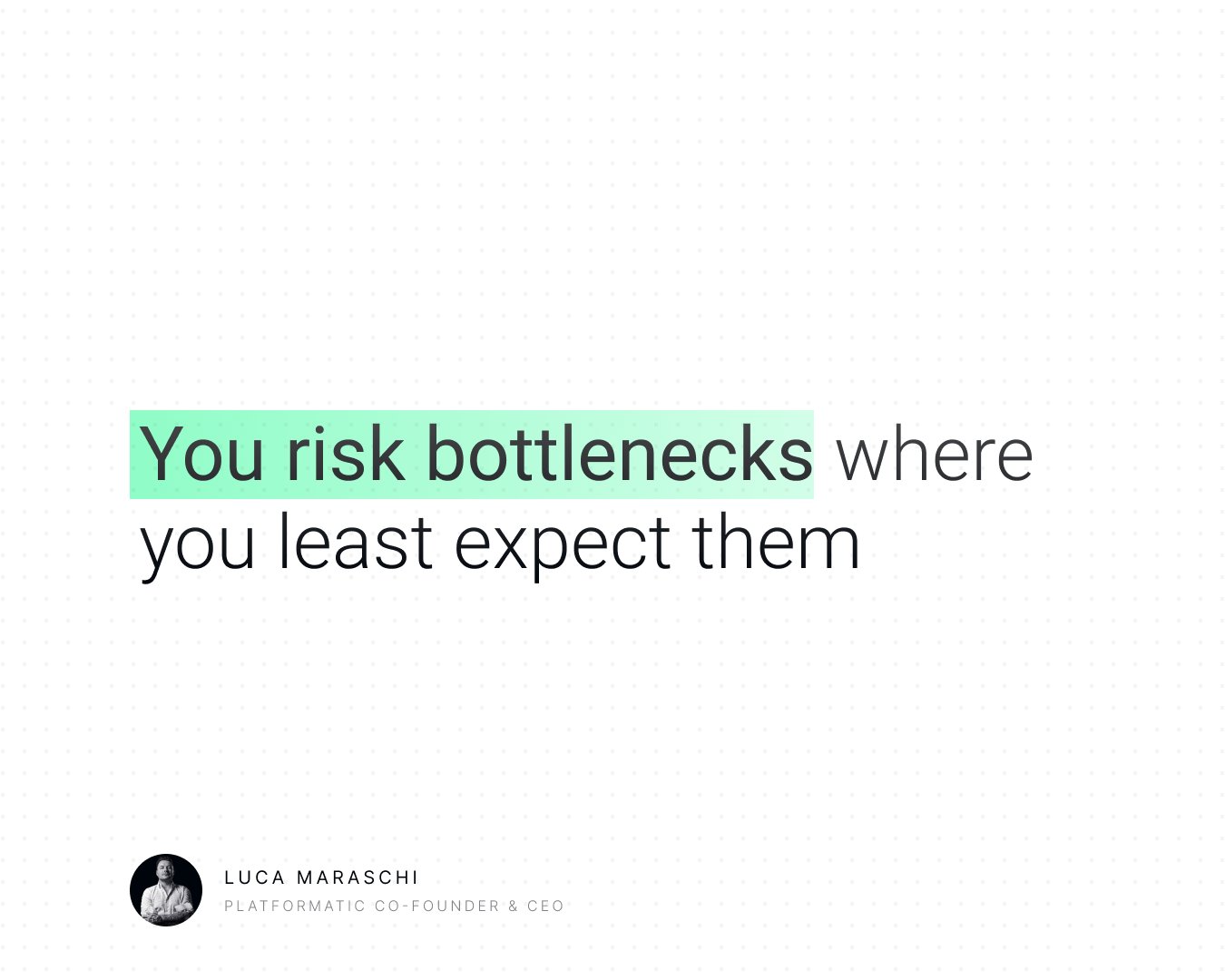
We never planned to build a memcached client.
But every existing option became the bottleneck in our stack. Gateway request deduplication demanded a client that could handle real production traffic at scale. Nothing out there could keep up.
When something sits this close to the hot path, I expect three things: strict opaque-token verification on every response, zero runtime dependencies beyond node:net, and real-world tests against memcached servers with authentication and TLS.
This client delivers on all three.
What’s the slowest link in your stack that everyone ignores?
ALT @platformatic/memcached
Platformatic retweeted
Here’s a lesson from @matteocollina deep dive into our memcached client:
A single pipelined connection outperformed a ten-connection pool from legacy @nodejs clients. Same server, same loopback, same Node version.
💡 The result? Our approach delivered triple the throughput of the fastest alternative.
Why did the old clients need connection pools? They couldn’t pipeline efficiently. With a smarter parser, you unlock performance: pipeline on a single connection, parse by length for speed, and merge writes for efficiency. No extra cost, just better engineering.
Pooling still matters when you need to handle large values that could block a pipelined connection. That’s what poolSize is for. But let’s be clear: pooling should solve real scaling problems, not compensate for slow parsing.
How many connections does your busiest cache client open, and why?

ALT @platformatic/memcached
Platformatic retweeted
🎉 We've renewed our @ThePledge for 2026!
Six developers, $13,000 to:
@openjsf , the @linuxfoundation, @GraphQL, the OpenAPI Initiative and Forbes Lindesay.
Plus a virtual file system contributed to @nodejs, and security triage that nobody announces.

ALT Renewing Our Open Source Pledge for 2026
Platformatic retweeted
Can’t wait to join this wonderful conference! I will be talking about @workflowsdk being the most natural foundation for agents like @eve…but…with a twist ;-)

Welcoming @lucamaraschi of @platformatic to BIOS SPHERE!
Agents Are Workflows: building agents that survive crashes.
Early bird ends Wed Sept 30, 11:59pm PT or sold out.
Sponsored by @DevinAI + @cognition. Workshop: @kentcdodds + @orchid_hq
luma.com/biossphere

ALT BIOS SPHERE speaker card featuring Luca Maraschi, co-founder and CEO of Platformatic, with his portrait and a Science World illustration. November 2, 2026, Science World, Vancouver. Presented by Cognition.
Platformatic retweeted
@eve sets the bar for agent frameworks in @nodejs. But beneath that clean API, there’s a layer of invisible infrastructure. One that most teams only notice when they leave Vercel behind.
On @vercel, everything just works. Workflow runtime, queue delivery, persistent state, retry logic, deployment version routing; all handled for you, all out of sight. That’s the promise of a truly seamless developer experience.
But shift to your own @kubernetesio cluster, and suddenly the invisible becomes visible. You start to see what Vercel was quietly managing behind the scenes:
Persistent state that survives pod restarts. Distributed queues for steps across multiple pods. Retry handling when a process fails mid-step. Deployment version routing so in-flight sessions finish on the code that started them.
None of this is in the framework. None of it is supposed to be. The framework is the agent model. The infrastructure is the deployment contract, and on Vercel it was invisible.
How much of your production infrastructure are you discovering rather than designing?
blog.platformatic.dev/run-du…

Platformatic retweeted
Too many @nodejs teams still treat AI agents like long-running connections. In production, that mindset holds you back.
A truly durable agent session is just a series of queued operations. Every tool call, every wait for user input, every restart, each step is recorded. If a process or pod disappears, another picks up instantly from the last completed step. No gaps, no lost progress.
Any pod, any worker, any step, no session affinity, no sticky routing, no need to keep the original process alive. This is true horizontal scalability.
The event history is the session. It belongs in persistent storage, not memory. That’s how you build for resilience and scale.
The practical result? Scaling durable AI agents becomes as simple as scaling stateless APIs. Add pods, and they immediately join the pool, executing steps across every active session.
Ask yourself: what happens in your current agent architecture when a process restarts mid-session?
If you can’t answer with confidence, it’s time to rethink your approach.
blog.platformatic.dev/run-du…

Platformatic retweeted
Pushing new code while an AI agent session is still running is not just a deployment detail.
𝐈𝐭 𝐢𝐬 𝐚 𝐟𝐮𝐧𝐝𝐚𝐦𝐞𝐧𝐭𝐚𝐥 𝐜𝐨𝐫𝐫𝐞𝐜𝐭𝐧𝐞𝐬𝐬 𝐫𝐢𝐬𝐤.
Durable agents capture every action: model calls, tool invocations, waits, user inputs. When a session resumes, the engine replays that exact history against your codebase to rebuild state. If your code has changed since the session began, replay can trigger steps out of sequence, apply results to the wrong logic, or quietly generate the wrong answers.
𝐓𝐡𝐢𝐬 𝐢𝐬 𝐰𝐡𝐞𝐫𝐞 𝐬𝐢𝐥𝐞𝐧𝐭 𝐟𝐚𝐢𝐥𝐮𝐫𝐞𝐬 𝐜𝐫𝐞𝐞𝐩 𝐢𝐧.
Every deployment splits your sessions in two:
1️⃣ New sessions that must run on the latest code.
2️⃣ In-flight sessions that need to finish on the version they started with.
𝘠𝘰𝘶𝘳 𝘪𝘯𝘧𝘳𝘢𝘴𝘵𝘳𝘶𝘤𝘵𝘶𝘳𝘦 𝘮𝘶𝘴𝘵 𝘵𝘳𝘢𝘤𝘬 𝘣𝘰𝘵𝘩, 𝘰𝘳 𝘺𝘰𝘶 𝘳𝘪𝘴𝘬 𝘣𝘳𝘦𝘢𝘬𝘪𝘯𝘨 𝘭𝘪𝘷𝘦 𝘦𝘹𝘱𝘦𝘳𝘪𝘦𝘯𝘤𝘦𝘴.
A session paused for human approval might sit idle for days, generating no traffic at all. Quiet does not mean complete.
❓ Does your deployment pipeline actually know which agent sessions are still running right now?
If not, you are flying blind. Read more about it ⬇️
blog.platformatic.dev/run-du…

ALT Your deployment isn't done when the new pod is running. It's done when every in-flight agent session has finished.
Platformatic retweeted
AI agent deployments break the rules of traditional API releases. The old playbook does not apply.
If a session begins on v1, whether it's paused for human input, waiting on a tool, or mid-workflow, it must finish on v1. The event history and queued actions are tightly coupled to that version. Forcing them onto v2 is a recipe for unpredictable results.
Every deployment leaves you running multiple versions of your agent in parallel. Each active session pins its version until the workflow completes. This is the operational reality.
Kubernetes rolling updates are blind to this complexity. They terminate pods without regard for in-flight or paused agent workflows, risking broken sessions and lost work.
What’s needed: version-pinned routing, session-aware draining, and real visibility into when an old version is truly done… not just idle.
This is the hidden infrastructure challenge behind every 'deploy AI agents to production' story. Ignore it, and you risk downtime, data loss, and broken user experiences.

ALT Run Durable Eve Agents on Kubernetes with Platformatic
Platformatic retweeted
"Zero downtime deployment" means your server never went offline.
It says nothing about the users already on your site when you shipped.
They're running old JS bundles, old React state, against a server that's already moved on. Next API call hits an endpoint that no longer exists. Checkout fails. Form resets. Zero downtime. Broken session.
Version skew isn't a bug. It's structural. It happens on every deploy.
The fix isn't preventing it; it's building systems that let multiple versions run together. Cookies, ingress routing, replica set management, and a control plane that handles the rest.
Building this with @matteocollina on Wednesday.
8am PT / 5pm CEST → streamyard.com/watch/RnVyfVT…

ALT How Do You Build Skew Protection? Let's unpack it
Platformatic retweeted

We’ve had support from @CloudflareDev, @AWS, @stripe , @platformatic, @ImagekitIo, @storyblok, @vercel, GYFF, Smallpdf, @OnlyDust_com, @jetbrains , SwissDevJobs, Dynatrace, Digitec Galaxus, GetYourGuide, @sentry, Tiptap, Namespace, Stormkit, SAE Institute Zürich, and many more.
Platformatic retweeted

I’ve deployed @platformatic Watt for our new loggedout page, excellent multithreading performance with observability. Have you tried multithreaded @nodejs yet?
Platformatic retweeted
We Ran DOOM in a Node.js Terminal. Now There's No Excuse for Your Legacy Native Code nitter.cf/i/broadcasts/1rxmqowzj…
Platformatic retweeted
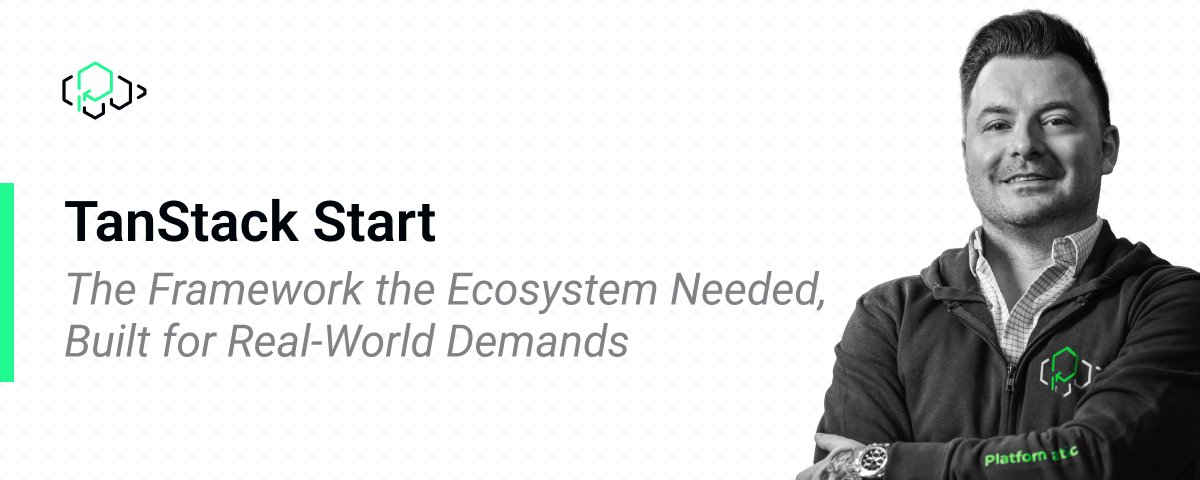
TanStack Start, AI, and Performance: Rethinking Full-Stack Architecture (with Tanner Linsley) nitter.cf/i/broadcasts/1qGvvkMMY…

Platformatic retweeted

Todays highlighted talks comes from @matteocollina from @platformatic. Check it out on the official Devworld website here: devworldconference.com/progr… or head on over to the Devworld YouTube channel and watch Matteo discuss how the alleged claims that Node.js is in decline, it is actually thriving here: youtu.be/2qu-rwxuH24?si=Vlcv… .
We hope to welcome both you and Matteo to Devworld 2026 in May!
If you're interested in visiting Devworld in may or wanting to know more then check out the official Devworld website to keep up to date with new developments and find out how you can your team can join the biggest tech conference in May: devworldconference.com/

Platformatic retweeted
We appreciate your patience and understanding as we work to deliver a secure and reliable release.
Updates are now available for the 25.x, 24.x, 22.x, 20.x Node.js release lines to address:
- 3 high severity issues
- 4 medium severity issues
- 1 low severity issue
nodejs.org/en/blog/vulnerabi…

Platformatic retweeted

Kafka is great for real-time apps — but with Node.js, it’s been rough. We built something new: ⚡ fast, 🧠 TypeScript-first, 🧩 supports multithreading, and 💻 100% open source. Join Paolo @platformatic to make Kafka on Node.js smooth again.
Watch now
youtube.com/watch?v=_n3DtWo2…
#NodeJS #Kafka #OSS
