

PRC domestic policy pulse | trade • sci-tech • energy • macroeconomy • agriculture Full articles @ https://nitter.cf/t.co/RlMeE27PxS
Joined August 2014
- Tweets797
- Following1K
- Followers2.1K
- Likes679






Against trading partners, the RMB is at its strongest since at least 2015. Adjusted for prices, it has slid since 2022. Europe reads that gap as undervaluation; PRC economists read it as falling prices and a savings gap at home.
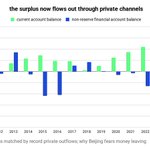
The RMB is climbing, and Beijing is setting the pace. In 2013 PBoC bought some US$450 bn of foreign currency to slow the RMB’s rise. In 2025, with a record US$735 bn current account surplus, it was a net seller, steering with quieter tools instead.
The surplus is not piling up as reserves any more. A record US$820 bn flowed out through the non-reserve financial account in 2025, as firms and households moved earnings into private overseas assets. That is why Beijing worries more about money leaving than about a rising RMB, and why the exchange rate is not up for negotiation.
No deal on the RMB: buff.ly/0ngwPb1


1
169
PRC beef quotas reset in January, but the headline total overstates usable access. Australia and Brazil have filled theirs; Uruguay has spare quota. Transfers need Beijing’s approval. For traders, unused quota elsewhere offers no automatic relief.
link to our brief: buff.ly/377K9LT
#BeefTrade #TradePolicy #ChinaTrade #Brazil #Australia #Uruguay

138
Chinese graduates aren’t coming home to the job market they left.
And most Australian universities haven’t caught up yet.
China Policy and the Australia-China Young Professionals Initiative have released a new brief, Re-entry: Landing PRC Jobs, on what’s changed for returning graduates and what institutions can do about it.
On Thursday 12 November, Mackenzie Lang (President, ACYPI) and I will share the key findings with the ACBC Queensland Education Working Group:
→ Shifting employment expectations for returnees
→ What leading international universities are doing in China
→ Practical ways Australian universities can collaborate
The event is in person at Bond University Brisbane, with an online option. Places are limited, so register here: lnkd.in/gyXsY_4S
#InternationalEducation #AustraliaChina #GraduateEmployability #ACBC
2
208
Beijing is swapping a patchwork of AI rules for one big law, as Caixin set out this week. Narrow rules on algorithms, deep synthesis and generative AI let regulators keep pace with the technology. A draft AI Law made the 2023 and 2024 legislative plans, then vanished in 2025 when nobody could agree on its shape. The 2026 plan now calls outright for an umbrella law, and NDRC doubled down on 3 November. No date yet.
source: buff.ly/plfGOxj
link to our commentary: buff.ly/Q5u9cNV

130
CHINA POLICY retweeted
Beijing wants people to spend more, so it is building more places to spend: farmers’ markets, mall upgrades, car parks, chargers, sports halls in old factories, care centres and refrigerated logistics. Twenty measures from NDRC and four other agencies, issued on 30 October, bring no new money or target; the C¥800bn (~US$119bn) set aside for policy-bank funding in 2026 was all handed out by 28 October. New facilities may make services easier to reach. They will not raise incomes.
link to commentary: buff.ly/8zDzC9K
source: buff.ly/vn2kXBY
CHINA POLICY retweeted
Shared AI risks give Beijing and Washington reason to talk. Incident reporting offers a starting point. Joint limits on development raise harder questions: whose tests, whose standards, whose lead? PRC researchers and commentators offer competing answers.
link to our brief: buff.ly/jN5LM3F
#AISafety #AIGovernance #USChinaRelations #FrontierAI #ChinaPolicy

CHINA POLICY retweeted
Hainan’s opening push again centres on processing trade and supply chains. Talent schemes also deserve attention. Bai Ming 白明, MofCom Institute researcher, seeks specialised legal regimes and a wider tax overhaul, changes that could deliver some of the largest gains from opening up.
source: buff.ly/Ejl0hIE
#Hainan #FreeTradePort #SupplyChains #ProcessingTrade

Shared AI risks give Beijing and Washington reason to talk. Incident reporting offers a starting point. Joint limits on development raise harder questions: whose tests, whose standards, whose lead? PRC researchers and commentators offer competing answers.
link to our brief: buff.ly/jN5LM3F
#AISafety #AIGovernance #USChinaRelations #FrontierAI #ChinaPolicy
Hainan’s opening push again centres on processing trade and supply chains. Talent schemes also deserve attention. Bai Ming 白明, MofCom Institute researcher, seeks specialised legal regimes and a wider tax overhaul, changes that could deliver some of the largest gains from opening up.
source: buff.ly/Ejl0hIE
#Hainan #FreeTradePort #SupplyChains #ProcessingTrade
CHINA POLICY retweeted
Children are becoming a national strategic resource in the PRC.
Child-friendly policy now spans neighbourhoods, transport, healthcare, and rural services.
The aim ties better childhoods today to the workers and skills needed tomorrow.
Our explainer: buff.ly/wHt8O86
#PRC #PopulationPolicy #ChildFriendlyCities

CHINA POLICY retweeted
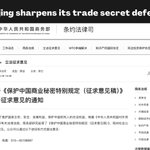
Foreign firms that infringe PRC trade secrets and threaten national interests could face trade bans, investment restrictions, entry bans and fines under new draft rules.
Zhou Mi 周密 CAITEC sees the proposal as a preventive addition to existing law, filling gaps in cross-border protection. It would also work alongside Beijing’s rules against improper extraterritorial jurisdiction.
source: buff.ly/bPhs4XP
#TradeSecrets #ChinaPolicy #IntellectualProperty #TradeCompliance #MofCom
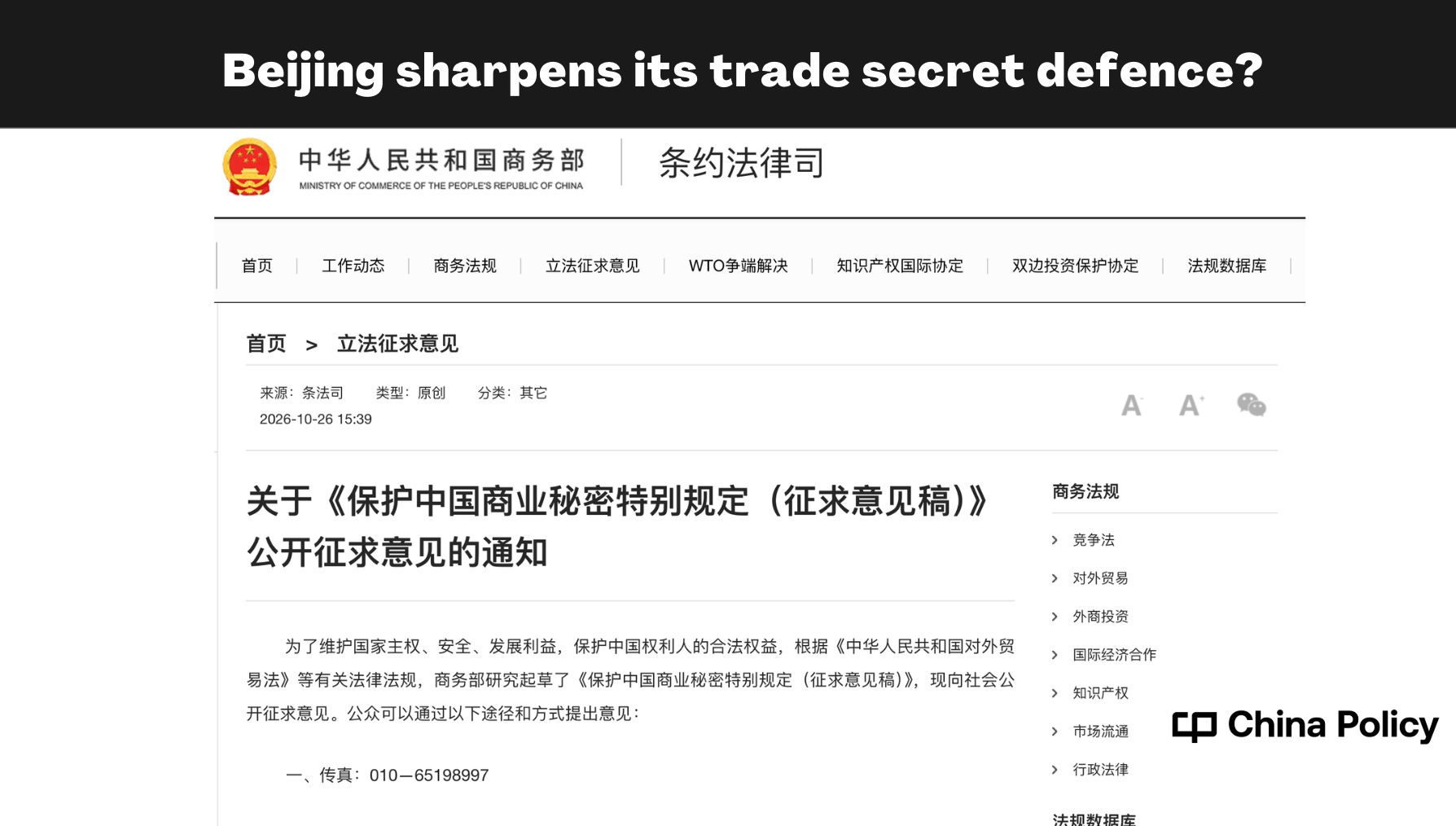
Foreign firms that infringe PRC trade secrets and threaten national interests could face trade bans, investment restrictions, entry bans and fines under new draft rules.
Zhou Mi 周密 CAITEC sees the proposal as a preventive addition to existing law, filling gaps in cross-border protection. It would also work alongside Beijing’s rules against improper extraterritorial jurisdiction.
source: buff.ly/bPhs4XP
#TradeSecrets #ChinaPolicy #IntellectualProperty #TradeCompliance #MofCom
Children are becoming a national strategic resource in the PRC.
Child-friendly policy now spans neighbourhoods, transport, healthcare, and rural services.
The aim ties better childhoods today to the workers and skills needed tomorrow.
Our explainer: buff.ly/wHt8O86
#PRC #PopulationPolicy #ChildFriendlyCities
CHINA POLICY retweeted
Beijing wants AI used first where workers are scarce or jobs are dangerous, while asking officials to manage its rollout cautiously in labour-intensive industries.
New State Council guidance calls for advance warning and job-transition support for displaced workers, along with employment risk assessments for some AI projects.
It aims to steer where and how quickly firms automate to protect jobs. How would this work in practice?
source: buff.ly/CKYm8RT
#AI #Employment #ChinaPolicy #Automation #LabourMarket

CHINA POLICY retweeted

The National Data Group 国家数据集团 puts the state at the centre of the PRC’s data economy. Unlike US tech platforms, which hold vast private data stores, it could link data across provinces and industries, widening access for firms and AI. Can it make data pay?
Our earlier coverage: buff.ly/YWuMhXi
#PRC #ChinaPolicy #NationalDataGroup #DataEconomy #DataGovernance #StateOwnedEnterprises #DataInfrastructure #DataMarkets #ArtificialIntelligence #DigitalEconomy

CHINA POLICY retweeted

China launched a new central state-owned enterprise (SOE) on Oct 20, the National Data Group (国家数据集团), to develop data resources and serve AI - jointly capitalized by five other central SOEs, the State Council, and Xiong’an New Area (中文) tinyurl.com/yh9jzmz9
Beijing wants AI used first where workers are scarce or jobs are dangerous, while asking officials to manage its rollout cautiously in labour-intensive industries.
New State Council guidance calls for advance warning and job-transition support for displaced workers, along with employment risk assessments for some AI projects.
It aims to steer where and how quickly firms automate to protect jobs. How would this work in practice?
source: buff.ly/CKYm8RT
#AI #Employment #ChinaPolicy #Automation #LabourMarket
CHINA POLICY retweeted
A wave of fund withdrawals can force bond sales, which can trigger yet more withdrawals. Beijing is preparing a new central-bank backstop to break that cycle.
It is also weighing an overnight policy rate and opening onshore FX trading to more offshore RMB banks.
The 2026 Financial Street Forum put wider market access and safeguards against financial stress on the same agenda.
source: buff.ly/h3ObzuI
