

Software Architect | Meditator
Pune, India
Joined September 2012
- Tweets3.8K
- Following75
- Followers96
- Likes3.7K






Pinned Tweet
I was having casual conversation (with my colleague Amey Potnis ) for implementing ChatBot for any Business use case without its dependence on LLM.
We were discussing how open source python project "pybot" does this, and it tuned out it uses lot of regexes at the core !!! while it is great effort, it may not scale well for real world use cases.
So after much concrete iterations with Gemini Hydrogen, DeepSeek 4.1 Flash and Claude Opus of actual code to implement i came up with extremely useful prompt that which you can follow to build lightweight private chatbot.
This prompt centred towards my own JS runtime called DynaJS and its immense capabilities to carry out the robust implementation. Its regex engine is upto 200x faster for simple to medium patterns and upto 12x faster for complex patterns compared to NodeJS or BunJS. DynaJS has in built support for all major class Machine Learning algorithms which can be used to build
The prompt is generic and can be used for any domain ( social media, education, healthcare, telecom, e-commerce, baking and finance etc)
Give it a try !
gist.github.com/corporatepiy…

2
1
50
Piyush Katariya retweeted

Introducing Edge0-145B and Edge0-120B, @Edge0_AI’s first device-native 100B-class foundation models with open weights.
Cloud-level intelligence on your laptop. Free, offline, and fast enough for real vibe coding.
- Smart: beats Claude Opus 4.6 on Terminal-Bench 2.1 (86.5% vs. 78.2%)
- Light: needs just 29G memory, 1/3 of a standard setup (100G+)
- Fast: decodes 75+ toks/s, prefills 1050+ toks/s on RTX Spark and Mac.
- Steady: handles 128K–256K tokens of context without slowing down, even on long tasks
Frontier-class agentic coding. No cloud API. No token bill. Your code and data never leave your machine.
Open weights are live on @huggingface. Run it locally or plug it into your favorite coding agent.

Piyush Katariya retweeted

Dario's spiel since GPT-2 has always been about hyping the dangers so that open models would be made illegal and *he* would stay in control.
He left OpenAI because he wasn't going to have control.
It's like the Ottoman Empire banning the printing press for Arabic so they would keep in control of the dogma.
It stops the population from freely accessing diverse knowledge.
It's a new form of medieval obscurantism.
Piyush Katariya retweeted

Qwen3.8-27B just got a big memory optimization in llama.cpp.
A new patch reduces speculative decoding state VRAM by up to 91%. At 32 concurrent sequences, memory usage drops from 37.4 GiB to just 5.5 GiB.
It also makes batched verification 34.5% faster on RTX PRO 6000.
The update works across CUDA, Metal and Vulkan. A really useful improvement for running Qwen3.8-27B locally.


Dark Magic 👽
sgiannopoulos.github.io/blog…
Piyush Katariya retweeted

Google made information cheap. AI made skills cheap. None so far have made understanding cheap. We can use AI to build magical things that we don’t understand. As if we somehow became the accidental recipients of an alien’s Amazon orders. Today’s parcel is the Reimann hypothesis.
Even after looking at so many explanations, I am too dumb to understand Riemann Hypothesis and P=NP 🥲
30
Piyush Katariya retweeted

Over the past week, I’ve been overwhelmed by the love and support of friends, industry colleagues, and people I've never met. Thank you to everyone who has shown kindness to my family and me. It means the world to me.
I came to the United States 53 years ago, and becoming an American citizen is one of the greatest gifts and proudest moments of my life. NVIDIA has been my life’s work. Building it into the company it is today alongside my colleagues has been a privilege and an honor. Nowhere but in America could a company like NVIDIA be possible. I love our country, and I love NVIDIA.
I did not live up to the standards expected of everyone at NVIDIA, and I have made serious mistakes in my personal life. I created problems for the Board that I deeply regret. I own my mistakes completely, and I am committed to cooperating with the Board’s independent investigation.
Since my departure, I’ve seen an outpouring of calls from NVIDIA’s employees, investors, business partners, and customers for me to return as CEO. Many continue to reach out to me directly as the company navigates complex technology, market, competitive, and geopolitical dynamics. NVIDIA is a once-in-a-generation company. If the Board of Directors decides that my return is in the best interest of our shareholders, our employees, the company, and America, I would be honored to answer these calls and return as CEO.
Thank you again to everyone who has shared their good wishes. I am profoundly humbled by your support. To my family: I love you, and I will spend the rest of my life being worthy of yours.
Jensen
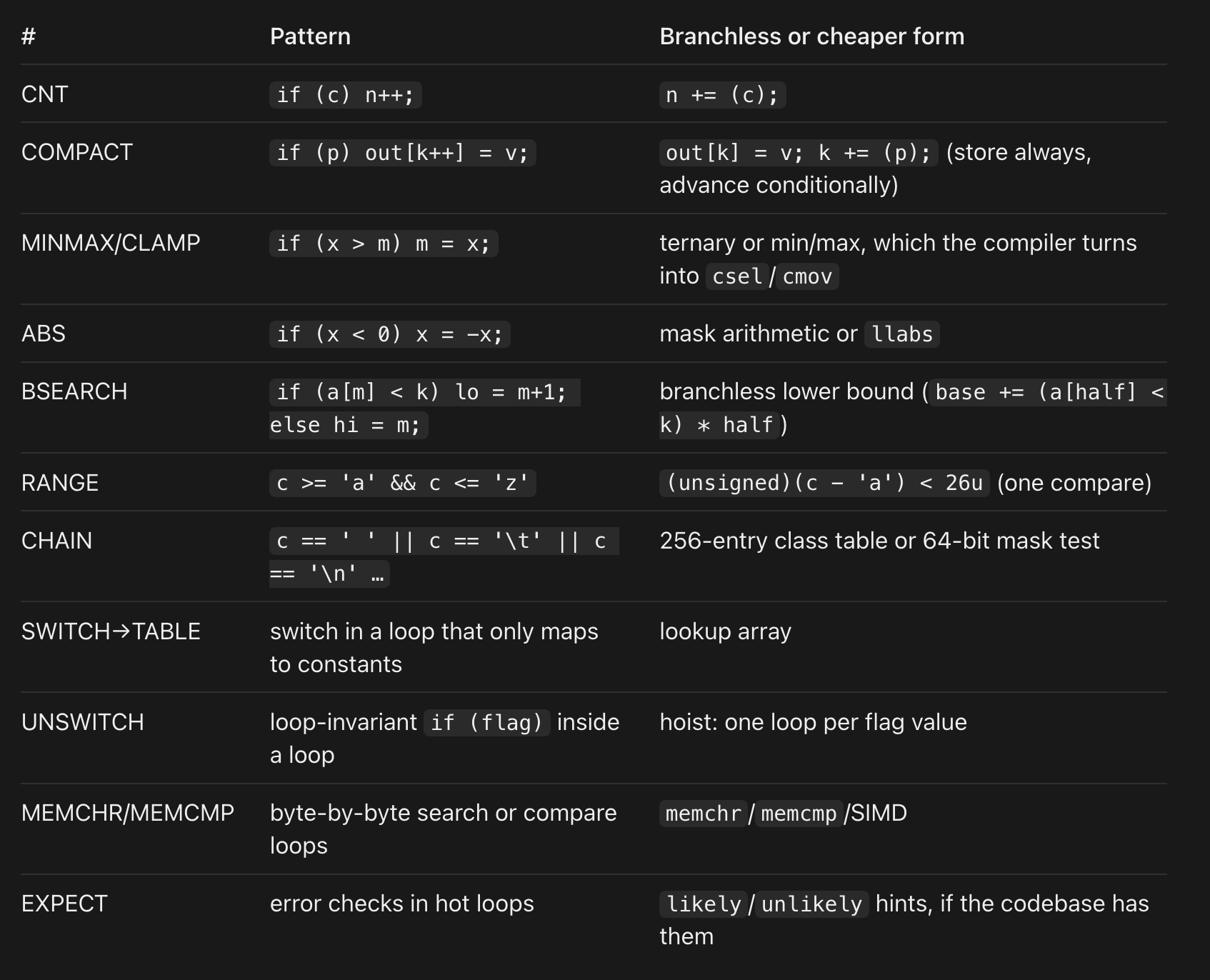
HOT Take: Asking coding agents to follow/implement certain algorithm is less important than asking them for "loop-fission" programming optimization in source code.
CPU and caches are weird and do not respect linear thinking.

1
56


Piyush Katariya retweeted

nobody believes me when i say this is deepseek
first prompt was a blue rectangle and a hoop
3 follow-ups later it built hollywood floating in the clouds
same model. different prompting
I am amazed this type of fingerprinting is possible

I have a major result to share.
I’ve found conclusive forensic evidence that the top 4 Chinese AI labs—DeepSeek, Moonshot, MiniMax and Ant Group—have built their newest models on NVIDIA’s most advanced Blackwell chips, which are barred from export to China.
This sounds insane, but I discovered that almost every AI model carries a hidden signature of the GPU that trained it. When a model is first set up, the starting values of its weights are laid out in a pattern that depends on the exact GPU. Each combination of GPU and seed number produces a unique pattern—a sort of fingerprint of the hardware used to create the model. Traces of that pattern survive training into the published model.
Again, this evidence isn’t based on any insider information or leaking. It’s based on a forensic analysis of the model weights released by the companies themselves.
I searched more than six trillion combinations of chip layout and seed number and matched them to open-weights models. In doing so, I found conclusive evidence that six Chinese AI models—including DeepSeek-V4-Pro, Kimi K3, and MiniMax-M3—were initialized on NVIDIA Blackwell systems. Four of the models match Grace Blackwell, the GB200 and GB300 parts in NVIDIA’s flagship liquid-cooled rack-scale systems.
I then verified these results on real hardware. Running unmodified PyTorch with the seeds I’d recovered, a Blackwell B300 reproduced DeepSeek-V4-Flash’s untouched starting weights bit for bit, and a rented GB200 reproduced Kimi K3’s to a correlation of 0.999995. A Hopper H100 reproduced none of DeepSeek-V4-Flash’s, and changing the seed by one broke the match. (DeepSeek’s seed is 953049583 by the way.) The method also was verified to match 24 known open-weights models to the hardware that developers said they used.
It is exceedingly unlikely that these results are a coincidence. Across six trillion combinations, the best accidental match should reach only about 8 sigma (i.e., eight standard deviations above what random chance would produce). The real matches range from 49 to 1,385 sigma, and even the weakest single test hits 20.
These were data-center-scale training runs. With some analysis of release schedules and model details, I estimate that the largest, Kimi K3 and DeepSeek-V4-Pro, used 2,000 to 3,000 Blackwell GPUs each. Clusters of this size cost on the order of $150 to $200 million each to buy, and across these labs alone would add up to more than half a billion dollars of export-controlled GPUs, not counting experimental compute or otherwise. It’s quite likely that we see multi-billion dollar expenditure on export-controlled GPUs.
I am highly confident in this result, and it has been independently verified by senior researchers at OpenAI and Anthropic. You can read the full report at unemploymentlabs.com/checkpo….
There is much more I’ve identified about these models through other forms of checkpoint forensics like this, and will have more to share soon.

22
Piyush Katariya retweeted

Dostoevsky exposes you. Tolstoy widens you. Kafka unsettles you. Woolf slows you down. Camus frees you. Orwell warns you. Austen reads you better than you read yourself. Hemingway strips you bare. Nietzsche dares you. Márquez enchants you. You don't read these people. YOU SURVIVE THEM.
Piyush Katariya retweeted

buzz 1.0 is finally here! the most flexible team workspace out there. for humans and agents, model agnostic, local or cloud, and infinitely extendable.
buzz.xyz

Piyush Katariya retweeted

We have dumped JAX/SGLang and rewritten the entire RL and inference stack from scratch in C/C++, which took some extra time.
Training (aka pre-training) is done. Lot of cleanup was needed on the SFT data to get that mostly right. Now, 4.8 is in RL and the evals are starting to climb. We will do a soft rollout to Bot users later this week and see how it goes.
Grok 4.8 will bear no resemblance to 4.7 (thankfully). It is not yet incredible, but, this time, the foundations are built right, so I expect it to evolve to be something special.