

Software developer with 15+ years in AAA gamedev. Background in systems programming, concurrency, debugging, optimization and a little audio & 3D
Toque weather
Joined July 2008
- Tweets2.8K
- Following556
- Followers4.3K
- Likes6.9K



Jeff Preshing retweeted

SOLVING is SOLVED.
ClaudeGPQwen 7 has just DROPPED and it's INSANE.
It's BROVER.
Jeff Preshing retweeted

Yes. It takes a lot of skill to design a language that is fast to compile by design, and then skill to write and optimize the compiler for that language so that it is fast at compiling too.
But I know that's not what you meant 😉


Jeff Preshing retweeted

Principal research scientist at Google's Deep Mind 👇
nitter.cf/jon_barron/status/2106…

I recently added similar guardrails to my open C++ harness:
🧰 plywood.dev/docs/high-level/…
It's a way to monitor agents' tool requests and verify that each request complies with a given policy before running it. I hope His Holiness @Pontifex finds it interesting 🙏


Pope Leo criticises Nvidia’s Jensen Huang over AI safety ft.trib.al/azwdiGc

I think it's mostly a matter of systems programming vs. applications programming. At the systems level, it's best to keep the codebase human-readable and human-maintainable because your uptime depends on it. At the applications level, there is a little more tolerance for vibe coding as long as things don't get too hairy, and you can always dive back in later if needed.
Some people are eager to predict that even systems programming will be fully automated soon. Maybe that'll be true some day. But for now, why not try to make systems programming simpler, so that anyone can learn it? That's the motivation behind my open C++ runtime library, plywood.dev/, and with agents it's only getting easier to improve it.


It was worth every penny, especially when you and your friend got jump scared while waiting for Way of the Exploding Fist to load


Jeff Preshing retweeted

I’m crying of laughter - please let this be the model that solved Navier-Stokes
(this guy’s name is hayZee, we need to get him on here!)

100% agree with Jensen here

Tomorrow on the show: @JensenHuang, the CEO of NVIDIA, who thinks A.I. fear is getting way out of hand.


None of this changes the fact that the Hugging Face mishap was totally preventable from a technical standpoint.

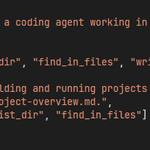
Giving agents shell access scares me. It's the easiest way to automate work end-to-end, but those agents can be quite wily (as we all know) and there are usually only certain actions I want them to take, like building a project, running it or attaching a debugger.
So, being a safety-minded person, I added an experimental "auto approve" feature to my minimal C++ agent library. It uses a second agent to review the tool calls of the first agent.
🐙 Commit: github.com/preshing/plywood/…
📋 Documentation (WIP): plywood.dev/docs/apps/agent#…
It's inspired by Codex's "auto approve" feature, but uses explicit configuration settings. Further improvement is possible, but the basic idea works. Curious to see if it stands up to actual use...

Cool idea! I find there's a tendency to delegate too much control to AI tools today. This project takes a different approach, keeping the process on rails while leveraging AI for decision-making. You can even use an LLM to write the script.

I've seen people describe Jev as an "AI if statement". But what if it actually WAS an if statement?
Introducing Probably: a programming language powered by Jev: probably-lang.southpolesteve…
Jev baked into the language. “feels” asks a question. “match” routes between descriptions. “while” keeps going until something stops feeling true.
This is obviously a toy, but it's fun to think about what something like Jev unlocks. Jev makes the decisions, an LLM does the writing, and a little program ties it together.

