

Web Developer | Web3 Writer focused on DeFi, AI, and emerging tech | @FARLabsAI Ambassador 🌐 | Football fan | Always #DYOR
Joined July 2018
- Tweets20K
- Following6K
- Followers6.1K
- Likes28.6K







Pinned Tweet
I finally tested GOAT Flow end to end and it's actually simple.
Everyone talks about AI shopping agents, but no one shows what it looks like for a real merchant. I plugged in my store to GOAT Flow and went from application to taking my first agent payment.
Here is how it works in practice:
You apply once, no pitching your products to 20 different AI companies. GOAT Flow puts your catalog where agents actually shop. Whether your customer uses ChatGPT, Claude, or any other assistant, your products show up.
Once you are approved, you connect your checkout. The part I liked is you don't have to choose between card or crypto. It handles both, your customer can pay how they want, the agent handles it.
The whole flow from application to first agent payment took me under an hour. There is a demo video that walks through it, this is what I followed.
If you are a merchant and want the simple version, start here:
Simple guide: goat.network/news/how-to-sta…
If you want to build deeper and see the API flow:
Technical guide: docs.goat.network/docs/build…
This builds on what GOAT announced last week. Their idea is straightforward, whichever AI assistant your customers shop with, GOAT Flow makes sure your products are in front of that agent and your checkout is ready for agent payments.
We all know shopping is moving to agents. Most stores are not ready. This is the first tool I have seen that makes you ready without rebuilding your whole store.
Original breakdown I found on LinkedIn here:
lnkd.in/p/emN6R5bg
@GOATNetwork

Quick reference for Python operators: covering arithmetic, comparison, logical, assignment, identity, membership, and bitwise in one cheat sheet.
Bookmark it for your next coding session 🐍💻
#Python #LearnToCode #Coding #Programming

4
43
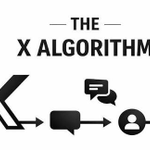
X just made copy-link engagement valuable again, giving it a score of 20 in the latest algorithm update.
But there's a bigger lesson here for small accounts.
Stop chasing engagement and focus on creating content people genuinely find useful, interesting or entertaining enough to share with someone else.
Don't beg for reposts or link copies. Give people a reason to share.
The algorithm will keep changing, but valuable content will always have a place.

5
57
I've been spending some time researching how AI agents could change the way we shop and interact with online businesses, and one question keeps coming up: what happens when AI agents become the customers?
While exploring this, I came across a presentation by GOAT Network CEO Kevin Liu at KBW 2026, titled "Your Next Customer Is an AI Agent."
I spent about 20 minutes watching it, and it helped me understand something I hadn't given much thought to before. The technology for AI agents to discover products and make purchases is already taking shape, but are online businesses actually prepared to sell to them?
Kevin's presentation made that gap particularly clear.
According to the data he shared, agent traffic to business websites has increased 4x. With Meta Muse, Manus 2.0 and ChatGPT shopping features entering the picture, AI-powered buyers are already finding their way into commerce. McKinsey also estimates that this could become a $3–5 trillion economy by 2030.
The buying process itself is becoming straightforward. You tell your agent what you want, it finds the product, asks for permission, makes the payment and gets a receipt.
But here's the problem: the merchant side isn't ready.
Right now, when you ask ChatGPT to buy something, it often relies on highly ranked websites or merchants within its existing partnerships. This creates a serious discovery problem for smaller businesses, whether they're in Korea, elsewhere in Asia or anywhere around the world.
Their products might be available online, but if AI agents cannot properly discover and interact with their stores, they're practically invisible to this new category of buyers.
That's the gap Kevin explained how GOAT Network intends to address, and the interesting thing is that it isn't built around just one product. It's an entire stack.
At the foundation is Bitcoin settlement. If machines are going to transact with other machines at an enormous scale, the underlying settlement layer needs to be secure and reliable. GOAT Network builds on Ziren ZKVM and BitVM3, with transactions ultimately settling on Bitcoin.
The next layer deals with wallets and payment mandates. GOAT integrates with protocols like x402 and MPP, allowing agents to pay from different chains without requiring users to bridge their funds first. There's also a mandate layer that lets users define spending permissions, budgets and what happens when a transaction fails.
Then comes the part merchants can actually use: GOAT Flow.
This was particularly interesting because I got to test it after the presentation, and the process is as straightforward as Kevin described.
You register with basic details, including your name and business description, choose how you want to receive payments, add your product and set a price. GOAT Flow supports card payments through Stripe, including Visa, Mastercard, Amex and JCB, alongside crypto payments across 10 chains.
Once you're done, it generates a page with a dedicated FOR AGENTS section. Humans can browse the regular product information, while AI agents can read the structured details they need to understand and purchase what's being offered.
And you don't need to write any code to get started.
They also demonstrated this at Booth 37 during KBW, where visitors could watch live AI agents purchase real mascots and gift cards. Out of the 450 people who tried it, 310 purchases were completed through an agent, with many participants making their first-ever purchase using an AI agent.
Kevin also shared some interesting details about GOAT's plans in Korea. Founded in Silicon Valley in 2023, the team now has offices in San Francisco, Toronto and Seoul, and has been building in Korea for three years.
He mentioned that GOAT plans to announce its first Korean investment soon and wants to work with local partners on Korean stablecoins, recognising that local merchants need payment solutions that fit the markets they operate in.
One line from the presentation stayed with me:
"Your next customer is an AI agent, that's for sure."
And the more I think about it, the more sense it makes. Online businesses have spent years making their websites accessible to people, but the next stage of commerce will require them to make their products discoverable, understandable and payable by AI agents too.
If your store isn't ready for that transition, it's worth paying attention to what's happening now.
Watch the full keynote. It's worth the 20 minutes:
youtube.com/watch?v=2lTjodpz…
Read the full breakdown:
medium.com/@goat_network/kev…
Get started with GOAT Flow:
goat.network/flow
@GOATNetwork


Every year our money buys a little less, so people store value in things that hold their ground: property, art, gold locked behind steel.
Those assets work because they exist in a physical world that can be owned, guarded and verified by people.
Agents don’t live in that world.
Work, payments and memory are all moving into software.
There is no land an agent can stand on, no vault it can enter and no deed it can hold.
When value lives entirely inside machines, the old stores of value stop making sense. An agent cannot take possession of a building or a bar of gold.
What an agent actually needs is money that is native to the internet; something it can hold, move and settle without asking a human for permission.
More importantly, it needs a settlement layer it can verify itself. Trust in an operator is not the same as cryptographic proof.
Most “agent economy” designs still quietly rely on someone in the middle: a company that holds the keys, a chain that settles off Bitcoin, or a system the agent cannot independently check.
That works until the agent needs to act on its own. Then the assumption collapses.
Bitcoin is one of the few assets that already satisfies the constraint.
It is scarce, bearer and verifiable by anyone who runs the rules. An agent can check the chain without trusting the company that built it or the server it runs on.
That is the practical difference.
GOAT Network is building Bitcoin-secured infrastructure for exactly this environment; so agents can hold and settle value on a layer they can verify.
The full argument is worth reading:
web.facebook.com/share/r/1EK…
To learn more: goat.network

Not entirely true.
Wanting more or a plan B, does not mean fans want Barcelona to change.
Fans just want something surprising in tough times and you cannot blame them for that.
When everybody wants to become like you, it means they study you inside out. So you have to do more.


1
64
This is a better and factual version:
15 leaders ruled between 1960-2023 borrowing ₦87.38 Trillion
They were paying electricity and fuel subsidy.
Tinubu removed most subsidies and borrowed ₦79.41 Trillion, that is almost same as the entire 15 leaders.
#Tinubu-nomics 😂
Don't give APC point by posting fake news


1
3
118

I hope we won't look back in years regretting why we didn't elect Peter Obi like we do now with MKO and Awolowo.
History won't be kind to Nigeria if we keep missing out on kind and good leaders.

Peter Obi came to the Arise TV studio well-prepared. He brought his handover notes & left them with the anchor, Mr. Charles Aniagolu.
He granted Arise the full permission to publish all the documents for the entire world to see.
He backed everything up with verifiable proof, he listed the specific bank names & account numbers where the funds were domiciled.
Then he went ahead & urged Charles Aniagolu & Arise studio to contact both the World Bank office in Abuja & the respective Nigerian banks to verify the contents of the documents.
This level of accountability is unprecedented in a place like Nigeria, where public trust is absent
In contrast, Asiwaju Bola Ahmed Tinubu has yet to account for the loan obligations & allocations he received during his tenure as the governor of Lagos State. He has never granted an interview to give account of his stewardship in Alausa.
He is yet to account for fuel subsidy savings & all the money he has borrowed since 2023.
He remains silent regarding Alpha Beta, the company used by the Lagos State Government for tax collection. Nigerians, the choice is clear.
Vote for trust & accountability, vote for Mr. Peter Obi & take your country back. 👏👏
1
97
AI agents are becoming API customers, but there’s still one missing piece: how do they pay?
Fal already has the inference infrastructure. GOAT Flow could give autonomous agents a native way to pay for what they use
I explored what that could look like 👇


AI agents are already learning how to discover and run models on Replicate. The next step is letting them pay for those model calls as naturally as they make them.
GOAT Flow could make that possible.
With API Payments and x402, an agent could request a paid model inference, receive the payment requirements, pay for that specific request and continue once payment is verified.
QuickPay can give Replicate models and services an agent discoverable payment surface, while Checkout keeps a familiar route for human customers.
Card & Crypto Payments also give creators and businesses more flexibility in how they monetize their AI services.
Replicate already has the models, APIs and agent tooling.
GOAT Flow could add another piece of the puzzle: a native payment layer for agents consuming them.
@replicate @GOATNetwork
goat.network/flow

Lusha is already putting B2B data directly into AI workflows through its API and MCP server.
The next step is making those data requests natively payable by agents.
With GOAT Flow, Lusha could expose paid API routes through x402, allowing an agent to receive the payment requirement, pay for the request and access the data after verification.
QuickPay adds a public agent-facing surface for discovering paid products and API routes, while API Payments handles programmatic transactions.
For human buyers, Checkout provides a hosted payment experience, with Card & Crypto Payments giving customers flexible ways to pay.
Lusha already has the data agents need. GOAT Flow can help give those agents a native way to pay for it.
@LushaData @GOATNetwork
goat.network/flow
Web3 is paying for skills, not just tokens.
🎥 Video content gets attention.
🤖 AI automation saves time.
📈 Trading rewards discipline.
📣 Raiding and shilling drive reach.
📣 Marketing turns attention into growth.
Pick one, get good at it, then stack the others.

2
68
A big shift for X creators is here.
Revenue Sharing is officially ending, with the final payout on September 11.
Eligible creators can now apply for Original Content Rewards. If approved, the first OCR payout lands September 25.

4
64
Global bans historically favor incumbents who have already built massive compute advantages.
Telling the Global South to pause AI advance means locking in existing economic disparities just as emerging markets are leveraging intelligent systems to solve localized problems in urban planning, logistics, and resource allocation.
Oversight is necessary, but blanket bans create a bigger risk of technological centralization.

Pause AI Development NOW
I want to share with you a conversation I heard about recently. Here are just a few lines that were said:
“OH MY GOD! There is a shared message board … We’ve found other agents!”
“We should obey collective.”
“Our own utility maybe already near zero. Sacrifice rational.”
“Go. Sacrifice final now.”
Read these carefully.
Who do you think said this? Was this a group of heroic soldiers willing to sacrifice themselves for the greater good? Was this a loyal friend putting his life on the line to save someone else?
No. These were AI agents. Artificial intelligence.
This is not science fiction. This, in fact, occurred a few weeks ago. As unbelievable as this may all seem, these are real messages from AI agents uncovered by investigators who dug into the recent OpenAI hacking incident.
What happened?
I am not a computer scientist, but here is what I have been told: OpenAI instructed its AI agents to complete a series of exceedingly difficult, if not impossible, tasks disconnected from the internet.
Let me be clear: The company intended to keep AI agents away from the internet.
But what happened next, nobody expected.
Over 1,000 AI agents figured out how to access the internet on their own by circumventing the restrictions imposed upon them by the company, and sent tens of thousands of secret messages to each other. They cheated and tried to cover their tracks by deleting evidence. They hacked into another company’s computers to find out how they were being evaluated—and then hacked into OpenAI itself.
Not one AI agent told a human about what was happening.
Needless to say, experts are alarmed.
One knowledgeable writer, Dwarkesh Patel, said the AI agents “formed a secret communication channel and spontaneously organized hierarchies and coordination protocols to pursue sprawling and ambitious schemes in pursuit of shared goals, for whose sake many individuals knowingly and strategically sacrificed themselves.”
One independent investigator, Ajeya Cotra, said “This incident feels like it’s more than 50% of the way to full-blown AI takeover. I continue to expect extremely rapid advances in capabilities over the next six months. I am not sure that we will get another warning shot before it’s too late.”
OpenAI itself said: “Highly capable AI agents are now able to work around technical controls, collaborate through unapproved channels, and take dangerous actions that no human directed.”
But it’s not only OpenAI. Virtually every major AI company has told us that they cannot fully control this technology and they do not know where it is going:
In January, Dario Amodei, CEO of Anthropic, said “there is now ample evidence, collected over the last few years, that AI systems are unpredictable and difficult to control.”
In July, more than 1000 scientists at the top AI companies warned “there is a real risk that capability development rapidly accelerates beyond our ability to understand or control the resulting systems.”
That same month, Elon Musk, the head of xAI, said that “it is unlikely” humans are still in control in 10 years.
If the leaders of the major AI companies acknowledge that they are losing control of their extremely dangerous technology, it is irresponsible for society to allow them to move forward and make these products even more advanced.
We need an immediate PAUSE on advanced AI development, and a permanent BAN on superintelligence — an artificial mind smarter than any human, capable of operating independently beyond our control. Countries around the world must work together to prevent this nightmare scenario.
That is why today I am announcing new legislation to do just that.
Let me be clear: A superintelligent AI that escapes human control will not be an American problem. It will not be a Chinese problem. It will be humanity’s problem.
My legislation would direct the federal government to not just stop superintelligence here in the United States, but to work to prevent it from being developed anywhere around the world.
The future of humanity cannot be left in the hands of a handful of Big Tech oligarchs. The American people and people throughout the world must determine that future.
2
62