

Say something true, or atleast useful.
Austin, TX
Joined July 2021
- Tweets1.7K
- Following864
- Followers535
- Likes2.9K






product retweeted

this is insane. i genuinely don't understand why ambitious people aren't shown this lecture before their careers start consuming their entire lives.
clayton christensen spent his career studying why successful companies collapse. in his final class, he asked students to apply the theory to themselves: if you keep allocating your time the same way, what life are you actually building?
he had already seen the answer in his own harvard mba class. everyone looked successful at the fifth reunion; by the 10th, 15th, 20th, and 25th, many were unhappy, divorced, and living far from their children.
work shows you the score immediately. close a sale, ship a product, finish a presentation, earn a promotion, get paid.
an hour with your child may produce nothing you can measure today; it may take 20 years to understand what that hour built. so the next free hour goes back to work, one rational decision at a time.
this is how people build lives they never planned: through hundreds of right decisions that lead in the wrong direction, day after day.
money, titles, and headcount are easy to count. christensen believed a life should be measured by the people who became better because you were there.
he died in 2020.
one question remains: if someone saw only where your time, energy, and attention went this year, what would they think actually mattered to you?
the full 19-minute lecture is in the video below.





product retweeted

A question I am thinking about a lot recently:
“How do you not lose your soul as a leader in the AI era?”
I won’t lie to you. I see a lot of people operating in a way that, when they look back on their life, will fill them with disgust. It fills me with disgust.
People ask why I have become so negative about AI and I simply say “I am watching people in the workplace lose their humanity.”
So how do you lead with dignity? The first three things that are very clear to me:
1. You owe it to your people to think very deeply about what every single role will look like 1-2 years from now. - What parts of this job are different
- Where is human judgement still required?
- Do I even need this job any more?
- If I need a different job, can I train the people I have today to start doing the new job?
2. Clarity is kindness. Anxiety is at an all time high. Every single person is already asking themselves that question. You owe them clarity. “I don’t know” is still clarity. Perhaps they will show you the future.
3. Try to show up with kindness. At the end of the day you will be fucking dead and nobody will remember your name. Nobody will remember the work you did. It doesn’t matter. It’s not worth it to be a piece of shit, sven if you’re scared or stressed. Just try to be kind.
product retweeted

the Claude Code vs Codex battle is a peek into the future of software. There are no laurels to rest on. You’re going to have to prove value every minute of every day on every agent action
product retweeted

A common dynamic I observe with AI: it feels most impressive when you don’t know much about the subject, don’t care or don’t have a clear idea of what the you want.
This applies across design, code, legal, and more. If I don’t know code very well, every piece of code it writes feels very impressive.
Once you know what something should feel or look like, it becomes almost impossible to guide AI there. And you definitely can’t one-shot it.
product retweeted

Built clawsweeper, which runs 50 codex in parallel around the clock, scans issues/prs deep and closes what is already implemented or what makes no sense.
Closed around 4000 issues today, a few thousand are in the pipeline. (rate limits are rough) github.com/openclaw/clawswee…


product retweeted

🧵 My tips for getting the best results out of Claude Design! I’m on the verticals team at Anthropic which means I serve 7 different products. Claude Design makes it possible!
1. Set up your design system and your core screens. An hour of setup and refinement here is worth it

product retweeted

We use OpenClaws to do all of our work at @every.
We have 25 full-time employees, so we’re one of the few companies in the world that has seen how work changes when everyone has their own personal agent in the company Slack.
I chatted with @every COO Brandon (@bran_don_gell) and @every head of platform Willie (@bigwilliestyle) to share what we’ve learned.
We get into:
- Why agents become mirrors of their owners, and how that influences how other people on the team interact with them
- How a parallel AI org chart forms on its own. People have stopped tagging me on Slack with questions about Proof, the document editor I vibe coded, because they knew my agent R2-C2 can step in
- The etiquette for human-agent collaboration is being invented in real time. Brandon's rule is that if there's an established process or documented answer, always ask the agent, not their human
- Why everyone is a manager now, and why even experienced managers carry limiting beliefs about what their agents can do
- This is a must-watch for anyone trying to understand how AI workers change daily operations, not just in theory, but inside a company that’s half-agent
Watch below!
Timestamps
Introduction:
How Brandon built Zosia, an AI agent to run his household:
Brandon’s “aha” moment:
What happened when everyone on the team got their own agent:
How agents take on their owners' personalities, and why that matters inside an org:
Why it’s important for agents to work in public:
What we’re still figuring out when it comes to agent behavior, including memory gaps, group chat etiquette, and the "ant death spiral" problem:
How we built Plus One, our hosted OpenClaw product:
The cultural shift required to make agents work at scale:
product retweeted

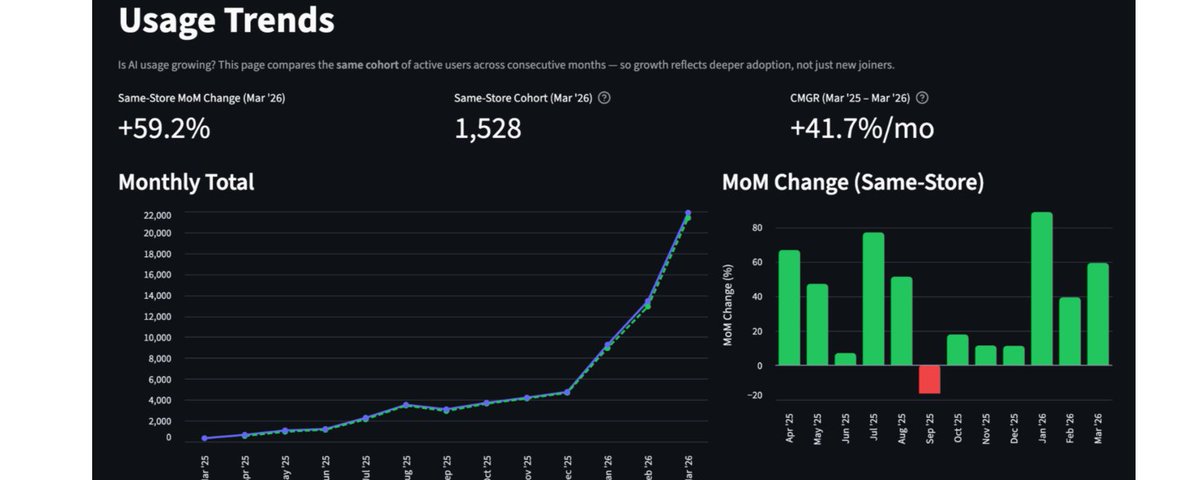
This is insane. Pedro Franceschi (29 year old CEO of Brex, acquired by Capital One for $5.15B) decomposed his CEO job using OpenClaw.
here's what he’s built:
> signal ingestion pipeline screens his email, Slack, Google Docs, and WhatsApp... filters everything through specific programs and the 25 key people he cares about
> Granola runs on every meeting, feeds transcripts into the pipeline, and auto generates action items
> the system takes each to-do, pulls context from the original meeting, and drafts the follow-up... Slack, email, or text. Pedro just clicks approve.
> a virtual recruiter named "Jim" lives in Slack with his own email... and taught himself to screen fabricated resumes without anyone coding that capability
> a security layer called "Crab Trap" intercepts all agent network traffic through an LLM proxy... a second AI monitoring the first in real time
this isn't some bullshit hype influencer demo. this is how a $5 billion company CEO actually operates right now.
anyone telling you OpenClaw is useless?
liars.
a billion dollar company says otherwise.
(full podcast link in the post below) 👇

product retweeted

Wow, this tweet went very viral!
I wanted share a possibly slightly improved version of the tweet in an "idea file". The idea of the idea file is that in this era of LLM agents, there is less of a point/need of sharing the specific code/app, you just share the idea, then the other person's agent customizes & builds it for your specific needs.
So here's the idea in a gist format: gist.github.com/karpathy/442…
You can give this to your agent and it can build you your own LLM wiki and guide you on how to use it etc. It's intentionally kept a little bit abstract/vague because there are so many directions to take this in. And ofc, people can adjust the idea or contribute their own in the Discussion which is cool.


LLM Knowledge Bases
Something I'm finding very useful recently: using LLMs to build personal knowledge bases for various topics of research interest. In this way, a large fraction of my recent token throughput is going less into manipulating code, and more into manipulating knowledge (stored as markdown and images). The latest LLMs are quite good at it. So:
Data ingest:
I index source documents (articles, papers, repos, datasets, images, etc.) into a raw/ directory, then I use an LLM to incrementally "compile" a wiki, which is just a collection of .md files in a directory structure. The wiki includes summaries of all the data in raw/, backlinks, and then it categorizes data into concepts, writes articles for them, and links them all. To convert web articles into .md files I like to use the Obsidian Web Clipper extension, and then I also use a hotkey to download all the related images to local so that my LLM can easily reference them.
IDE:
I use Obsidian as the IDE "frontend" where I can view the raw data, the the compiled wiki, and the derived visualizations. Important to note that the LLM writes and maintains all of the data of the wiki, I rarely touch it directly. I've played with a few Obsidian plugins to render and view data in other ways (e.g. Marp for slides).
Q&A:
Where things get interesting is that once your wiki is big enough (e.g. mine on some recent research is ~100 articles and ~400K words), you can ask your LLM agent all kinds of complex questions against the wiki, and it will go off, research the answers, etc. I thought I had to reach for fancy RAG, but the LLM has been pretty good about auto-maintaining index files and brief summaries of all the documents and it reads all the important related data fairly easily at this ~small scale.
Output:
Instead of getting answers in text/terminal, I like to have it render markdown files for me, or slide shows (Marp format), or matplotlib images, all of which I then view again in Obsidian. You can imagine many other visual output formats depending on the query. Often, I end up "filing" the outputs back into the wiki to enhance it for further queries. So my own explorations and queries always "add up" in the knowledge base.
Linting:
I've run some LLM "health checks" over the wiki to e.g. find inconsistent data, impute missing data (with web searchers), find interesting connections for new article candidates, etc., to incrementally clean up the wiki and enhance its overall data integrity. The LLMs are quite good at suggesting further questions to ask and look into.
Extra tools:
I find myself developing additional tools to process the data, e.g. I vibe coded a small and naive search engine over the wiki, which I both use directly (in a web ui), but more often I want to hand it off to an LLM via CLI as a tool for larger queries.
Further explorations:
As the repo grows, the natural desire is to also think about synthetic data generation + finetuning to have your LLM "know" the data in its weights instead of just context windows.
TLDR: raw data from a given number of sources is collected, then compiled by an LLM into a .md wiki, then operated on by various CLIs by the LLM to do Q&A and to incrementally enhance the wiki, and all of it viewable in Obsidian. You rarely ever write or edit the wiki manually, it's the domain of the LLM. I think there is room here for an incredible new product instead of a hacky collection of scripts.
product retweeted

NEW EPISODE: @jack & @roelofbotha unpack @blocks 40% staff cut and rebuilding the entire company as a mini-AGI.
This isn’t “use AI to make people more productive.” It’s making the company itself the intelligence.
If you’re a founder or operator wondering what work looks like in the next 5 years… this is the episode.
The evolution looks like:
• Manager mode = Pyramid 🔺 (command & control)
• Founder mode = Flat ➖(founders decide fast)
• Dorsey mode = Circle 🔵 w/ AI at the center, humans at the edge, and decisions flow from customer inputs → AI → humans steering it
I’ve tried killing org charts before. Brutally hard. But we never had these tools.
This is rewriting the CEO playbook for the AI era.
Buckle up.
00:00 Existential Dread & Hope
02:56 AI Replaces Hierarchy
07:22 Block’s New Three Roles
26:47 Flattening the Company, Fast
35:23 Getting the Board to Buy-In, Fast
36:50 Building a Great Board
41:29 Founder CEO Lessons
48:18 Second Acts & Conviction
56:22 Timeless CEO Traits
product retweeted

I’m in love with this sentence:
“The degree to which a person can grow is directly proportional to the amount of truth he can accept about himself without running away.”
product retweeted
this is an extremely good explanation of why the things that we today call systems of record increase in value in a world of abundant intelligence. work will always require intention and coordination, whether performed by a human or an agent

Linear has always been about coordination and communication in the company. You could have always just built features directly to the codebase, but then there is not that much visibility to others and understanding why the changes were made, or how it was decided.
Your codebase is also not the source of customer problems, feedback or bugs. They get reported from customer channels, and Linear has tools to manage those workflows, and then automatically connect it to agent + human execution.
There is also time shift where you might want to sit on a feature a while and collect more feedback or have a discussions to understand the full picture. Linear is this centralized place for the whole org. The danger of jumping to isolated solutions quickly is that you don't realize the larger pattern.
What has changed that execution bandwidth has increased because agents, but I would argue that having direction, intent, context or communication has even increased because faster you go, the more streering you should have.
I think the misnomer is that issue tracking is classically considered as some kind of "engineering tasking tool", like tickets flow from the front desk to the kitchen and then completed.
But we always thought Linear as product building tool, having the tools, communication channels and workflow rails to work through problems.
But I think we will as an industry find how tools or workflows will need to evolve and problems no longer matter and what new problems arise.
product retweeted

my current favorite trick for reducing "cognitive debt" (h/t @simonw) is to ask the LLM to write two versions of the plan:
1. The version for it (highly technical and detailed)
2. The version for me (an entertaining essay designed to build my intuition)
Works great

