

Capturing the presence of vocalizing #biodiversity in India using creative remote sensing technology. #bioacoustics #conservation #ecology @E3BColumbia
India
Joined September 2020
- Tweets536
- Following325
- Followers425
- Likes840





Pinned Tweet
Our team's first publication led by @Poojation coming out of central #India. Read about how #soundscapes differed across restored and unrestored tropical dry #forests.
#restoration #conservation #bioacoustics
CC: @WILDLABSNET @AudioMoth @RainforestCx @E3BColumbia

Been away for fieldwork since early 2023 building on work behind this OA @SERestoration paper with folks @ProjectDhvani @mayurikotian22 @Megs59801921 @4thewildtiger @vjjan91 @ruthdefries and others. We asked what #soundscapes can tell us abt #restoration. onlinelibrary.wiley.com/doi/…

Project Dhvani retweeted

A recent study from @project_dhvani -- a collaborative research group which uses sounds to study biodiversity -- has found how removal of invasive Lantana from forest patches can affect red-vented bulbul songs.
✍️ @NikaljeMohit
Read here 👉 buff.ly/3Vj5aKs

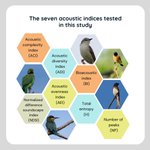
And so, we studied the efficacy of acoustic indices in an understudied biome in ecoacoustics - a Central Indian dry forest. These forests represent a complex socio-ecological system that sustains local communities and endangered species.

1
4
77
Other factors, such as differences in the vegetation structure of the forest and species diversity, could affect how sounds travel in a habitat, thereby affecting how the indices capture these sounds.

1
4
56

Thrilled to share a new study by @mayurikotian22, @Sakhasiddha, Pravar Mourya, @z_burivalova and, @Poojation from Project Dhvani and @UWMadison on the efficacy of acoustic indices for measuring biodiversity published in @ConservationSP. Quick thread below! conbio.onlinelibrary.wiley.c…

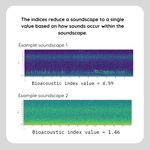
In times when monitoring biodiversity responses to landscape changes is the need of the hour, acoustic indices may offer a solution by mathematically summarising soundscapes into single values based on how sounds occur in the soundscapes. See an example below.

1
3
57
Excited to share a new publication by our team, @mayurikotian22 , @PavithraS0102, @SangwanTaksh and, @Poojation where we used passive acoustic data to understand how a bird changes its
vocalization in response to the removal of an invasive shrub.
onlinelibrary.wiley.com/doi/…

Observing post-restoration behavioural changes can provide insights on how
species adapt and survive in restored habitats.
1
1
44
