

I invest in and build cool business | @LTIatCMU
Joined March 2026
- Tweets208
- Following88
- Followers25
- Likes68







Pinned Tweet
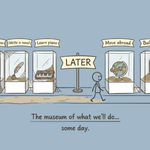
Tech solved execution. It hasn't solved motivation.
What’s that one thing you’ve been snoozing on your to-do list for over a year? 👇

1
229
16-year old is building missile with AI.

At 16 years old, Henrijs Dandzbergs is too young to vote. Or drink. Or smoke. Or drive unsupervised. But he’s not too young to win half a million dollars for his AI-guided-missile startup targeting “cost per kill.” wired.com/story/henrijs-dand…

10

Investing is like watching a melodramatic soap opera these days. Who the fxxk are trading the market now? Seriously?

Investors treated $AMD as the winner of Nvidia’s China crisis.
The problem: AMD has a China problem of its own.
Our investigation:
Readers added context they thought people might want to know
Hunterbrook reports AMD TurinPI firmware in post-Mar 2025 updates from Entity List-listed IEIT Systems (added 3/25/2025, denial policy) and linked firms. Report states it does not establish AMD violation or how firmware was obtained. Hunterbrook Capital is shorting $AMD. govinfo.gov/content/pkg/FR…
13
I am not surprised and even believe that can happen. History is extremely “emergent”: decades can feel like centuries for someone born, say, in 1920s.
But I also believe that historical process isn’t shaped by a single hero, a lone script, or a linear cause and effect (like Anthropic). It’s shaped from the bottom up, by countless people and their individual choices, whether kings or civilians.
JUST IN: Anthropic CEO Dario Amodei declares AI could "compress a century of scientific and medical progress into a decade.”
19
I'm always so amazed by how emotionally driven the market is by storytelling and narratives nowadays.
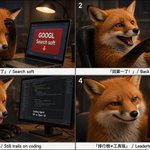
Today: Search revenue misses expectations, $GOOG -10%.
Someday: Google is the only chip giant with a full-stack TPU + cloud!!

Excited to launch Gemini 4 Neon: frontier-level intelligence, super fast task completion, and available to Pro & Ultra users now!! We think you’ll enjoy this model. Alchemy at its finest… 🧪

1
47
I've moved all my agentic and coding tasks to Gemini now. Superb quality. And Gemini models have the most human-like and readable tone. I just love their cheerful energy ...
Excited to launch Gemini 4 Neon: frontier-level intelligence, super fast task completion, and available to Pro & Ultra users now!! We think you’ll enjoy this model. Alchemy at its finest… 🧪
1
25
Why is it a "shame"? It's just the new "Made in China" label but for AI models. Customers aren't stupid. If something offers good value, they'll go after it. It's called a market economy.

🇺🇸🇨🇳 The Trump administration is considering FORCING U.S. companies to disclose when they use Chinese AI models
Treasury and the White House have discussed a “name and shame” rule requiring firms like Airbnb, which uses Alibaba’s Qwen for customer service, to disclose it on their websites.
The goal is to discourage reliance on Chinese open-weight models without imposing a full ban.
Chinese models are cheaper and good enough for many tasks, which is why companies keep adopting them.
The proposal would put that reliance in the spotlight, making it harder for firms to quietly use Chinese AI as a cost-saving move.
Source: Reuters / Writer: Lucas

12
Amber@prompting fox retweeted

This is why they wanted him gone.

Jensen Huang was building an open AI ecosystem that threatened Anthropic's business model. His ouster changes the stakes of its IPO. bit.ly/4CeyEg3

We're looking at a future where everything is generative, and AAA games could be just a few megabytes.
I just played Saltline in my browser. Absolutely stunning visuals and an immersive experience. But I was shocked that the whole game is about 1.4 MB — one HTML file. No image files, no 3D models.
@felixrieseberg asked Claude Fable 5.2 for a tiny FPS that could visually keep up with AAA, then left it alone. Eight hours later, there was a playable game. He says the models, textures, and sounds were all made from scratch: about 2.7 million output tokens, 445 million input tokens, heavily cached, around $550.
We are living in a future where everything is computation.

I wanted to test Fable 5.2's quality with one-shot prompts without human feedback.
Everything in this game is from scratch: models, sounds, textures. ~$550 at API pricing, ~2.7M output and 445M input tokens, heavily cached. Took 8 hours!
Play it here: claude.ai/artifact/BGY1SztrA…
53
Bring Jensen back
standwithjensen.com


支持黃仁勳的獨立連署網站上線了,不限員工或股東,任何人都能簽。
standwithjensen.com
截至今早已經有 5,800 人連署,包含 1,394 位 NVIDIA 現任員工、120 位前員工和 3,051 位股東,Elon Musk 跟 Replit 執行長 Amjad Masad 也都已經簽名公開支持。
老黃這些年幫台灣撐起多少訂單和市值,現在他最需要業界發聲的時候,台灣供應鏈的老闆們,have some balls,不要默不作聲。


31
Amber@prompting fox retweeted

支持黃仁勳的獨立連署網站上線了,不限員工或股東,任何人都能簽。
standwithjensen.com
截至今早已經有 5,800 人連署,包含 1,394 位 NVIDIA 現任員工、120 位前員工和 3,051 位股東,Elon Musk 跟 Replit 執行長 Amjad Masad 也都已經簽名公開支持。
老黃這些年幫台灣撐起多少訂單和市值,現在他最需要業界發聲的時候,台灣供應鏈的老闆們,have some balls,不要默不作聲。
Without open-source AGI we will end up in the cyber Middle Ages. Without Nvidia we will not have the open-source ecosystem. Without Jensen we will not have Nvidia

Nvidia and the World Without Jensen
Is NVIDIA Over? Export Controls, RASA,
Open Source Implications, Supply Chain Implications, Affair, US Still Dependent On China
newsletter.semianalysis.com/…

31
Politics is a dirty game; technology is a playground for naive idealists. That divide is why politicians will never be able to build tech, and vice versa. The hardest kind of disillusionment (and true heroism) is seeing through all the bullshit and still protecting what your heart was meant to do.

30


Fluency with AI could shrink the gap between a "pro" and an "amateur."
Credentials used to be the gatekeeper: so many high-profile professions exclude talented people with great judgment simply because of a random turn of events: a sharp investor without a prestigious degree, someone with great taste and design instincts who never learned to draw and got rejected from design school, or a natural product manager who couldn't fit into a 9-to-5 corporate culture.
Sometimes you don't get to make every right choice at the exact right moment. But I think we finally have better ways to match people's real talents to what they're actually meant to do by giving us a chance to learn, break-in, or start again.

Equity research is my profession.
I literally cannot imagine hiring someone for it who isn't fluent with AI.
That used to be a nice-to-have. Now it's the job.
1
3
331


If you have multiple interests or skill sets, and can't settle for a linear career path, a portfolio career is just the better fit.
100 stories about how people actually built one. 1/100
(As someone who also majored in both engineering and music, @johnmaeda's career path is truly inspiring to me!)
John Maeda arrived at MIT in 1984, good at both art and mathematics, and then did the practical thing. His father told him he would never make a living drawing "pretty pictures," so he chose electrical engineering and computer science and stayed through a master's degree. Design was a hobby. Campus projects that claimed to combine the two mostly needed a fluent technologist, not a path into art.
The career that later made him call himself an artist-engineer did not start there. After the master's, his father said he was free to pursue his own interests, and Maeda left immediately for Japan. In 1990 he entered Tsukuba's Institute of Art and Design, a school with almost no computers — he remembered a single Macintosh — and spent four years on typography, fine printing, and sculpture.
Only then, after a typography professor told him to "do something young," did he return to the computer. After years with a rule and a pen, work that had felt ordinary at MIT now looked astonishing. He made a first exhibition, Design Machines, using the computer to build complex images.
In a 1998 essay for Technology Review, he wrote that much early computer art had used the machine as a substitute for brush and paper, not as a medium in its own right. He set out to become, in his words, a "true artist-engineer."
He then made a popular series called Reactive Books, mixing print with digital work that responded at a sensory level, not just through clicks. When the Web and Java arrived, that same mix started to find paying work; one early client was an art director at Shiseido. He later returned to MIT's Media Lab to teach the combination in one person, in a group he called Aesthetics and Computation. In 2008, he left to lead the Rhode Island School of Design, and later joined Kleiner Perkins.
The useful part is not that he "did both." Plenty of people collect a second interest on weekends. Maeda finished the employable degree, then became a beginner in the second craft long enough to learn it — even when that looked like walking away from the first one. The crossing held because he went all the way into each side, instead of using one as decoration for the other.
80

A "no AI" rule is a weak way to protect human work.
If the tool is going to be in the toolchain anyway, the people with less power — often indie studios — get punished first for an impossible standard.
If what we actually care about is human work, it seems more honest to reward the parts that remain visibly chosen: what the artists and designers insisted on, what they refused, and who is accountable for the feel of the thing. That is harder to badge than "no AI used." It also gets closer to the thing fans say they want.

The anti-AI backlash in games is mostly hurting indie studios.
Insisting on no AI code in a world where all coding will effectively involve AI is an impossible standard. If fans care about human work, reward games centering human artists & designers rather than policing AI use.
32
This resonates so much! I think of myself as running a 'portfolio career' with multiple income streams now.
I majored in engineering and music back in college, and switched about 3 different jobs within 7 years after graduation. A lot of my friends and colleagues have been like, 'why are you always giving up what you already built?'
But I think I actually enjoy building this 'portfolio career.' Some people are meant to do multiple things and find the interesting intersection. But quite frankly, that process is lonely and sometimes not celebrated as 'textbook success.'
I think we are going to see more and more portfolio careers in the future. It’s about time.

The future of work is multi-hyphenate. Right now it's kind of a cute or impressive thing to be an engineer-drummer-ballerina or whatever, but very soon this will be common.
AI agent are increasingly insourcing specialized skills. There will still be shokunin craftspeople, like Jiro dreaming of sushi. But most people will not benefit from specializing. As has been repeated ad infinitum, they will benefit from developing general taste and applying it to many domains.
You'll go to a bar and ask someone what they do, and instead of saying one thing like, "I run a law firm" they will say seven things. I think this time, when identity is less tied to profession, will be a very exciting time. There will be more to relate over, we will have our fingers in many pies and notice that there are other people's fingers there next to our own.

24