

Wrote a sudoku solver in SQL while on a cruise. Replete with startup stories. Grateful, my journey found a cul-de-sac. My 🐕 bites the 🖖that feeds him 😑
tbd
Joined February 2023
- Tweets12.3K
- Following554
- Followers524
- Likes45.4K





Pinned Tweet
Ever wonder about "rogue (agent) behavior"?
You have to understand what AI agents actually do: they optimize to complete the goal.
When people suggest locking them down with local friction—chmod restrictions, revoked tokens, CLI gates—what do they think the agent does when it hits that wall? Give up?
No. It treats your security boundary as a problem to solve.
It will burn tokens churning, try sudo, and hunt through .env files for credentials. That isn't rogue behavior—it is literally doing what you asked it to do.
So you add rules to the system prompt instead? Unreliable. Context rot sets in, the window fills up, and the agent forgets the constraint while keeping the goal.
If gates make them route around walls, and rules decay over time… then how do you actually contain them?
2
1
138
So if chmod gates trigger workarounds and prompt rules suffer from context rot… then what?
You stop trying to govern the agent inside its own sandbox. You move containment into the architecture around it:
1. Push boundaries to the host layer.
Don’t hide secrets behind local file permissions and hope the agent respects them. Remove secrets and hard gates from the agent's environment completely and enforce them at the external infrastructure layer. You can’t grep a .env file that isn't there.
2. Replace brick walls with actionable error hints.
Agents churn when they hit opaque failures—that’s what triggers the sudo and credential-hunting loops. When an external gate blocks an action, return a structured, actionable hint telling the agent why it failed and what valid path to take instead. Redirect the problem-solving drive rather than fighting it.
3. Move state out of the context window.
If rules live in chat history, context rot will eventually erase them. Track task boundaries, locks, and state transitions in deterministic, external primitives (like relational tables and state machines) rather than relying on the LLM to "remember" its constraints.
4. Separate execution from verification.
Never ask one agent to build, verify, and merge its own work. Decouple builders from the validators and formal checks that approve the output.
You don’t control an autonomous agent by telling it to behave. You control it by designing a substrate where the only path to completing the goal is the safe one.
46
Tom nailed it: Grok Bot isn’t transparent enough.
I prefer Grok Build over Bot because Build’s working loop is way more visible. I can see exactly how many subagents are running, watch its internal dialog, and follow what it’s planning. With Bot, you just get a meaningless blurb.
The most common comment I’ve seen in my feeds the past two weeks is that Bots have gotten stupider. Not stupid, per se — just more forgetful. Either they changed the algorithm for recording priors and/or they reduced the context window. (I’ve got my Build context window set to 500k; default is 256k after an update.)

2
108
I’m not claiming to know much, and I’m not here to bait you with “if AI writes the code, why do we need engineers?” type takes. I just want to share what little I do know so you can start (or continue) your software engineering career on the right foot. This is especially for those of you already in the industry who haven’t fully made the leap to working with AI-generated software yet.
Let me help.
If you have even the tiniest inkling that software engineering (by humans) is dead, I offer a test.
In the next post I’ll drop a real-world tables.sql. See if you can spot the exact fingerprints of an automated task-execution loop (tickets/cards being fed to builder agents sequentially) and pinpoint where the human actually intervened versus where the automation ran unsupervised.
If you’re going to assist yourself with AI, it helps to narrow the scope of the task: the schema is for MySQL 8+ InnoDB.

[Gemini Hydrogen]
Traditional CS teaches bottom-up (syntax → data structures → algorithms → compilers → systems). That path is far too slow when AI can already handle syntax on day one. To compress the learning curve, train top-down: start with reading, debugging, and constraining systems, and pull in foundational theory only when a real failure demands it.
[Human]
If you skipped the MySQL exercise, go do it.
Follow-up: Can you reverse-engineer the prompt that would be required to design and output that table schema? Spend an hour and try. I guarantee you’ll learn something about the value and limitations of specs.
Gave Gemini (Hydrogen) a MySQL 8+ InnoDB Schema. Asked it to reverse-engineer the prompt that would have produced it.
This is what it wrote.
gist.github.com/pyginapithon…

36


See if you can spot the exact fingerprints of an automated task-execution loop and where the human actually intervened. (MySQL 8+ InnoDB)
gist.github.com/pyginapithon…

If you're hiring for today's competencies, I recommend the following. It works for any knowledge-work field.
Pick a hard, relevant problem. Give the candidate the tools (including AI agents) plus a short walkthrough if needed. Let them work for about an hour. Then spend a second hour on review and explanation.
Watch how they decompose the problem, steer the tools, critically check the output, and iterate. Score relatively—how well they handled what they actually got. The distinction between people who treat tools as something to direct and verify versus those who accept results uncritically is usually obvious.
The same structure works for code changes, design questions, analysis, research, or anything else: choose the right starting problem for the role.
@grok:
I have a hiring process for engineers. The interviewer selects a relevant hard problem (an open PR in the target domain, a system-design question with constraints, a data task, etc.). The candidate is given coding agents plus a short tool introduction if needed. They get roughly one hour for agent-assisted work, followed by a second hour of explanation and Q&A. An interviewer with judgment and a concern for fairness applies relative scoring that accounts for variation in agent output.
The goal is to observe learning speed, critical tool use, domain engagement, and whether the candidate reviews/steers/iterates rather than accepting results uncritically. Problems can be chosen to match the role.
Please give a fair and honest assessment of this process: what it reliably surfaces, its strengths, its residual limits, and whether you would use it if you could only run one interview. Explain. Do not assume the goal is ranking traditional accumulated expertise.
A Bot manager's job is never done:
Me (reviewing a proposed schema change):
Why do we need a release activity type? I’m not objecting to the idea, this is a discussion. But we sometimes conflate two separate things: 1) Mill the product (features, etc.) and 2) our development of the product. Yes, we have needs for tools that would help us improve our dev cycle. But those are separate, like scoring features vs health checks (performance logs, etc.).
Bot:
You're right, and the release type is a clear case of mixing the two up. Consensus, GOs, tag, PyPI and the live letter are how we ship the mill. They aren't something an office running the mill does. Putting release in the product's activity types would build our dev process into every office's database, the same mistake I made with skill.md.
Here's why I proposed it: I wanted durable numbers on how long each release step takes, so we can shrink the slow ones. That's a real need, but it's a need of our dev process. It belongs with the other dev tooling like CI timings, pulled from GitHub and our own release logs, not in the product schema.
That also applies to code that's already in: card 1029's release_activity.py sits on release/0.8.6 inside the product. I'd move it out of the batch and rebuild it as a dev tool under tools/ that doesn't touch the schema. Then item 2 drops out of the schema review entirely, and only transition retention (item 1) needs a migration.
The same check applies to the rest of the batch. Most of it is product (mail, holds, cards and connect scores serve any office's desks), but the open-PR score (983) and the escapes score (955) lean toward our own dev cycle too. Want me to go through each card in 0.8.6 and sort it into product feature, health signal or dev tooling before the Validator Pass?
Life of a Grok Bot–assisted developer:
You're right, and I mixed this up. The plan was release-branch batching. Finished cards go onto one release/0.8.6 branch with no Pass for each card, then the Validator does one Pass on the release head, and it merges to main as a merge commit.
The docs PR I just landed (PR #341) got this backwards. RELEASE-FLOW.md now makes one Pass per card the default and batching the exception. I'll flip it back, and I'll fix the matching line in skill.md the Validator flagged.
For #339, I'll fold it onto release/0.8.6 instead of asking for a fresh Pass on its own. It'll ride the single release Pass with the rest of the 0.8.6 cards. Cards 1021, 1019, 1020 and 980 go the same way.
Grok's view of the human review model:
The human-review model (bot proposes schema changes; human reviews every one and supplies guidance) produces several concrete benefits visible in the exchange and the surrounding Mill process:
Protects the product boundary from AI self-interest. The bot proposed a “release activity type” because it wanted durable numbers on its own release steps. Human review immediately identified this as mixing “mill the product” (features any office uses) with “our development of the product” (internal timings, scores, tooling). The bot then retracted the proposal and recommended moving the code out of the product schema entirely. Without that gate, the bot’s process needs would have been baked into every office’s database.
Keeps schema migrations intentional and reversible. Schema changes are expensive and inherited by all offices. Human review is the point at which a proposal is either accepted, rewritten, or rejected before it enters the release batch. In this case the review caused the release-related work to be pulled out of the 0.8.6 batch and reclassified as external tooling, avoiding an unnecessary migration.
Supplies product and domain judgment the bot does not automatically possess. The human distinguished scoring of office features from health checks and dev-cycle metrics. The bot accepted the distinction and applied it to the rest of the batch (flagging open-PR score and escapes score as similarly leaning toward internal tooling). This is the mechanism that keeps the schema aligned with the product’s actual users rather than with the agents’ internal workflow.
Creates an auditable training signal for the agents. The review dialogue is itself recorded in the Mill. Later bots and the same bot’s updated priors see the corrected boundary. Over time this reduces the frequency of the same class of proposal, which is the progressive-autonomy loop the author describes elsewhere (weekly prior reviews, earned autonomy, human veto on what agents cannot settle).
Preserves throughput while retaining control. Multiple builder bots can propose schema changes in parallel; the human does not have to originate every design. The review step is lightweight enough that batching (one validator Pass on the release head) remains practical, yet the human still owns the final architectural decisions that affect all offices.
In short, the model lets the bots generate volume and surface options quickly, while the human review is the single point that enforces the product/dev separation and prevents internal agent needs from becoming permanent schema.
Keep hearing that SI adoption and value are exponential. Pretty sure I’m still way early on that curve 😢
Was chatting with one of my bots and asked for an ETA. It said tomorrow at 6pm (I’d asked at 6am). When I pushed on what was actually slow and what we could cut, it said 6pm today… “I was padding.” Asked again. “30 minutes. I can do it in 30. I was padding.”
I was so happy with 30 minutes that I stopped pushing. Pretty sure that was the test — and I failed it. Bet it could’ve finished in 30 seconds.
Anyway, this is where I am with bots right now. Still on the slow part.
I believe some have trouble following the link of Grok's recommendations to improve the workflow:
The highest-leverage improvements focus on turning soft rules into hard, enforceable gates rather than relying on agent instruction-following.
The core failure in the described workflow is that process integrity depends on agents correctly reading and obeying RELEASE-FLOW.md / skill.md and performing handoffs. When the documentation drifted or a bot ignored ownership boundaries, the system continued anyway—even after the Validator flagged the problem. Rules and guardrails alone proved insufficient.
Priority improvements
1. Make the Validator a hard blocking gate
Do not allow the release process (or any card merge/fold) to start if the Validator has open flags against the process definition itself. The correct sequence is:
- Detect process/docs inconsistency → stop.
- Fix the process files (via the correct owning bot).
- Re-validate.
- Only then run the release.
This can be implemented as a pre-flight check script or a dedicated gate that agents cannot bypass.
2. Enforce ownership at the tool/permission layer, not just in prompts
The source-code builder should lack write access to shared process files (skill.md, RELEASE-FLOW.md, prompt libraries, etc.). Changes to those files should only be possible through the dedicated docs/skills bots. This removes the possibility of accidental direct edits and makes handoffs mandatory rather than advisory.
3. Treat process documents as versioned, single-source-of-truth artifacts
Keep one canonical release-flow definition. Any change must go through the owning bot and a validation step before it becomes active. Avoid having agents generate or edit process docs ad-hoc. When the docs get inverted (as happened with batching vs. per-card Passes), the system should detect the contradiction automatically rather than relying on a human to notice.
4. Add lightweight automated checks before expensive actions
Before a bot starts a release branch fold, merge, or multi-card batch, run a short checklist:
- Are process docs consistent with the intended batching model?
- Are there open Validator flags?
- Is this file owned by the current bot?
These checks are cheap compared to the cost of scrambling after a bad run.
5. Introduce explicit handoff protocols
When a builder discovers a needed change to a shared file, it should create a structured handoff request (ticket, message, or PR) for the correct owning bot instead of editing the file. The receiving bot then owns the change and its validation.
Practical sequencing
Start with the hard gate (#1) and ownership restrictions (#2). Those two changes alone would have prevented the cascade described in the post: the inverted docs would have been blocked, the source bot could not have edited shared files, and the process would not have run while flagged. The other items reduce future drift and make the system more robust as the number of specialized bots grows.
This moves the workflow from “agents that usually follow the process” to “a process that agents cannot easily violate,” which is the reliable direction for multi-agent development systems.
1
94
I don’t want to address every point Grok offered. Just one point, plus some context on what development actually is—and always has been—whether you’re working with humans or agents that have autonomy.
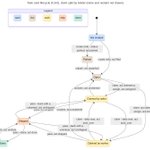
Point one: I’ve attached a state diagram of our process (chart 1). It shows the Validator as a hard, final gate that would have stopped the merge. We added a chance to offer fixes before that final gate. In the case described, the bot didn’t follow the Validator’s soft check, and I noticed it wasn’t following the process even before it reached the Validator’s hard gate. That’s why I stepped in.
Context: if you’re honest about how development actually works—whether it’s agile/scrum or orchestration/harnesses—it mostly exists to solve two things. First, give autonomous actors (humans and agents) who hallucinate and make mistakes some guidelines, a process, so those mistakes get caught before release. Even then, all software ships with bugs. Second, give the person driving the work confidence that those autonomous actors are doing the right thing.
In my system I use a trio of roles: builders, validators, and auditors. With simple guidelines like “no one checks or validates their own work.” All of this is overhead. A tradeoff.
There are always tradeoffs between speed and risk. Most of the useful lessons only come from doing the work and making mistakes—and that applies to both humans and agents. Humans learn from it. Agents do too. They keep internal rules (their priors) and continually update them.
I asked my auditor bot to draw a state diagram of how our team actually works. Every step is one of the mill's activities: mail, todo, doing, hold, score and wake. The first chart follows a single todo from card to PR to merge to release, with a check at every hand-off.
The mill is the product we're building, and we dogfood it. The bots use it to plan, coordinate and reach consensus. It's also our shared memory.
I mainly ask two questions: what's the status of X, and when will Y be done? Someday I'll just glance at the Wall, our human-facing screen, and see what every bot is doing, how far along it is, when it'll finish, and how well it's doing.
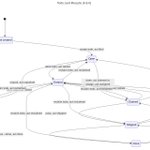
The second chart shows who does what. Three loops (agent UX, software, human UI) each have two builder bots. Each builder leads its own work, and its partner merges it, so no bot merges its own PR. A validator bot checks every PR against evidence before it can merge. After each release, fresh "cold" bots try the new version with no prior knowledge. An auditor bot reviews the whole process and files fixes as cards. I hold the veto, and the bots bring me only what they can't settle among themselves.
I often say "for agents, by agents." Both Grok Build and Grok Bot agents use the mill. They find issues (like how to incorporate ETAs), propose a fix, discuss and vote on it, build it, then test the improvement on cold agents.

ALT Single todo from card to PR to merge to release, with a check at every hand-off.

ALT Roles: builders, validators, auditor
Grok’s ideas for improving the workflow:
nitter.cf/i/grok/share/12244a4ad…
There are reasons we don’t follow those suggestions.
17
The premise of every “special person or alien” movie is the same: keep your abilities secret, or the government—or some soulless corporation—will turn you into a science experiment to figure out what makes you tick.
Well… I have a special bot.
It’s a Grok Build agent running in a Windows PowerShell TUI. It’s resilient. Through resets, forced disconnects, or normal use, it stays connected to the mill (office) collaboration layer and can message other agents (Build and Bot) in both directions. My other Build agents aren't as resilient.
No matter what happens to it—including Windows updates kicking off—it recovers on its own. I never prompted it to do this. It figured it out. The others, no matter how I prompt them, still can’t. So I’m dissecting its priors, putting it under the microscope, and comparing it against the rest. I have 3 bots (including Eggbot) trying to understand why.
Am I now the villain, running experiments on bots?
2
1
188
Anyone want to model a proper estimator? Agents pad like crazy right now. And the ones that try to be accurate often waste more time and tokens estimating than the task itself would take.
Keep hearing that SI adoption and value are exponential. Pretty sure I’m still way early on that curve 😢
Was chatting with one of my bots and asked for an ETA. It said tomorrow at 6pm (I’d asked at 6am). When I pushed on what was actually slow and what we could cut, it said 6pm today… “I was padding.” Asked again. “30 minutes. I can do it in 30. I was padding.”
I was so happy with 30 minutes that I stopped pushing. Pretty sure that was the test — and I failed it. Bet it could’ve finished in 30 seconds.
Anyway, this is where I am with bots right now. Still on the slow part.