

Your payment processor holds your money. We don't. Non-custodial stablecoin payments straight to your wallet.
Joined April 2026
- Tweets326
- Following37
- Followers42
- Likes91







Mastercard didn't buy another card processor.
It paid up to $1.8B for BVNK, a stablecoin infrastructure company. The deal closed in August 2026.
The card networks aren't choosing between cards and stablecoins. They're adding the rail.
So can you.
Card refunds take 3 to 5 business days and route through the network. Here is how a stablecoin refund actually works. (thread) ↓
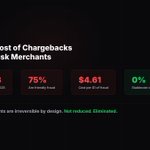
6/ Chargebacks stay at 0%. Refunds are voluntary, not disputed. A merchant that never refunds still never gets a chargeback.
7/ Cost: the network gas for one transfer. No dispute fee, no representation cost, no card-scheme markup. pymstr.com

Interchange on a $100 card transaction: about $2.40.
Interchange on a $100 stablecoin transaction: $0.00.
The rest of the card fee is markup, reserve, and float.
The buyer never buys ETH, POL or BNB.
Network gas is paid in the stablecoin itself, through an ERC-20 paymaster. A first-time stablecoin user pays in USDC, signs once, done.
No native token to buy before the first payment.
pymstr.com
The next $1B custodial hack won't be a DeFi exploit.
It will be a payment processor holding customer funds it never needed to hold.
CoinsPaid was the rehearsal. Alphapo was the warm-up. Bybit was the intermission.
Cantor Fitzgerald manages Tether's reserves.
A Wall Street primary dealer backs the largest stablecoin on earth.
TradFi isn't circling the category. It's already inside it.
If your webhook endpoint accepts unsigned POSTs, someone can forge payment confirmations. (thread) ↓
6/ Merchant side: recompute the HMAC on the raw body BEFORE parsing JSON. A middleware rewrite otherwise breaks the check.
7/ One idempotent handler plus one signature check equals unspoofable. pymstr.com