

A physics related interview podcast hosted by Owen Darragh.
- Tweets88
- Following99
- Followers10
- Likes190


ALT A collage of photos of Bob McDonald over the years, with the text "Celebrating 30 years at Quirks & Quarks"







ALT Bob McDonald in the early 90's, shown with an inflatable globe.




ALT The background of space is black. Thousands of galaxies appear all across the view. Their shapes and colors vary. Some are various shades of orange, others are white. Most stars appear blue, and are sometimes as large as more distant galaxies that appear next to them. A very bright star is just above and left of center. It has eight bright blue, long diffraction spikes. Between 4 o’clock and 6 o’clock in its spikes are several very bright galaxies. A group of three are in the middle, and two are closer to 4 o’clock. These galaxies are part of the galaxy cluster SMACS 0723, and they are warping the appearances of galaxies seen around them. Long orange arcs appear at left and right toward the center.


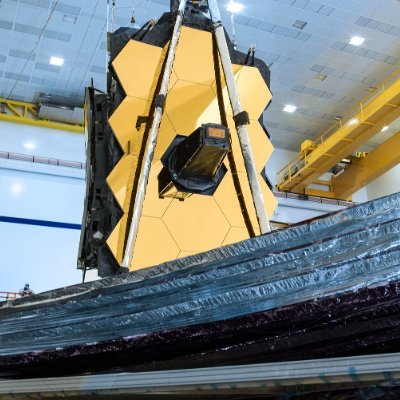

ALT Arianespace's Ariane 5 rocket launches with NASA’s James Webb Space Telescope onboard, Saturday, Dec. 25, 2021, from the ELA-3 Launch Zone of Europe’s Spaceport at the Guiana Space Centre in Kourou, French Guiana. The James Webb Space Telescope (sometimes called JWST or Webb) is a large infrared telescope with a 21.3 foot (6.5 meter) primary mirror. The observatory will study every phase of cosmic history—from within our solar system to the most distant observable galaxies in the early universe. Photo Credit: (NASA/Bill Ingalls)

ALT Arianespace's Ariane 5 rocket, with NASA’s James Webb Space Telescope onboard, is seen at nightime on the launch pad at Europe’s Spaceport in Kourou, French Guiana.

