
Supporting innovators in education at @standtogether. Previously @doelouisiana, @4pt0Schools. Trying to highlight interesting things I see. DM me to talk.
Minneapolis, MN
Joined October 2022
- Tweets199
- Following344
- Followers180
- Likes160






Pinned Tweet
People aren't ideological when it comes to their own kids/experiences.
tampabay.com/news/education/…

Abundance in education is possible the same way it is in housing and energy. States don't even need to spend money on it. They just need to get out of the way: accreditation, zoning, building codes, licensing, and the like.

RaphaelGangEdu retweeted

17 states give every family the ability to get money for private education. Many of these same states make it hard to open a new school.
What happens? Limited schools get more expensive.
If you want more kids in better schools, you have to make it easy to build new schools.
“We would love to all band together and invest, but that’s way too high of a cost.”
The language of investment and ownership is striking.
Is education the only industry where consumers (parents) of the product (schools) are expected to fix core defects in it?

In 2018, about the time Nikole Hanna Jones decided to put her child in a low performing public school, I published "School Choice: The Personal and the Political" in the @josc_official. The paper highlighted results from focus groups with parents in STL & KC discussing school choice. NHJ is hardly the first to wrestle with political convictions against school choice, but wanting the best personally for her child. As one parent put it:
"One parent in the focus group, Jennifer, a married mother of two... moved to Kansas City just a few years ago. They considered sending their children to the low-performing local public school and working with other parents in the neighborhood to turn things around. You might call this idea missionary schooling—sending your child to a low-performing school in an effort to save the school. Stillman refers to this process as “tipping in” in her study of “gentry parents” in three gentrified areas of New York City. Back in Kansas City, Jennifer, who might be identified as a “gentry parent” remarked, “We would love to all band together and invest, but that’s way too high of a cost.” She and her husband had already secured a spot in one of Kansas City’s highest-performing charter schools for their daughter. Rather than take the chance of sacrificing their child’s education for the greater good, they sent her to the higher-performing charter school.""
RaphaelGangEdu retweeted

A 7-year study of 3,900 social science papers found that only ~50% could be replicated.
There was significant variation across fields, however.
While more than 60% of political science & econ papers were replicated, only ~25% of sociology & 0% of education papers were.

From 2014…
Huge implications for higher ed. @rickhess99 has published volumes about this, but I can’t recall when or by who.


The good people at @educationgadfly created a report on this!
fordhaminstitute.org/nationa…


What's interesting about this is that it reveals how standardized assessments as they are currently built and utilized provide little value to parents. But that makes sense when you consider what parents care about vs. researchers/policymakers.
cont.
This quoted post is unavailable.
People talk about parents not being able to be good consumers of education, but I'd point to this data to show that actually it's the education system that actively tries to keep them from being good consumers. "We're not providing information you want, but make good choices."
Interesting contrast in @edchoice data: Families who considered switching schools said top concern was the school not developing their child as a whole person. Families who actually made the switch? Their #1 reason is safety. The threshold for action depends on what's at stake
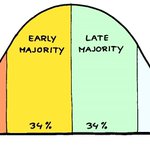
But crossing the chasm to the majority means offering something beyond escaping harm. New schools need a vision that speaks to families who aren't in crisis, ones looking for something genuinely better, not just something safer.
Whenever I think about the moment with Mom's For Liberty, I wonder how something like that doesn't happen constantly, given the kinds of decisions school boards are making daily.

Fantastic piece from @rpondiscio - makes an important & under-appreciated point:
Choosing a school is also making a set of pedagogical, content, and delivery (edtech vs. not) choices.
All of these are value-laden.
Who should make values based decisions for children?