

🧬 Structural Bioinformatics | 💊 AI/ML for Drug Discovery | Geometric DL 🔬 @IOCBPrague, prev. PhD @cusbg @matfyz
Prague
Joined September 2010
- Tweets240
- Following7.5K
- Followers736
- Likes8.3K



Pinned Tweet
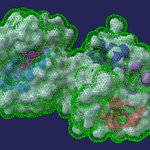
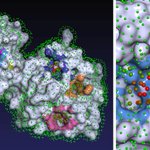
How long does it take to predict ligand binding sites for all 220k proteins in the PDB? P2Rank 2.5 does it in 3 hours on a single CPU (16-core amd 5950x)—2x faster than the previous version 🚀.
The SwissProt subset of AlphaFoldDB (540k proteins) takes even less: under 2 hours (proteins are smaller on average).
But does prediction speed matter? 🤔 It depends. In most cases, probably not that much. After all, if you have only a few structures, it’s worth waiting for more accurate predictions.
So, are slower methods more accurate? Not necessarily. A recent independent benchmark shows that P2Rank outperforms (in prediction success rate) newer, much slower Deep Learning based methods. (1/n)
Radoslav Krivak retweeted

Introducing SynthonMap: a zoomable map of billion-to-trillion-scale chemical spaces, using factorized synthons and parametric UMAP density estimation.
Try at: synthonmap.mireklzicar.com/?…
Demo on @XtalPi VAST 👇
Radoslav Krivak retweeted
I wanted to run ADMET predictions on our library of 20+ trillion make-on-demand molecules (eMolecules, Enamine...)
Tried Chemeleon GNN. Estimated runtime: ~340 years on my GPU. Got it down to under 10 minutes using neural tensor factorization.
Git: github.com/mireklzicar/synfa…

Visualize all synthon-based chemical spaces

Introducing SynthonMap: a zoomable map of billion-to-trillion-scale chemical spaces, using factorized synthons and parametric UMAP density estimation.
Try at: synthonmap.mireklzicar.com/?…
Demo on @XtalPi VAST 👇
1
193
Radoslav Krivak retweeted

Misinterpreting bitter lesson and an incredibly short period when scaling transformers did most of the legwork has reward hacked brains of a whole generation of scientists.
The more compute you’re pouring in training you’re model, the *more* important it is what algorithm you’re using.
There are algorithms that scale and algorithms that don’t and the only bitter lesson is that a lot of energy was spent on directions that were dead ends in the end. At the same time there are whole dimensions of scaling completely unexplored.

Radoslav Krivak retweeted
🔥 Announcing the @deepmedchem LLM suite 🔥
With official plugins for ChatGPT, Claude, MCP server and SKILL md. No extra login needed, no entreprise license key, no paywall yet.
Installation: deepmedchem.com/llms
Welcome to the era of agentic drug discovery 🧵


Radoslav Krivak retweeted
Adding @onepot_ai CORE 2.0 database into our python package. The speed of synthesis is insane. overnight delivery in the US
pip install deepmedchem-python and access it at github.com/Deep-MedChem/deep…


Radoslav Krivak retweeted
🚨 Just made searching trillions of purchasable molecules this simple: `pip install deepmedchem`
A new CLI + Python package for going from chemical-space search → molecule selection → vendor quote/order prep.
Thread 🧵
Radoslav Krivak retweeted
How do you visualise a chemical space with 296 billion compounds?
What if we explored them as connections between building blocks, defined by the reactions through which they can be synthesized?
Introducing Navigator: Constellations UI 🧵 (1/7) @deepmedchem

Radoslav Krivak retweeted

We are on the road in the fall:
Oct 14–15: ELRIG (London)
Oct 27–29: AIDDD (Boston)
Nov 9–11: BIO-Europe (Cologne)
Nov 11: Cambridge Cheminfo Group meeting
Nov 12: UK-QSAR (London)
Nov 10-11: Drug Discovery Chemistry (Barcelona)
We're looking fwd to meet to talk science :-).
Radoslav Krivak retweeted

Protein backbone design methods innovate by recombining naturally occurring subdomain structures, rather than designing domains unseen in nature, and widely-used novelty metrics aren't able to detect this


Is retrieval all you need? Assessment and emergence of novelty in protein structure generation
1. The paper argues that “full-chain novelty” (no close whole-chain hit in a structure database) is not sufficient evidence for new fold invention, because multi-domain proteins are modular and can look novel as whole chains while reusing known domains.
2. It introduces Domain Retrieval Rate (DRR): decompose each generated backbone into domains (Merizo), then retrieve each domain against CATH S40; a generated backbone counts as “retrieved” if any domain has a match above a threshold. This explicitly tests novelty at the domain scale rather than the chain scale.
3. Across 8 backbone generators (diffusion + flow-matching families, plus two binder-oriented systems run in target-free ablations), DRR is high under an aligned-length TM convention: at TM≥0.5, DRR ranges ~80.2% to 98.2%, meaning most generated chains contain at least one locally alignable known domain-sized unit.
4. In the same unified evaluation, conventional full-chain retrieval (query-normalized TM, qTM≥0.5) is much lower for most unconditional generators (0.0% to 9.6%), while DRR stays high—showing a strong protocol-dependent gap between “domain reuse” and “whole-chain novelty.”
5. The paper diagnoses a key reason: query-normalized TM has a length ceiling when searching long chains against a domain database (CATH S40 median ~132 aa). For long queries, qTM≥0.5 can be unattainable regardless of structural content if reference entries are too short.
6. To calibrate what “retrieval alone” can produce, it proposes RetFold, a zero-training baseline that retrieves CATH domains (using an ensemble of ESM-2 embeddings, Foldseek 3Di, and ProstT5), assembles 3 fragments (core + two extensions), then refines junctions with geometry-based helix-linker optimization. It runs on CPU at ~1.98 s per backbone (reported ~110× faster than their measured RFdiffusion run).
7. RetFold is recombination by construction, yet under the conventional full-chain qTM≥0.5 protocol it is retrieved only 20.0%, while its DRR is 96.0%. This demonstrates that low full-chain retrievability can occur even when the chain is explicitly built from known domains.
8. The paper then calibrates three TM-score conventions using (i) RetFold as a positive control and (ii) a leave-one-topology-out negative control on CATH S40. A key result: aligned-length TM (alnTM) has very high false positives for “fold novelty” at τ=0.5 (it retrieves 90.04% even after removing the query’s topology), so it mainly evidences local alignability rather than complete fold reuse.
9. A stricter reference-normalized criterion (target-normalized TM, tTM) becomes more specific only at higher thresholds: at tTM≥0.7 the leave-one-topology-out false positive rate drops to 5.38%, while RetFold remains retrieved at 100%. Under this calibrated view, unconditional generators largely concentrate in the ambiguous 0.5–0.7 range and drop sharply at 0.7.
10. Beyond retrieval metrics, RetFold highlights a separate designability issue: AlphaFold3 confidence drops at assembled junctions (inserted helix-linkers have much lower pLDDT than retrieved fragments; inter-fragment PAE is high). Whole-chain average pLDDT can mask these localized failures, so novelty and designability should be reported separately with matched baselines.
📜Paper: arxiv.org/abs/2608.10598
#ProteinDesign #ComputationalBiology #ProteinStructure #DiffusionModels #FlowMatching #CATH #Foldseek #AlphaFold3 #ProteinBackboneGeneration #Benchmarking


Radoslav Krivak retweeted

this is big in #alphafoldology

Today we're announcing ESMFold2, an open scientific engine to power prediction, design, and discovery across protein biology.
The new model delivers state of the art performance on protein interactions, especially antibodies, a critical modality for therapeutics.
We have designed and validated miniprotein binders and single chain antibodies across five therapeutic targets that are important in cancer and immunology. We are seeing very high success rates, and affinities at levels consistent with therapeutic activity.
We’re also releasing an atlas of 6.8 billion proteins, and 1.1 billion predicted structures.
ESMFold2 is built on a state of the art language model that has been trained on billions of protein sequences.
A world model of protein biology emerges through language modeling.
We’ve used the techniques of mechanistic interpretability developed to understand large language models to understand the concepts ESM uses to represent proteins.
The model’s representation space has a compositional organization of features across scales, levels of complexity, and abstraction, that reflects and mirrors the understanding of protein biology developed through a century of empirical science.
This understanding emerges without prior knowledge, just from language modeling of protein sequences.
Language models are becoming a powerful substrate to understand and program biology.
The design of protein interactions is one of the most fundamental problems in biophysics, and has critical implications for the discovery of new medicines. A simple gradient based search with the model was able to discover high-affinity protein binders.
I'm excited by the potential this has to accelerate basic science and the understanding of proteins. And especially for the new avenues it opens up for therapeutic design and medicine.
Radoslav Krivak retweeted

🎨 Část areálu Ústavu organické chemie a biochemie AV ČR ve Stavitelské ulici lemuje šedá zeď a rádi bychom jí dali novou podobu. Proto vypisujeme veřejnou výzvu na návrh a realizaci murálu, který připomene 90. výročí narození chemika Antonína Holého – jedné z nejvýznamnějších osobností české vědy.
Více na ► uochb.cz/cs/novinky/800 📲
#UOCHB #IOCB #IOCBPrague #AVCR #AkademievedCR #ceskaveda #chemie #popularizace

Radoslav Krivak retweeted
+1
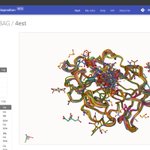
This time, we updated the AlphaFind to allow quick structural search over AlphaFoldDB - this time with domains (TED and multi) and structure quality filtering
alphafind.ics.muni.cz
Try it out!
academic.oup.com/nar/advance…
Radoslav Krivak retweeted


Radoslav Krivak retweeted

We’ve built the world’s first Chemical Sequencer, but unlocking nature’s chemistry still requires more data and better ways to understand it. That’s why we’re deepening our collaboration with @tomas_pluskal and his lab at @IOCBPrague, a global leader in natural product chemistry and plant #metabolomics.
We’re proud to support the PhD work of Filip Jozefov, whose research combines machine learning and mass spectrometry. Filip is developing new machine learning approaches using a rich dataset generated in the lab. These approaches improve the accuracy of molecular structure prediction, which is an essential step toward decoding nature’s chemistry at scale.
Our ongoing collaboration supports our commitment towards advancing cutting-edge science, pushing the boundaries of what’s possible in structure prediction, and helping to shape the future direction of the field.🚀
#MachineLearning #MassSpectrometry #DrugDiscovery #Biotech
