

Former General Counsel, https://nitter.cf/t.co/UKdNEjJKDh, former SFU Visiting Law Prof, Retired Member of LSBC, SNPBC, CBA, BCNA R.I. Also at https://nitter.cf/t.co/9cBkPWtcF9
Vancouver B.C. Canada
Joined October 2008
- Tweets8.8K
- Following1.7K
- Followers1.1K
- Likes8.3K




Halloween Oct 31 1962 - The wonderful Oak Bay Fireman's bonfire attracted a huge crowd of 1,700, listening to my Father's band - "The Hometowners" (as usual), playing with fireworks and eating the Kiwanis hotdogs. @OakBayGazette @OakBayNews


Ron Usher retweeted

There's so much interesting new scholarship in the pseudolaw world. Here Lobbert explores the deep question of why someone would mimic being part of a fictitious state.
Why? Partially all states are fictions. But deeper, we need anchors.
Highly recommended.
journals.uchicago.edu/doi/pd…

Bill 44: “Should the new B.C. Conservative government return responsibility for local housing rules to municipalities?” castanet.net/news/Poll/63601…

This triplex built on a street of single level single unit homes in breach of a registered covenant is the subject of litigation. IMHO should not have been allowed by the city, even with bill 44. Registered building schemes prevail. @Conservative_BC


"Queen of Canada documentary director wants you to know her followers are still out there" cbc.ca/news/entertainment/qu…


Ron Usher retweeted

Thank you @PeterMilobar @Conservative_BC for the opportunity to learn more about early priorities for the new government. @BCNotaries look forward to future consultation opportunities.


Ron Usher retweeted
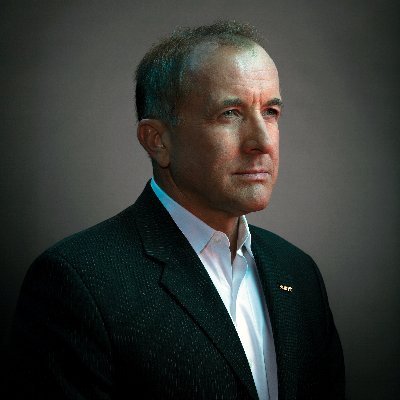
The deeper problem beyond the fact that Elizabeth Holmes is a pathological liar is that her victims succumbed to "Truth Default" theory:
Given limited time/access to fact check what people claim, most of us default to believing what we're told is true (e.g., someone tells me they are a Vietnam vet I have neither the time nor resources to check). Most of the time most people are relatively truthful, so Truth Default works as a cognitive heuristic (and liars can get away with lying some of the time).
HOWEVER: that doesn't apply to investors, who have a fiduciary responsibility ("due diligence") to fact check claimants before investing. That was not always done in the case of Holmes, in part because they were charmed by her youthful looks, sultry voice, Steve Jobs-wannabe turtlenecks, and her bold promises that Theranos would be The Next Big Thing that investors did not want to miss out on.
So while justice is rightly being served against Holmes, the victims of such scams carry some responsibility for letting themselves be fooled. No one held a gun to their head and made them invest. They chose to do so, and because our life outcomes are, in part, self-determined, victims must take some responsibility.
No, this is not "blaming the victim." Holmes committed a crime and is getting her just deserts. But neither are her victimized investors naifs.
Agreed, in a perfect utopian world no one would lie (or steal, rape, murder, etc.) But that is not the world in which we live. Yes, you should be free to walk around any part of any city anywhere in the world at any time of the night and not get mugged or robbed. But you're an idiot if you do that without taking precautions.
Reality matters.

"Build more. Lose less: Why maintaining existing homes matters" cmhc-schl.gc.ca/observer/202… @CMHC_ca

"The $300-Million Con Man - Greg Martel’s victims thought they were getting rich off Canada’s housing boom. Instead they lost everything. Will the notorious Ponzi schemer ever face justice?" pressreader.com/article/2814…

Ron Usher retweeted

Longer, but not toooo long, on the Vienna housing model and its relevance to globe wide housing crisis:
Controlling Land Rent, Vienna Style
Max Schranz is 26 and working on a master’s degree. He lives in a bright fifth-floor, 54-square-metre two-bedroom in Vienna’s Theodor-Körner-Hof, a 1950s city-owned Gemeindebau ten minutes from the main station. He pays €596 a month, put down no deposit, and holds an unlimited contract he could, in theory, pass to a child or sibling.
“I’m aware it’s a pretty stress-free existence,” he said. “My friends in other European cities are a bit jealous.” On summer evenings he reads in the estate’s green courtyards. The city reached him through a programme for first-time tenants under thirty—something nearly impossible for a student in most other capitals. What looks like personal luck is simply how a large share of Vienna’s housing still works (The Guardian 2024).
Given the linked crises of unaffordable housing, rising inequality, and global speculation in urban land, successful models for systemically controlling housing market prices are scarce. After forty years of neoliberal privatizations, few developed-world cities offer attainable systems for supplying affordable housing that map easily onto Anglosphere political economies.
Singapore is often cited, yet its land—and thus its land Rents—is largely public. Shifting 100 trillion in urban land value from private to public hands seems politically improbable.
Under post WWII Social Democrat regimes, both The Netherlands and Sweden expanded public housing , but neoliberal policies have since shrunk the non-market share while land Rents rose.
Berlin was long praised for its large renter majority and protective laws. Massive transfers of public stock to private REITs produced a 50 percent rent rise and protests demanding the return of sold blocks (“Berlin Spends” 2019).
Only one liberal-democratic global city has largely solved housing precarity in a form practical for other cities to copy: Vienna. It did so by controlling land Rent through taxation and related policies rather than by either stimulating or crippling private housing markets.
The Vienna Model – The Beginning
In the last days of the Habsburgs, Vienna displayed wealth by attaching grand façades on overcrowded apartment blocks. Sadly, behind the elegant facades, workers crowded ten to a 300-square-foot flat. Many slept four to a bed; some rented beds in shifts. This was a landlords’ city. Fewer than 60,000 of over two million residents could vote. One-month leases were common; rents rose freely; evictions were immediate. In 1913, 461,472 people—one-quarter of the population, including about 29,000 children—lived in asylums (Reiss 2017).
Defeat in the First World War collapsed the monarchy and brought universal suffrage. The left governed from 1917 to 1934 (the “Red Vienna” period) until the fascist takeover put an end to non market housing programs. Unlike socialist governments elsewhere in Europe at the time, Vienna officials did not appropriate private land. They used taxation, not appropriation, as the policy tool to house their citizens.
The Strategy
Even before the Red Vienna period, strict rent control - initially imposed to protect war wives and never repealed - limited rent increases. This economic control had the initial effect of lowering highly inflated urban land values.
It should be mentioned here that In most Anglosphere cities, strong rent control is often blamed for reducing new rental housing supply. The Canadian government has spent billions in subsidies to induce market-rate rental construction in the hopes that new unregulated supply will lower costs (City of Vancouver 2022b). Rental housing starts rose dramatically, but costs did not fall (Anderson 2022). Advocates claimed that even though new stock was expensive, new stock would open up cheaper old stock through a process called “filtering.” Support for this thesis is extremely weak; research shows that financial effects are minimal at best, are glacially slow, and that new units can displace rather than supplement affordable stock (Rosenthal 2014; Nygaard, Galster, and Glackin 2022; McDonald 2021; Condon 2023).
Vienna’s approach differed. Strong rent control mitigated the market price for urban land while progressive taxes on expensive apartment units further undercut speculative land values. Development land prices fell while the city used new tax money to buy land at the new depressed price.
Henry George’s ideas on land tax were known, yet leaders avoided a pure single tax on land value, fearing backlash from small owners. Progressive taxation of buildings (rather than bare land) plus rent control achieved a similar result: lowered land Rents. It's important to underline that the Vienna precedent broadens the land tax toolkit beyond pure Georgism single tax on land. We provide other examples in later chapters
With urban land speculators driven out of the market, the city became the dominant catalyst for affordable housing construction. (Förster and Menking 2016). One-fifth of new housing produced was deeply subsidized social housing for the poor and disabled. However, most new housing went to average wage earners in the form of resident co-operatives or limited-profit housing associations that charge only cost-covering rents, reinvest profits, and limit equity returns (Marquardt and Glaser 2023; Mundt and Amann 2010).
In the late 1920s roughly 30 percent of the Vienna city budget bought land and financed construction, funded mainly by progressive property taxes—higher on the most valuable units. These measures stripped speculation from the market. Now over 50 percent of Vienna housing units are in the non market sector. Rents for both market and non-market units are now less than half those for comparable units in Paris or other major European cities. This is because the strong non-market sector has weakened speculative pressures on urban land, which in turn holds down market rents.
The Market Today
It's not wise to ignore that Vienna is not immune to more recent globe wide neoliberal pressures. Pure social housing for the poor largely stopped being built by the city in the early 2000s; limited-profit associations took over building, and built fewer units. 1990s laws allowed condo conversions of former rental properties and rent-to-buy options for former non-market units. Pre-1945 rent controls were relaxed. Homeownership rose from 16 to 21 percent in seven years (Gutheil-Knopp-Kirchwald and Kadi 2017). Home costs rose relative to wages (Kadi 2015).
Despite these shifts, Vienna still builds far more cooperative and limited-profit housing each year than most other European capitals. Roughly 40–43% of the stock is municipal or limited-profit, and when pre-1945 rent-controlled private units are included the share of residents shielded from full market pressures rises to around 60–65%. (City of Vienna, Housing market (socialhousing.wien))
This large protected base keeps market land rents lower; market rents and condo prices are typically 20–30% below those in Paris (Numbeo; City of Vienna / socialhousing.wien). The protected sector dampens speculative pressure on private land and the fear of missing out that inflates prices elsewhere. Advocates continue to worry about backsliding (Prager 2018; Verlič 2015), yet the system remains far more protective than most.
Grassroots Design
In contemporary practice, the city of Vienna acquires urban land, sets social and demographic goals, publishes subsidies, and lets stakeholder panels choose among competing nonprofit teams. Competition produces distinctive architecture rather than standardized mediocrity.
Conclusion
Vienna shows that land Rent can be effectively controlled through taxation and rent regulation without ending private land ownership or markets. The city successfully treated most of its land, over time, as a public asset; other cities can do the same. Housing only the poorest erodes political support for intervention, while including average wage earners sustains it. In Vienna, co-op rents cover costs and replacement and stay under 30 percent of average income. The result is a city that has largely tamed the force that elsewhere keeps turning housing into a speculative asset - and proved that land can still serve the people who live on it..


"'Chaotic situation': Cowichan decision appellants warn of possible impacts" cbc.ca/news/canada/british-c… by Jason Proctor.

Ron Usher retweeted

Thoughts From The Campaign Trail!
As we look at election results from across the province, there is no doubt that voters have sent a message. I know there will be plenty of commentators offering their interpretations of what that message is. I wanted to share a few thoughts about what I believe voters are trying to tell us.
People are looking for competence from their government, not ideology.
Politics can sometimes attract people who are more motivated by a desire to reshape society in their own image than by the practical responsibilities of governing.
But I don’t believe that’s where most voters are.
First and foremost, people want government to do its job. They want it to deliver the basic services we all depend on, and to deliver them well.
At the municipal level, that means good recreation centres, clean parks, potholes filled, snow removed, safe neighbourhoods and responsible management of property taxes.
Getting the basics right has been my mantra since the day I walked into City Hall. And I believe the people of Port Coquitlam have responded to that approach.
Second, people want results they can actually see and feel.
That means being upfront, honest and realistic about what we can accomplish.
Increasingly, I see politicians making grandiose promises designed to capture attention and win votes, even when those promises are completely detached from reality.
And when those promises inevitably go unfulfilled, the damage goes well beyond the politician who made them. It erodes people’s trust and confidence in government itself.
That’s one of the reasons I place so much importance on delivering core public services exceptionally well.
It doesn’t mean government shouldn’t be ambitious. Quite the opposite. We should have big aspirations for our communities and our province. We should want to tackle difficult problems and make life better for people.
But we also have to be honest about what is possible, realistic about what it takes, and accountable for what we promise.
When government consistently gets the small things right, it earns the trust and confidence necessary to take on the bigger challenges.
Finally, I think people are looking for a return to some normalcy in our politics.
I think people are exhausted by politics built around division, hostility and the demonization of anyone who happens to see the world differently.
I can’t think of many other parts of our lives where we would consider that acceptable behaviour.
When I’m at the rink or the field watching my two boys, I talk with other parents who have all kinds of different opinions and perspectives. We don’t necessarily agree about politics or everything happening in the world.
But I can tell you one thing we do agree on. We all want our kids to be happy, healthy and have the best possible shot at a good life.
And I think that says something important about who we really are.
I don’t believe the public is nearly as divided as some politicians would have us believe.
I don’t believe we’re locked in some do-or-die struggle where one side has all the answers and everyone on the other side is beyond redemption.
That’s not how we behave in our families. It’s not how we behave at work. It’s not how we behave on teams. And it’s not how we should behave in our politics.
We can disagree without being enemies. We can have different beliefs without questioning one another’s character. And we can recognize that, despite our differences, most of us want many of the same things for ourselves, our families and our communities.
I believe there’s far more that brings us together than pulls us apart.
And I believe government works best when it focuses on those things we have in common, earns the public’s trust through actions and results (usually smaller, incremental ones), and stays firmly planted where the vast majority of normal people are.

