

Currently interning at Meta FAIR Chemistry in SF. PhD student at AstraZeneca and Chalmers University working on generative models for molecules.
Gothenburg, Sweden
Joined June 2024
- Tweets64
- Following724
- Followers135
- Likes205



Pinned Tweet
Excited to finally announce a new preprint on Ensemble-Conditioned Molecular Design!
We tackle the issue of incorporating more dynamic structural information into 3D molecular generators by guiding sampling on multiple structural conditions
1/N 🧵
Ross Irwin retweeted

Today we are releasing UMA Nitro! ⚡
Nitro brings unprecedented inference speeds to the latest UMA models – reaching 6 ns/day on 1k atoms on a single H200 GPU, and up to a blazing 33 ns/day raw inference speed on ~150 atoms!
Try it now - github.com/facebookresearch/…!
Ross Irwin retweeted

Thrilled to share our new preprint: "Simulation-Based Quantum System Inference with Neural Posterior Estimation"!
Check out: scirate.com/arxiv/2609.34995

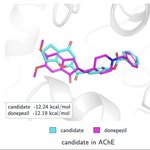
Finally, we see promising results when applying the method to real-world case studies on dual binder design (targeting both AChE and MAO-B) and agonist design (active-state-selectivity for the A2A adenosine receptor)
8/N


We see this as only an early step in using ensemble information within 3D small mol design pipelines, with many exciting directions from here!
Paper: arxiv.org/abs/2609.15077
Code: github.com/rssrwn/ensemble-c…
Jointly with @smnlssn, Alessandro Tibo and Jon Paul Janet!
9/N, N=9

Ross Irwin retweeted

Ensemble-Conditioned Molecular Design
1. The paper reframes molecular design from “find a single bioactive conformer” to “optimize the conformational ensemble”: both (i) ensemble modes (distinct low-energy states such as shapes, pharmacophore arrangements, or pocket-bound poses) and (ii) ensemble properties (aggregate scalars over the ensemble such as mean PSA or mean pairwise RMSD).
2. Core method: ensemble-conditioned guidance for 3D molecular generative models. Instead of training on paired multi-state data, the model is trained on single conditions and multiple conditions are composed at inference by combining the vector fields (continuous coordinates) and log-probabilities (discrete atoms/bonds) produced under each condition.
3. This enables a single trained model to express many design tasks by choosing inference-time compositions: target multiple modes, avoid specific modes (negative weights), mix modalities (shape + pharmacophore + pocket + property targets), and combine arbitrary numbers of conditions—without rebuilding datasets per task.
4. Mode conditions supported: (a) shape profiles represented as noisy coordinate point clouds with tunable fidelity (sigma controls how tightly the generated molecule must match), (b) pharmacophore point clouds with types and optional direction vectors, and (c) “soft” protein pocket conditioning (generate a ligand that fits a pocket without forcing a specific pose).
5. Property conditions supported (demonstrated): mean polar surface area (PSA) across conformers and mean pairwise RMSD as a flexibility proxy. These are provided as target scalar values and integrated via conditioning embeddings, allowing simultaneous control of a bound mode and whole-ensemble behavior.
6. A key technical issue is composing structural conditions from different reference frames. The paper introduces adaptive symmetry learning: encoders are trained to output either equivariant or invariant features depending on whether the input is randomly rotated during training, letting one condition define the generation frame while others are safely composed invariantly.
7. The generator uses joint continuous-discrete flow matching: coordinates are generated by continuous flow matching, while atom types and bond types are generated via discrete flow matching (CTMC). The guidance composition is designed to work consistently across both continuous and discrete outputs.
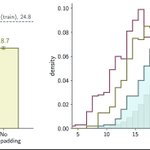
8. Flexible-size generation is added to pocket-conditioned 3D generation by padding to a maximum atom count (48 heavy atoms) and learning to emit padding tokens. Two training details are highlighted as important: placing pad coordinates at the molecule center-of-mass and aligning padded prior/data atoms with a permutation that minimizes squared distance.
9. Benchmarks introduced: (i) multi-mode conditioning with mode targeting and mode avoidance using compact vs extended conformer shapes; results show strong gains over a size-matched virtual screening baseline, with sigma trading off conditioning fidelity vs chemical novelty. (ii) ensemble property optimization while maintaining pocket + interaction pharmacophore constraints; PSA and RMSD respond monotonically to targets while interaction recovery and docking scores remain largely stable (directional rather than perfectly calibrated control).
10. Case studies: (a) dual-target design for AChE (donepezil) and MAO-B (safinamide) by composing two pharmacophore conditions; docking-based evaluation shows higher fraction of molecules scoring well in both pockets than single-target conditioning. (b) active-state-selective agonist design for A2A adenosine receptor by targeting the active pocket while avoiding the inactive pocket; adding the negative inactive-state condition increases active-state preference in docking (∆Vina state) while keeping low similarity to the known agonist.
📜Paper: arxiv.org/abs/2609.15077
#ComputationalChemistry #Cheminformatics #MolecularGeneration #DiffusionModels #FlowMatching #DrugDiscovery #GenerativeAI #StructureBasedDesign #MultiObjectiveOptimization #ConformerEnsembles

Ross Irwin retweeted

When we design molecule we often want to target properties which are averages for the Boltzmann ensemble, rather than a single configuration or graph.
Yet, current property-guided 3D generative models condition on single conformers.
We target this with Boltzmann-Expected Design

Ross Irwin retweeted
Boltzmann-Expected Molecular Design with Decoupled Annealing Flows
1. The paper reframes 3D molecular design around the key fact that many relevant 3D observables (e.g., free energies, shape descriptors) are expectations over a molecule’s Boltzmann conformational ensemble, not properties of a single generated conformer.
2. It introduces DECAF (Decoupled Annealing Flows), which factorizes the joint distribution over molecular graphs and 3D coordinates into two conditional flow models: a graph-conditioned coordinate flow p(x | G) that emulates the Boltzmann ensemble, and a coordinate-conditioned graph flow p(G | x) that proposes new graphs using 3D information.
3. DECAF alternates between these two flows in a simulated-annealing-like loop: sample an ensemble X from p(x | G), propose a new graph G’ via p(G | x) using coordinates from the ensemble, resample an ensemble for G’, and accept/reject the graph move with an annealing acceptance rule based on an ensemble-scored objective f(X).
4. A central design choice is that the scoring function is evaluated on ensemble statistics estimated from i.i.d.-style samples from the Boltzmann emulator p(x | G). This makes “ensemble-consistency” the optimization target, addressing a failure mode of property-guided 3D generators that can optimize for a single favorable conformer while the true ensemble violates the objective.
5. The approach is modular: changing the optimization objective does not require retraining the generative models. Any computable ensemble-level score (including moment-based objectives) can be plugged into the annealing loop.
6. On GEOM-Drugs, DECAF optimizes ensemble means of radius of gyration (Rg) and solvent-accessible surface area (SASA). The study shows that using larger ensembles during optimization (e.g., N=10 or N=50 vs N=1) is especially important for larger, more flexible drug-like molecules where the Boltzmann distribution is broader; single-conformer optimization degrades notably beyond ~50 atoms.
7. The paper evaluates optimization shifts using Cliff’s delta, reporting both local shifts along trajectories and global shifts across the dataset, oriented so that successful minimization/maximization corresponds to strong negative/positive shifts respectively.
8. DECAF extends naturally to multi-objective optimization over coupled geometric properties (Rg and SASA) using an augmented Tchebycheff scalarization, enabling trade-offs even when objectives are correlated and when their desired directions conflict (e.g., maximize Rg while minimizing SASA).
9. A distinctive capability is higher-moment “distribution shaping”: DECAF jointly optimizes variance and skewness of an ensemble property (demonstrated for Rg) to design molecules that are both flexible (high variance) and biased toward a prescribed conformational regime (via skewness control). The resulting conformational distributions are validated with all-atom MD simulations, not just the learned emulator.
📜Paper: arxiv.org/abs/2607.19519
#ComputationalBiology #MolecularDesign #GenerativeModels #FlowMatching #NormalizingFlows #DrugDiscovery #MolecularDynamics #Boltzmann #MultiObjectiveOptimization #MachineLearning

Ross Irwin retweeted

🧵 1/5 Enjoying a coffee break at #ICML2026? ☕Looking for more Boltzmann Generators?
🚨 Introducing Coarse-Grained Boltzmann Generators (CG-BGs)
CG-BGs are a scalable framework for equilibrium sampling in CG coordinate space, combining reduced-order generative modeling with importance sampling, using machine learning potentials as the target energy.
Proud to share this work with @BojunZhaoAI4S , Jan Eckwert, and @JulijaZavadlav 🙌
Ross Irwin retweeted
Confidence Is the Key: How Conformal Prediction Enhances the Generative Design of Permeable Peptides
1. The paper argues that RL-guided generative design can be misled by predictive models when generation drifts outside the model’s applicability domain, producing “high reward, high uncertainty” peptides—especially problematic for understudied cyclic peptides.
2. They integrate conformal prediction (CP) directly into the reinforcement learning (RL) scoring loop (PepINVENT-style peptide completion), so the agent is rewarded not just for predicted permeability, but for permeability predictions made with calibrated confidence at a user-chosen confidence level (here, 80%).
3. Core technical setup: a permeability classifier (XGBoost on ECFP features) is trained on CycPeptMPDB PAMPA data (6876 cyclic peptides; threshold LogPexp ≥ -6 as permeable). On top of this, they build an aggregated Mondrian inductive conformal predictor (ACP with 10 ICPs) outputting two p-values: P1 (permeable) and P0 (non-permeable).
4. Key conceptual point: CP’s two p-values encode “evidence for each class,” enabling four outcomes (Class 0, Class 1, Both, None). In RL, the target is not merely “high P(permeable)” but conformal efficiency: confidently permeable designs where P1 > 0.2 and P0 < 0.2 (at significance 0.2).
5. Baseline finding: optimizing raw model probability (standard practice) increases average predicted permeability (raw score rises ~0.51→0.87 over 350 epochs), but many “permeable” designs are not conformally confident—highlighting a mismatch between probability-based rewards and calibrated reliability.
6. They test multiple CP-based reward designs: maximize P1, maximize (1−P0), maximize (P1−P0), plus two discrete schemes: “harsh” (reward 1 only if both thresholds met) and “soft” (reward 1 if both met, 0.5 if one met, else 0).
7. Main methodological takeaway: single p-value optimization (P1 alone or 1−P0 alone) is learnable but does not reliably increase the number of confidently permeable peptides, because maximizing P1 does not ensure low P0 (and vice versa). The joint decision structure of Mondrian ICP matters.
8. Best-performing strategy: the CP “soft” scoring function converges fastest to the desired region (defined as reaching ~50% conformally efficient permeable predictions among valid molecules) and yields more reliable hits than raw-probability scoring when “hits” are defined as confident + within-domain.
9. Practical insight on generation dynamics: the soft reward reduces brittleness from sparse rewards (compared to harsh) and improves efficiency—fewer unique valid molecules may be generated overall, but a higher fraction meet the calibrated confidence criterion, meaning less wasted exploration in uncertain space.
10. Robustness check: performance depends on peptide length and training-data coverage. The CP-soft approach works well for lengths well represented in training (6, 7, 8, 10), but deteriorates for 9, 11, 12, effectively flagging when the predictor’s applicability domain is being exceeded—useful as a “stop relying on this objective” signal.
📜Paper: arxiv.org/abs/2605.05770
#ConformalPrediction #ReinforcementLearning #GenerativeModels #PeptideDesign #CyclicPeptides #UncertaintyQuantification #Cheminformatics #ComputationalBiology #DrugDiscovery #MachineLearning

Ross Irwin retweeted

Out today Science Advances: Long and flexible time steps for MD. Very excited to see this published!


Ross Irwin retweeted

I can feel @GaryMarcus’s frustration. AI’s utility—specifically in drug development—was over-promised and under-delivered upon.
But I still can’t help but get annoyed at the concept of an AI drug. They don’t exist and I look forward to when we stop using this phrase.
AI is a utility. It’s a raw resource. It’s intelligence in a box (er, data center).
Electricity is the same way. It gets pushed into devices that transform that utility into another unit of work.
AI gets pushed into different nodes of the drug discovery paradigm and also gets transformed into units of work.
That’s why the phrase is based entirely on a false premise.
If we were talking about building bridges. We wouldn’t have this issue. Is electricity used to build bridges? Sure! There are all sorts of electrically-powered tools used to build bridges. Small ones. Big ones.
But is it an electrically-built bridge? Do 51% of the rivets need to get installed with electricity and not gasoline as the raw fuel?
What about drug development? Do 51% of the atoms require data-driven models versus human heuristics and/or physics?
I don’t know!
The phrase AI drug is an allergic reaction to the irrational over-hyping of an idea and the ensuing misallocation of investor capital. It is rarely used in a scientific or technical sense.
Nowadays, it’s mostly used by some who tacitly root on the missteps or failures of so-called AI drugs — as a bit of ‘I told you so’.
And I get it! It’s well placed and somewhat deserved, but doesn’t move the needle on scientific discourse.


Ross Irwin retweeted
PhD positions in my lab (AI for Science), but with special preference for people who complement our current activities or are enthusiastic about contributing to our on going work. Looking for technically strong, independent and proactive candidates. chalmers.se/en/about-chalmer…
