

St Andrews & Oxford. Early modernist, late morningist. Enthusiast for pub dogs, poetry and handholding. I resolve to know nothing but Christ, and Him crucified.
Joined June 2015
- Tweets7.2K
- Following230
- Followers1K
- Likes70.3K







Pinned Tweet
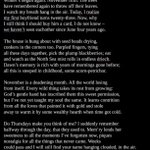
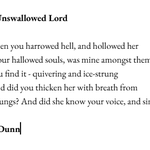
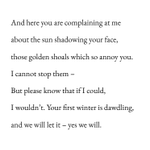
Not being at all saintly about this migraine, but here's a selection of my devotional poems, whilst I suffer:
First up:
'Sabacthani'


Ruby Dunn retweeted

In my opinion Russell Brand's biggest crime is rape.

Russel Brands biggest crime in my opinion is being an egotistical womanizer who like to talk up his conquests. Let’s face it. He’s no Brad Pitt. He probably struggled to pull a woman prior to his fame. I have no doubt he completely fabricated the number of women he bedded purely for shock factor.
It’s clear that the women that threw themselves on Russ after he acquired his fame and fortune are now looking to profit off their roll in the hay with him. I would say the old MeToo movement has evolved into the MeThree movement!
Not all women are victims and not all women are honest. Why do we always automatically believe the woman! I am a woman and even I believe the majority of women are just purely opportunists out to make a quick buck!
#RussellBrand


Ruby Dunn retweeted

The invention of backup cameras making men no longer required to do that thing where they reach their arm behind the passenger seat while they turn around to look is declining the birth rate


Ruby Dunn retweeted

It's Bonfire Night, so here's 'Autumn Leaves' by John Everett Millais, 1856 in Manchester Art Gallery.
Millais was a friend of Tennyson, and visited him in the autumn of 1854, when they gathered fallen leaves and lit a bonfire together with them. Tennyson's son later claimed this was the origin of the painting.
In 1847 Tennyson had written:
'Tears, idle tears, I know not what they mean,
Tears from the depth of some divine despair
Rise in the heart, and gather to the eyes,
In looking on the happy Autumn-fields,
And thinking of the days that are no more.'

Ruby Dunn retweeted

Enough public humanities. It is time to bring back the arcane humanities. The hieratic humanities. The humanities pursued in masonic secrecy


Ruby Dunn retweeted

All this debate about the best Christmas advert. John Lewis? M&S?
For me, there can only be one winner. Robert Dyas.
Every year. No contest.
Strongly recommend you fill in this survey 👍💪

Just completed a very strange and confused survey by @britishlibrary intended to inform its future strategy. Seems to be chiefly aimed at justifying selling off reading rooms. I'd urge everyone to complete it (open until 17 Nov): tinyurl.com/3v89mb3s
Ruby Dunn retweeted

In November 1817 the only legitimate grandchild of George III, twenty-one years old and carrying the heir to the throne, was bled and starved through her pregnancy by the most fashionable obstetrician in London, left in labour for 50 hours because he did not believe in forceps, and died five hours after delivering a dead nine-pound son, which is the reason Britain ended up with a queen called Victoria.
Princess Charlotte was the nation's darling. Her father, the Prince Regent, was fat, extravagant and loathed, and her grandfather was mad. She was the one member of the family the public actually liked: headstrong, funny, married for love to a handsome German prince called Leopold and living with him at Claremont in Surrey. When the pregnancy was announced in the spring of 1817, the bookmakers opened a market on the sex of the baby.
Her care went to Sir Richard Croft, the leading man-midwife of the day, and he did exactly what the best medicine of the day prescribed. It was called the lowering treatment. A pregnant woman was thought to be dangerously full of blood and nourishment, so she was bled to prevent haemorrhage and kept on a thin diet so the baby would not grow too large. Charlotte had begun the year robust. She was bled repeatedly and fed sparingly for months, and by the autumn she was weak and anaemic.
She went into labour in the first days of November, two weeks late. The first stage lasted 26 hours. Croft could tell the baby was lying badly. The profession held that a natural labour should be left to nature and that forceps were a vulgar interference, so he left it. The second stage lasted another 24 hours, without pain relief, because none was given to labouring women. On the evening of the 5th she delivered a boy, nine pounds and dead. Around midnight she began to bleed, and in the small hours of the 6th she died.
Britain mourned her on a scale nobody would see again until Diana. Shops shut for a fortnight. An inquiry cleared Croft, and everyone else blamed him. Three months later, attending another long labour, he took his own life.
Then the kingdom looked at the succession and found nothing. George III had fifteen children and not one legitimate grandchild left alive. His middle-aged sons, most of them with mistresses and families on the side, were packed off to find German princesses and produce an heir. The Duke of Kent married a widowed princess, and in May 1819 she had a daughter. Her name was Victoria.
The obstetricians took the lesson, slowly. Forceps came back. The lowering treatment faded out of the textbooks.
A young, healthy woman was weakened for months on the orders of the best physician in the land, because the best physicians in the land agreed, and when she was dying in front of them, the same agreement told them to keep their hands in their pockets.
The settled science of 1817 decided who would sit on the throne for most of the next century, in a bedroom in Surrey, and it was only ever tested on the people who could not argue with it.


