

Thinking about quantum information & computation @IQIM_Caltech
London, England
Joined July 2020
- Tweets44
- Following198
- Followers282
- Likes638

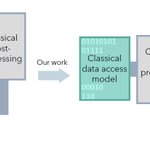


Where exactly could we find concrete quantum advantage in processing large matrices? Happy to share new work (arxiv.org/abs/2410.13937) trying to circle in on more precise answers to this question

We look at two matrix function problems with classical input and output; toggle problem parameters (function, input model, matrix norm, sparsity, error); and catalog how the complexity changes
Joint work with Santi Cifuentes, Thais L. Silva, Mario Berta & @AolitaLeandro
1
323
Samson Wang retweeted

I'm looking for a PhD student to join my new group at @UniHannover to work on quantum information and quantum learning.
More information here:
christophhirche.github.io/Ch…
Please share and forward to anyone who might be interested.

Samson Wang retweeted

The great @FrederikvomEnde has started a really nice "Counterexamples in quantum information" document -- assembling counter-intuitive results from across the literature
It would be great to spread and contribute!
docs.google.com/document/d/1…

Samson Wang retweeted

🚨 Deadline approaching! Less than a month left to submit your papers to QCTIP24 🚀. February 5th is the last day! We're excited to see submissions across a wide range of quantum computing topics.Submit here: l1nq.com/u9Zxt #QuantumComputing #QCTIP24
Samson Wang retweeted

⭐️Looking for two post docs to come join us at EPFL ⭐️
One focused broadly on quantum learning theory.
The other, joint with Christa Zoufal and Stefan Woerner at IBM Quantum, working broadly on quantum simulation.
Apply 👉 docs.google.com/forms/d/e/1F…

New work out on qubit-efficient randomized quantum algorithms! arxiv.org/abs/2302.01873
We investigate a class of algorithms to sample properties of matrix functions, where we ask for no quantum/coherent oracle access to the matrix in question.

This builds on some great previous work using similar techniques for phase estimation (arxiv.org/abs/2110.12071) and for randomizing multi-product formulas (arxiv.org/abs/2101.07808).
1
4
292
Thanks to my great mentors Mario and @SMcArdleQuantum for the really enjoyable discussions and collaboration!
2
245
Samson Wang retweeted

Postdoc positions in quantum information at RWTH Aachen dlvr.it/SdDppx
Samson Wang retweeted

Applications are now open for the 2023 Los Alamos Quantum Computing Summer School! Our school focuses on theory, applications, and programming of quantum computers. Apply here: smr.to/p85950
Samson Wang retweeted

Kernel methods are famous for their trainability guarantees. But, is this always true for quantum kernel-based models where kernel values are statistically estimated from quantum hardware ?
Check out: arxiv.org/abs/2208.11060
with @samson_wang, @MvsCerezo and @qZoeHolmes

Samson Wang retweeted

In the world of hypotheticals "the battle of clean and dirty qubits in the era of partial error correction" has been raging. Its outcome is here: arxiv.org/abs/2205.13454.
Huge thanks to
@samson_wang @MaxHunterGordon @czarnik_piotr @MvsCerezo @ColesQuantum @LCincio and @EuMoqs!
New preprint out, studying gradient scaling in QML models that employ quantum neural networks
with @s_thanasilp, Nhat Anh Nghiem, @ColesQuantum and @MvsCerezo.
Congrats Supanut and Anh on a great summer school project!

Do Quantum Machine Learning (QML) models suffer from trainability issues like barren plateaus?
Check out our new work: arxiv.org/abs/2110.14753
with @samson_wang , Nhat A. Nghiem, @ColesQuantum , @MvsCerezo from the LANL quantum computer summer school.

Noise can severely limit the trainability of Variational Quantum Algorithms. Can error mitigation help? That’s what we investigate in our latest pre-print!
arxiv.org/abs/2109.01051
with @czarnik_piotr @AndrewArrasmit2 @MvsCerezo @LCincio @ColesQuantum


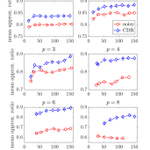
There is some good news though! In certain settings we find EM can help. While solving a MaxCut problem in the presence of realistic hardware noise, we observe that CDR offers improvement to the training process in settings where cost concentration is not too severe

1
3