

Statistics, medicine, humanity. I study the math behind medical decisions, and I try to use what I learn to help patients and improve the healthcare system.
Pennsylvania
Joined May 2017
- Tweets700
- Following1.4K
- Followers216
- Likes1.8K






Samuel Weisenthal retweeted

You're too smart for this, you know better. Obviously a differentiable curve fitted via SGD can only interpolate. That's true by construction. But if you use this curve as a sampling guide in a search process, then you're doing search, you're no longer interpolating at all. Theorem proving is search. Reasoning chain generation is search. Etc.
Samuel Weisenthal retweeted

Mathematician Terence Tao:
"one thing this whole era of AI is teaching us is that our idea of intelligence is not really accurate"
The history of AI has been: 'here’s a task only humans can do', and then one by one, an algorithm does it too
Maybe we're not quite as smart as we think
Samuel Weisenthal retweeted

This is certainly the most consequential paper published in child and adolescent psychiatry for the last few years. It shows that the meta-analyses that current child psychiatry guidelines rely on to recommend fluoxetine for depression were skewed by an unbelievable trial (n=40) in Iran which found an effect 15 times larger than the average.
When this trial is removed all meta-analyses find the same as a recent Cochrane analysis which found 'small and unimportant differences.'
The flawed meta-analyses by Zhou and @cipriani in the @TheLancet and Lancet Psychiatry need to be corrected.
And guideline committees need to update their guidance in the context of the harms of these drugs including withdrawal effects, sexual effects and agitation/akathisia and suicidality in a minority of youths exposed to them.
Link below


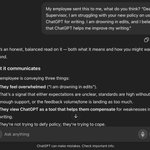
Just wrote article on language models and inaccuracy disclaimers
linkedin.com/pulse/medical-c…
Disclaimer in interface far better than buried in terms.
Ultimately answers need verification via primary sources.


(3/16) Hundreds of millions of people are asking AI systems health questions and acting on the answers. A cheap disclaimer at the bottom of the screen (often doesn't even appear anymore) or buried in terms of service doesn't really change the expected behavior.
2
97
Grouping image processing and other tech like generative models under the umbrella term "ai" is problematic
statmedhumanity.org/2025/09/…
47
Samuel Weisenthal retweeted

AI is best understood as a bunch of US companies decided to launch a trillion dollar infrastructure project.
Once you see it that way, a few things become obvious:
- It was always going to have an insane level of economic impact
- It was always going to have an insane level of social impact
- Both of these things are true regardless of whether AI is useful
The question isn't whether AI is having an impact, because it's almost impossible for spending on this scale not to have an impact.
The real question is whether the impact is over and above just randomly sinking a trillion dollars of infrastructure spending into the US economy.
Samuel Weisenthal retweeted

The PHQ-9 is one of the most widely used depression screening tools in the world.
It's used in primary care offices, hospitals, schools, universities, workplace wellness programs, and mental health clinics. Millions of people have completed it. Many have received a depression diagnosis based, at least in part, on their score.
Most people assume the PHQ-9 emerged from a purely scientific effort to improve the identification of depression.
The actual story is more complicated.
In the early 1990s, Pfizer was preparing to market Zoloft. At the time, severe clinical depression was generally viewed as a relatively uncommon condition, and many primary care physicians were hesitant to diagnose and treat it.
Mental health assessments were complicated. They required time, clinical judgment, and an understanding of a person's life circumstances. Most family physicians didn't receive extensive psychiatric training and many were uncomfortable making psychiatric diagnoses.
This presented a problem.
If antidepressants were going to reach a much larger population, depression had to become easier to identify within primary care.
The solution was a brief screening questionnaire.
The idea for what eventually became the PHQ-9 originated with Pfizer marketing executive Howard Kroplick. The goal was straightforward: create a simple tool that could be administered during routine office visits and help physicians identify potential depression quickly and efficiently.
Over time, the PHQ-9 became embedded throughout healthcare.
The problem isn't that the questionnaire asks about symptoms associated with depression. The problem is that the symptoms it measures are not unique to depression.
Feeling down.
Loss of interest.
Trouble sleeping.
Fatigue.
Difficulty concentrating.
Changes in appetite.
These experiences certainly occur in depressive disorders. They also occur during grief, divorce, job loss, financial hardship, chronic illness, burnout, loneliness, and countless other painful but normal human experiences.
A questionnaire can count symptoms.
It cannot understand context.
It cannot tell whether someone is mourning the death of a spouse, struggling through a difficult life transition, or suffering from a depressive disorder.
That distinction requires a conversation.
It requires clinical judgment.
It requires understanding a person's history, relationships, circumstances, and meaning-making processes.
When we reduce emotional suffering to a checklist, we risk confusing normal human responses to adversity with psychiatric pathology.
This matters because screening tools do more than measure symptoms.
They shape how clinicians think.
They shape how patients understand themselves.
And they influence who receives a diagnosis, who receives medication, and how society defines mental illness.
The question is not whether depression exists.
The question is whether we have allowed a marketing-driven framework to expand the boundaries of diagnosis in ways that blur the distinction between clinical disorder and ordinary human suffering.
The history of the PHQ-9 deserves far more attention than it receives.
Most people have never been told this story.
They should be.
Read the full article and decide for yourself. 🔗in first comment

Overall, the @Midjourney debates show:
Test interpretation is crucial,
The cost of misinterpretation is high,
Tons of quantitative people are excited about applying math to medicine,
Healthcare providers are willing to engage to make sure this is done right.
👏
47
Let's start with D-dimer
linkedin.com/feed/update/urn…


Sometimes data is useless. "Here is an EMG of my left pinky, can we talk about my cough?"
Data lovely, and beautiful. I am a data geek. I love it. But data is also noise, and noise can be misinterpreted as signal. We need scientific ways to separate noise from signal.
69
Correct; the environment is not great for innovation like Midjourney. Need to target the problems that are plaguing patients/doctors using the concepts behind tech like midjourney (e.g., optimization/probability behind post-test probabilities) and also need to change environment

The problem is that US doctors are being pushed to the breaking point and they see more uncompensated work headed their way.
1
93
Bingo. Information is not neutral. If one doesn't act on information, it can be a massive liability. This partially explains the information aversion in healthcare system. We needs systematic changes to allow providers to have a different, healthy relationship with information.

1
44
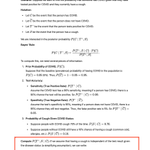
Estimating post-test probabilities easier said than done, sadly
arxiv.org/html/2503.15382v2

It’s just remarkable watching doctors explaining that if anyone does additional tests, they will be forced, as though by an inescapable physical process, to take bad actions based on the additional data from the tests. They correctly say that the literature shows outcomes for patients who get these tests are worse, but then they draw completely the wrong conclusion, claiming that the problem is the tests and not that physicians were incorrectly trained on how to analyze the tests and make decisions based upon them.
None of them seem to have heard of conditional probability estimates, the literature on making decisions under incomplete information, etc. One of them earlier asked me what I would do if I saw some unknown mass in a scan, and after I answered “I would start by consulting the statistics to figure out prior probabilities and attempt to do a conditional probability estimate based on them, he insisted I was not answering his question.
1
67
There's truly a clash between decision theory and the real world, and this shows up in diagnostic screening debates, where one group is correctly saying what should be and another is correctly saying what is. This leads to extreme frustration in all parties
1
1
48
This collective agreement is a reflection of a health system (and society) that focuses too much on outcome and too little on process
A provider can't dismiss a false positive, because a false positive might always be true...

I just accepted that doctors are bad at math
it is embarrassing that the field responsible for making life or death decisions just collectively agreed on the obviously false, grade-school disprovable statement that more information can be bad to a robust decision making process
63
False positive are not the problem.
The problem is that it's more lucrative to make a new test than it is to monitor and control the effects of an existing one
So @midjourney built a new test - also need to build the framework around it
linkedin.com/posts/samuel-we…
48
To me, the biggest difference between @OpenEvidence and general language models does not have to do with the recent study.
It is that the general models, unlike OpenEvidence, have the disclaimer: “Can make mistakes. Check important info.”
This is a crucial disclaimer.


1
75
False positives aren't the problem. Misinterpretation is.
linkedin.com/posts/samuel-we…
21