

Bioinformatician who codes, cooks, bakes, eats, sketches, and runs, in a loop. PhD researcher. Long-read enthusiast and figuring out TADs in the 3D genome
Warsaw, Poland
Joined December 2009
- Tweets3.8K
- Following1.2K
- Followers282
- Likes13.5K




Pinned Tweet
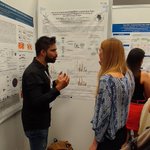
Here at London Calling 2023, new updates, new platforms for raw data analysis, some really exciting work in the field of Genomics being showcased. We had super engaging poster session at #NanoporeConf – at City of London, London

VISA officer (VO) at US consulate
VO : What is the purpose of visit to USA?
Me : Attend a conference
VO: What is it abt?
Me: It's about long-read DNA seq. technology
VO: Oh DNA
then he types something on his screen with utmost focus and says congrats for the VISA
#reallyhappened

Border agent: purpose abroad?
Me: scientific conference.
BA: topic?
Me: single cell biology.
BA: prokaryotic or eukaryotic?
#reallyhappened
2
843
Sachin Gadakh retweeted

Whole genome sequencing has officially become a standard part of cancer diagnosis and treatment, something we've been working towards for decades! This is the 1st cancer WGS test approved for Medicare reimbursement, meaning insurance will cover it & making it broadly accessible

Medicare approves ChromoSeq, @WUSTLmed's whole-genome test for blood cancers. Offering a complete genetic view, it aids personalized treatments. Already in use at Siteman for AML & MDS, it's now available nationwide. A leap for cost-effective cancer care.
ow.ly/u0yy50PAxME

cc @plewczynski really nice paper underlining the existence of TADs

We are excited to share our recent preprint in which we have shown the importance of the expression and mutual arrangement of enhancers and genes for 3D insulation and protection against enhancer hijacking @EnhancerLoop
biorxiv.org/content/10.1101/…

1
174


Sachin Gadakh retweeted

@smframptonsoto1 on how long @nanopore reads sheds light on the usually dark FCGR locus (short reads cannot be uniquely mapped). Phasing across whole challenging locus possible. Haplotype resolved de novo assembly of the region reveals structural variants. #NanoporeConf

You’re unable to view this post because this account owner limits who can view their posts. Learn more
Thank you @ECCBinfo @iscb_escs @BioInfoGRX for providing opportunity to present my work about highlighting advantage of @nanopore long-reads enabling identification of required variants from WGS with Low-coverage datasets with inhouse developed consensus approach. – at Sitges, Spain


Sachin Gadakh retweeted

🧬Plewczynski Lab is looking for a Postdoc in "Multiscale spatial reorganization of chromatin in response to replication stress and its role in cellular protection against genomic instability"👨🔬
Deadline: 28.09.2022 r. 📅
🔎For more information, please visit ⬇️
☺️

ALT https://konkursydlanauczycieli.uw.edu.pl/api/document/1802/datafile/pdf
If you fancy working on NGS and 3D genomics techniques such as RNA-seq, ChIP-seq, ATAC-seq, iBLESS, Hi-ChIP, etc, and analysis of those datasets, please check the position.
P.S: You would be working with Multinational lab members and the coolest PI
konkursydlanauczycieli.uw.ed…

cc @plewczynski @abhishek10ag , the authors are addressing
How CTCF establishes TAD boundaries and to what extent these are permeable to cohesin?

Latest #CDlab preprint on @biorxiv biorxiv.org/content/10.1101/…
Collaborating with Jan-Michael Peters’ lab, we show that CTCF is a _DNA-tension-dependent_ barrier to cohesin-driven loop extrusion.
Lots of new data! Congrats to 1st authors Iain Davidson @RomanBarth2 Maciej Zaczek
1/


1


Our machine learning approach to peak calling "LanceOtron: a deep learning peak caller for genome sequencing experiments" has been published. If you want better peak calls and less false positives in your ChIP-Seq results, please give it a try! doi.org/10.1093/bioinformati…

1


Yes ! I am registered for the Brussels Airport Marathon & Half Marathon / prod.chronorace.be/inscripti…

1
5
Sachin Gadakh retweeted

had a very nice @MSCActions secondment week in Warsaw. Thanks a lot to Dariusz and Abhishek @plewczynski @abhishek10ag and all the kindly Plewczynski Lab. We found a very nice beginning for collaboration and lots of possility to go further. @enhpathy_H2020 – at Warsaw, Poland


Sachin Gadakh retweeted

Why I think science works! 👇🏾
That pause and the smile - priceless.
#wowScience
This post is from a suspended account. Learn more