

佐藤直生 Principal Software Engineer (FDE), Microsoft 「エフェクティブ・ソフトウェアエンジニア」 https://nitter.cf/t.co/WmKVX25rJp 「ベクトルデータベース」 https://nitter.cf/t.co/lxN0DIkn0j
Tokyo
Joined May 2007
- Tweets52.1K
- Following5.7K
- Followers6.3K
- Likes7


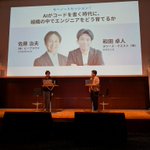





Software engineering after code becomes cheap with Satya Nadella
youtube.com/watch?v=0NE89Nzf…
Microsoft Ignite 2026 現地速報ライブ msdevjp.connpass.com/event/4… #MSIgnite

ご期待ください。
「エフェクティブ・ソフトウェアエンジニア ― 個人とチームの成果を上げるAI時代の実践知」(The Effective Software Engineer)
著者: @addyosmani
翻訳: @satonaoki
出版社: @oreilly_japan
発売日: 2026/12/25
link.amazon/B0f4g6sAy
oreilly.co.jp/catalog/soon.h…

SATO Naoki (Neo) retweeted

Got off a call with the an MS team lead who was on the bridge for this incident on what exactly happened in the outage:
1. This was a "latent bug" - a commit going in ~4 months ago to a Windows build, that only activated much later. Super hard to spot
2. Zero AI, this code was human written + committed
3. Machines got saturated and unreachable at a result
4. So many other things went wrong during this outage: a series of unlucky events
5. It was a dev who found the root cause, poking around and seeing a dump that reminded them of an error seen here. AI diagnostic tools were used and helped progress with the outage
A detailed, public postmortem is on its way. MS wants to make sure they have everything patched globally before the postmortem. I'll add my two cents when it's out, and those details will be VERY educational

SATO Naoki (Neo) retweeted

12/25(金)発売予定の新刊『エフェクティブ・ソフトウェアエンジニア ―個人とチームの成果を上げるAI時代の実践知』の情報をAmazonおよび楽天ブックスで公開開始しました!
AIツールを含む技術の変化に対応しながら、人間ならではの貢献に注力する方法を考える一冊です!
amazon.co.jp/dp/4814401914


SATO Naoki (Neo) retweeted

『ドメイン駆動設計をはじめよう』の原著者 Vlad Khononovさんのサイン会があります。翻訳した綿引さんと私も参加。
11月27日(金)12:20から
アーキテクチャConference 2026 オライリー展示ブースにて
東京・羽田
#アーキテクチャcon_findy
architecture-con.findy-tools…

SATO Naoki (Neo) retweeted

More details on the root cause can be found in the Microsoft 365 Admin center, and an abridged version can be found below.
We are deeply sorry for the impact to all our customers and recognize the impact that this has on their normal business & operations.
The incident on Thursday, November 12th, 2026, was caused by three main factors that together caused a global outage for the networking gateway that fronts many Microsoft 365 services.
First, a latent defect caused servers to become overwhelmed and unresponsive under certain load conditions. This was due to lock contention inside an internal process which caused the machine to become unavailable. This defect was the result of a fix that was prepared specifically for Microsoft 365 networking gateway servers; neither the underlying defect nor the fix applies to broader Windows deployments.
The initial change in behavior first started deployment in July of this year. The update went through safe deployment and saturated globally over several weeks, during which time no issues were observed. For more than three months, the change was deployed worldwide without impact.
Our normal load testing did not detect the latent issue because the different traffic and SKU mix used in our test labs. The contention issue is worsened on machines with more cores and newer hardware; whereas our load testing tended to focus on our weaker hardware SKUs with fewer cores.
Second, a surge in load increased the likelihood for the networking gateways to encounter the contention. Within Microsoft 365, we maintain two independent and heterogenous network gateway systems designed for isolation and high availability. This allows many Microsoft 365 services to fail to/from them during outages or disruptions. Approximately fifteen hours before the outage, Teams failed over from the alternative networking gateway to the ‘primary’ gateway that also supports Exchange Online. This increased the load on the networking gateway and changed its traffic patterns. This type of failover is part of normal operations and is integral to standard Microsoft resiliency efforts.
Third, at the same time, nearly 14% of server capacity for the networking gateway was out of service due to an unrelated issue from the previous day. This server capacity was on track to be returned to active service through routine maintenance and health processes. The service had sufficient capacity headroom, so the reduction in server capacity had no impact on its own.
Taken together, the increased load and the reduced server capacity, caused the network gateway to encounter the latent bug from July. This caused requests to build up until servers ultimately stopped responding. This occurred during the peak window of traffic in the United States.
When servers lose connectivity, our traffic management systems automatically route users to other healthy endpoints. This happens often and is critical to avoiding any interruption due to hardware, software, or network defects and is normally what makes the service resilient. However, the redirected traffic increased the likelihood for the same problem to occur on the remaining endpoints. This caused a cascading failure from server to server as the same amount of load was spread across fewer servers. In less than two hours, the previously unknown defect was encountered across our fleet and rendered them unresponsive. At its lowest, more than 80% of servers were unresponsive.
Normally, the network gateway is composed of thousands of ‘capacity units’ which represent shards of capacity, hardware, and networking infrastructure. These ‘capacity units’ are then organized into regions. In this case, due to a separate issue, the normal bulkheads between these different partitions did not stop the cascading failure. This is what allowed the impact to spread across our network gateway infrastructure globally.
Several services like Teams, OneDrive, SharePoint, and Office apps failed out of the faulty network gateway infrastructure. That is why those services were restored earlier, with Teams chats and meetings functioning without issue for most of the outage. But not all services, like Exchange Online, can fail out of this network gateway.
Recovery took longer than usual because as servers returned to service, they were immediately overwhelmed by waiting traffic and became unresponsive again. Our normally automated recovery processes were not designed to restore service from this broad unresponsive state. Additionally, since the main code defect was a latent bug from several months previous, our normal rollback, flighting, and feature flags were unable to quickly revert the change.
After engineers confirmed the defect as the cause, we developed an update that returned the code path to the previously known good state. To effectively apply this fix, and to slowly bring the service online again, we took groups of servers out of service, applied the change, and restarted them before returning them to service. This process was carefully applied to large quantities of infrastructure at a time (e.g. 50%+ of a region).
The final Post-Incident Review (PIR) will provide more details later this week.

SATO Naoki (Neo) retweeted
What does software engineering look like when generating the code becomes cheap and verifying it is the hard part? A rare podcast focused on everything around building software, with @satyanadella. Timestamps:
00:00 Intro
02:12 Microsoft’s open-source shift
04:15 Building VS Code in the open
05:55 Copilot, Cursor, and Claude Code
09:52 Decision engines
12:32 Verifying AI-generated code
15:39 The software factory
20:45 Bringing AI to existing products
24:06 Why adopting AI is different to adopting React
26:29 The changing role of software engineers
29:25 Microsoft’s voluntary exit offers
34:05 AI anxiety and changing roles
36:35 Junior hiring
42:36 Open models
45:39 Owning your AI infrastructure
51:21 Building trust in AI agents
53:48 Local models and hybrid intelligence
56:39 Microsoft’s model strategy
59:26 Advice for engineers
1:01:21 Closing takeaways
Brought to you by:
• @turbopuffer – a vector and full-text search engine built on object storage. It’s fast, cheap, and extremely scalable. turbopuffer.com/pragmatic (I built a greatly improved podcast/newseltter search with it, check it out: pragmaticengineer.com/search)
• @linear – the product development system for teams and agents. linear.app/pragmatic
• @WorkOS – everything you need to make your app enterprise-ready. workos.com/
3 interesting takeaways from Satya:
1. A new form of software engineering: teams building software factories to improve their work.
Satya cites the Azure networking team which manages 500+ fiber network operators and recently built an agentic system to better manage emails and processes. Now, they operate much more efficiently as a result. Satya sees this as the reality of “AI transformation”: brownfield work on building software factories to improve how teams operate, all while continuing the day-to-day work.
2. “Own the intelligence”: avoid lock-in & treat agents as an insider risk.
Satya cautions companies to avoid lock-in with any single model provider by ensuring that the harness, memory, and model are not coupled, so that they can be changed with ease. He also thinks more companies should consider using open models as a way to protect their core intellectual property (IP) from leaking out, and build private evals to decide what models to use and upgrade to. He also says that models are intelligent but unreliable, so it’s best to treat them as “insider risks” and build a separate system to verify that agentic systems work as expected.
3. What’s with those voluntary exit offers?
I asked Satya directly why Microsoft recently made voluntary exit offers to most of its software engineers for the first time in the company’s history. I also wanted to know if it could mean layoffs in the future. Unsurprisingly, his reply was diplomatic, but in the podcast I rehashed what I heard in a more direct way.
Speculating On Outlookageddon samnewman.ghost.io/speculati…

261
完璧なメール、消えない罪悪感─AIが加速させる「インポスター症候群」 | クーリエ・ジャポン courrier.jp/news/archives/46…

1
243
SATO Naoki (Neo) retweeted

We are deeply sorry for the disruption this incident has caused our customers and partners. We know the trust they place in our services and take that responsibility extremely seriously. We are seeing broad recovery and stability across our services.
This was a technical issue not related to cyber or AI / agents. The incident was introduced by an issue during an earlier network capacity upgrade that surfaced following a recent network change. We have addressed the underlying issue and continue to restore service to remaining customers and regions.
Given the scale of demand, we restored services gradually, validating stability at each stage. While this took longer, it helped ensure a stable restoration.
We will provide a full post-incident report once our review is complete.
「コーディング面接」は時代遅れ…アンソロピックのマネージャーが語る、若手が頭角を表す方法 | Business Insider Japan businessinsider.jp/article/2…

375
SATO Naoki (Neo) retweeted

The coding interview is dead, at least for my team at Anthropic. I've seen enough to know that it no longer provides signal. I removed it from loops this month.
I have a spicy, optimistic take - I think there's an opportunity for junior engineers: felixrieseberg.com/hunger-be…

SATO Naoki (Neo) retweeted

グローバルアワード V2 達成しました🎉
しかも今回受賞したのは Azure AI Apps カテゴリなので、一応このカテゴリでは世界一ってことですかね😅
お客様と ZEN のみんなに感謝しかありません🙏

ゼンアーキテクツは、2026 年 Microsoft Partner of the Year Awards にて「Innovate with Azure AI Apps and Agents」を受賞いたしました🎉
zenarchitects.co.jp/posts/20…

SATO Naoki (Neo) retweeted

Building software takes more than code generation. Here's what an effective agentic engineering workflow looks like with GitHub Copilot 👇

From AI ambition to business impact - The Official Microsoft Blog blogs.microsoft.com/blog/202…

1
285
SATO Naoki (Neo) retweeted

昨日NVIDIAのイベントに登壇したばかりで、地雷原を歩いてる気持ちですが、一応界隈の人の所感として、
・NVIDIAの技術自体は一連の騒動で揺らぐ程度のものではなく、CEOが変わっても必要性は変わらない
・一方、技術とは別にAI業界がジェンスン・フアンという個人に依存していた部分は大きく、何が起こるかは未知数
勉強になります。@nagix さんの連載。
Agent時代の必須知識 APIから読み解くAIの裏側
atmarkit.itmedia.co.jp/ait/s…
SATO Naoki (Neo) retweeted
12月新刊『エフェクティブ・ソフトウェアエンジニア ―個人とチームの成果を上げるAI時代の実践知』にカバー画像を追加しました!
著者Addy Osmani氏の著書は、今月11/26(木)発売の『AI時代のWebパフォーマンス・エンジニアリング』に続き、2カ月連続で刊行予定です!📖📖
amazon.co.jp/dp/4814401914

SATO Naoki (Neo) retweeted

ブログ書きました: マイクロソフト、.NET 11正式リリース。C#に共用型を導入、JITやAOTコンパイラの高速化、コマンドラインツール強化など新機能
publickey1.jp/blog/26/net_11…
