Science Signaling (@scisignal) header
Science Signaling (@scisignal) profile picture

Science Signaling offers researchers the most up-to-date resource for groundbreaking research and commentary in the dynamic field of cellular signaling.

Washington, DC
Joined April 2010
Photo by Science Signaling (@scisignal)Photo by Science Signaling (@scisignal)Photo by Science Signaling (@scisignal)Photo by Science Signaling (@scisignal)Photo by Science Signaling (@scisignal)Photo by Science Signaling (@scisignal)Photo by Science Signaling (@scisignal)Photo by Science Signaling (@scisignal)Photo by Science Signaling (@scisignal)Photo by Science Signaling (@scisignal)
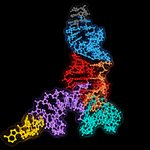
Scientists identify a mutant #STAT3 protein in a patient with hyper-IgE syndrome, which forms dimers with wild-type STAT3 that have impaired transcriptional activity. @JoeMackie6 @Tangye_Lab @GarvanInstitute scim.ag/3UgIqNx
1
1
202
A team elucidates how the modification of transfer RNAs accompanies behavioral habituation and synaptic plasticity in the model sea slug A. californica—revealing how neuronal #tRNAs are reprogrammed during a learning paradigm. @clarkkd25 @TuftsUniversity scim.ag/4zUDZqC
3
4
364
The new issue of #ScienceSignaling has arrived! The humble sea slug reveals how transfer RNAs become modified during behavioral habituation and learning, new work shows how a mutant form of STAT3 causes a genetically dominant immunodeficiency, and more. scim.ag/3WNtfMs
1
9
22
7,776
A new slate of #optogenetic tools enables scientists to finely control G protein signaling in excitable cells—providing a flexible method that might also be used therapeutically for disorders that disrupt the excitability of cells. @ruhrunibochum scim.ag/4jsnmOf
3
4
655
How do inflammasomes drive CAPS? A mass cytometry analysis decrypts how #NLRP3 mutations in patient neutrophils trigger the clustering of gasdermin D and E at the plasma membrane, leading to #pyroptosis and the release of IL-1-beta. @UCSanDiego scim.ag/3THE7dU
1
11
1
22
1,460
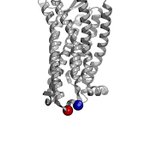
In a recent study, scientists show that intracellular changes to receptor conformation alter how agonists bind to and activate a biologically important #GPCR from outside the cell through an “inside out” mechanism. @UCPH_health scim.ag/4ynGkcI
2
3
729
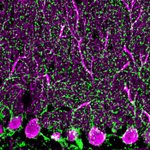
Researchers find in mice that cells in the brain’s network of blood vessels also support neural circuits in the cerebellum that govern motor coordination—expanding current paradigms of the role of the brain’s vasculature in neurodevelopment. @Tsinghua_Uni scim.ag/4iaiLhg
318
By developing tools that enable light-dependent activation of ion channels by receptors in a range of different cell types, a team has provided researchers with the means to control #GProteinSignaling in excitable cells. @ruhrunibochum scim.ag/4jsnmOf
1
2
411
The enzyme #PRMT5 in vascular endothelial cells supports synapse formation and circuits in the cerebellum by suppressing the factor ANGPTL4, shows new work that uncovers an epigenetic link between the cerebrovasculature and motor control. @Tsinghua_Uni scim.ag/4iaiLhg
1
7
506
Scientists uncover a surprising connection between the brain’s maze of blood vessels and fine motor control in the cerebellum, new tools provide scientists with an optogenetic means to control G protein signaling, and more this week in #ScienceSignaling. scim.ag/4dQ8vth
1
2
16
7,139
New work involving mice and patient cells reveals the mechanisms behind how neutrophils drive a rare group of autoinflammatory disorders called CAPS—and uncovers a potential new therapeutic target. @SciSignal scim.ag/3THE7dU
4
5
610
In a new study, scientists show that intracellular changes to receptor conformation alter how agonists bind to and activate a biologically important #GPCR from outside the cell through an “inside out” mechanism. @UCPH_health #Biochemistry scim.ag/4ynGkcI
2
430
A preclinical analysis of T helper 1 cells shows that shifting their metabolism from glycolysis to #oxphos curtails their role in inflammatory bowel disease and identifies a potential therapeutic target for these conditions. @MayoClinic scim.ag/476fnyT
1
1
6
652
Scientists show that a protein named RGS4 plays a central role in chronic neuropathic pain by maintaining hypersensitivity after nerve damage—a finding that could lay the road for precision drugs that target this protein. @BUMedicine @VannaZachariou scim.ag/3TDKgYw
2
3
515
In this week’s Editors’ Choice, we highlight a study by Rhee and colleagues in @Nature, showing how antibodies linking a GPCR with the transferrin receptor lead to GPCR down-regulation. Read a summary: scim.ag/3UxSYb3
353
New work involving mice and patient cells reveals the mechanisms behind how #neutrophils drive a rare group of autoinflammatory disorders named CAPS—and uncovers a potential new therapeutic target. @UCSanDiego scim.ag/3THE7dU
1
252
Intracellular changes to receptor conformation alter how agonists bind to and activate the #GPCR ACKR3 from outside the cell—illuminating the connection between receptor conformation, agonist binding kinetics, and constitutive activity. @UCPH_health scim.ag/4ynGkcI
1
5
556
How do inflammasomes drive CAPS? A mass cytometry analysis decrypts how #NLRP3 mutations in patient neutrophils trigger the clustering of gasdermin D and E at the plasma membrane, leading to #pyroptosis and the release of IL-1-beta. @UCSanDiego scim.ag/3THE7dU
4
7
741
This week’s new issue of #ScienceSignaling has arrived! Researchers discover how the inflammatory death of neutrophils drives a rare group of autoinflammatory disorders, a new study uncovers an “inside out” regulatory mechanism for a GPCR, and more. scim.ag/4yISIVt
3
4
1
29
7,500
Scientists show that a protein named RGS4 plays a central role in chronic neuropathic pain by maintaining hypersensitivity after nerve damage—a finding that could lay the road for precision drugs that target this protein. @BUMedicine @VannaZachariou scim.ag/3TDKgYw
1
5
500