

Web portal of seismogenic faults data repositories, data and metadata publication, in the framework of @EPOSeu
Europe
Joined October 2017
- Tweets899
- Following68
- Followers348
- Likes687




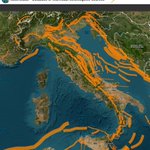


For the World Tsunami Awareness Day of 5th November, we are honoured to share with you an excerpt from an 18-year-old edition of the "Corriere della Sera", which described our first attempt to model tsunamis in the Mediterranean area using DISS's (diss.ingv.it/)


📍 20 years ago, this workshop was held at the International School of Geophysics.
🌍 8 versions of DISS have since been released, with the European and Greek ones (seismofaults.eu).
👉 New challenges are now approaching: stay tuned to learn how we will face them!


🌍 How is the Mmax for seismogenic sources determined in diss.ingv.it/?
📈 It is the value on the moment magnitude scale corresponding to the largest rupture the fault can host, given its dimensions, based on the relation by Leonard (2010, 2014).

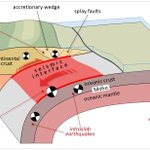
🤔 How many types of earthquakes in a subduction zone?
Each type is relevant to seismic and tsunami hazards.
🌍 In DISS and EFSM20 (seismofaults.eu), the 3D model of the slab captures both interface and intraslab seismicity.
Picture from: doi.org/10.1007/978-3-031-98…

Seismofaults is heading to 👉 SGI-SIMP2026!
Want to get to know DISS (diss.ingv.it/) up close?
Curious about the newly released PDF-Italy (seismofaults.eu/pdf-italy)?
🌍 If you are attending the SGI-SIMP conference, visit us at session 10 (becong.it/BECong/sessione_pr…)!

seismofaults.eu retweeted

#ScientificPublishing | #AnnalsOfGeophysics
Research results gain value when they are shared.
At #LACSC2026, #INGV researchers highlighted the role of scientific publishing in sharing research results and advancing scientific knowledge.
#Geophysics

Seismofaults is heading to ESC2026! 👉esc2026.org/
Seismofault's data resources are used in several contributions to the EFEHR session.
See you in Istanbul!

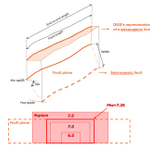
Why does DISS (diss.ingv.it) represent faults as wide ribbons rather than lines?
🌍DISS maps the footprint of the entire fault 3D surface.
This is vital for structural geology and hazard modelling.
Example from 👉doi.org/10.1029/2022GL102299

🌍 The DISS database (diss.ingv.it) prioritizes the third dimension by mapping the footprint of the entire fault surface onto a 2D map.
This is vital for structural geology and hazard modelling and helps us visualize whether two faults intersect deep underground.
seismofaults.eu retweeted

Tsunami e mareggiate: due fenomeni diversi, da non confondere ingvterremoti.com/2026/07/15…

What is the difference between a seismogenic fault and a capable fault? 🤔
💥 Seismogenic: The source of an earthquake at depth.
🌍 Capable: A fault with potential for displacement at or near the surface.
Want to connect the two? Check out PDF-Italy (seismofaults.eu/pdf-italy).
1/4


If you are working with Italian data:
📌 DISS: Catalogs Italy’s seismogenic faults, representing their 3D projection onto a 2D map. (diss.ingv.it)
📌 ITHACA: Maps the surface traces of Italy’s capable faults. (sgi.isprambiente.it/ithacawe…)
3/4
1
3
60
PDF-Italy (seismofaults.eu/pdf-italy) calculates the likelihood of surface faulting across Italy's ITHACA network whenever a moderate-to-large earthquake (Mw ≥ 5.5) strikes on a DISS seismogenic fault.
4/4
3
48
seismofaults.eu retweeted
#OpenScience | #INGV
Miscellanea INGV shares projects, experiences and scientific knowledge.
Vol. 107 (2026) presents the Abstracts Volume of the 7th Alfred Rittmann Conference, making the conference contributions permanently available and citable.
bit.ly/4eRma4h

seismofaults.eu retweeted
Annals of Geophysics records a Journal Impact Factor of 1.65 in the 2026 Journal Citation Reports (Clarivate Analytics), up 37.5% from 2025.
Read more:
bit.ly/4wmGlgq
#OpenAccess
#Geophysics
#ImpactFactor
#EarthSciences – at Rome, Lazio

How to handle fault modelling when the dip is unknown? Can we rely on the Anderson's theory?
G-DIP is a compilation of 597 fault plane dip values.
Download the full dataset:
👇
seismofaults.eu/gdip
Learn more at: doi.org/10.1093/gji/ggaf158

seismofaults.eu retweeted
#OpenAccessArticle | #AnnalsOfGeophysics
From Seismology and Volcano Physics to Atmospheric Sciences, Geomagnetism and Data and Methods, Annals of Geophysics covers a broad range of Earth and Atmospheric Sciences disciplines.
Explore all subject areas:
bit.ly/AG_SubjectAreas – at Rome, Lazio

