

AI Knowledge & SaaS Builder Founder of Serpyn - the collaboration platform for Saas builders
United States
Joined November 2026
- Tweets1.3K
- Following363
- Followers429
- Likes954





Pinned Tweet
Claude Team upgrade or separate Max subscriptions: which makes more sense??? 🤔
Need some advice from experienced Claude users!!!
I manage a marketing team with a video editor/designer, an SEO specialist, and a few other roles.
We're currently on Claude Team, paying around $120-125/month. Next year, I'm planning two major AI workflows:
1. Video: Produce motion graphics videos at scale using Claude.
2. SEO: Automate content research, writing, publishing, and image generation for 10–30 articles/month.
Our company only allows Claude. Other AI tools aren't an option. I'm considering two setups:
> Option 1: Upgrade the video editor's seat to a premium Team seat (~$100/month), keeping everything under our existing Team workspace.
> Option 2: Buy a separate Claude Max 20x subscription ($200/month) for the video editor, plus a Claude Pro subscription ($20/month) for SEO.
>> Which setup would you recommend for usage limits, productivity, and cost efficiency? I'd especially appreciate feedback from people running similar workflows in production.
Thanks!
☕ Build. Fail. Learn. Repeat.
5
2
212
Why does AI keep picking 17??? 🤯
> I just stumbled upon a weird algorithmic bias or some hidden AI code.
"Ask AI to pick a RANDOM number between 1 and 30.
Surprisingly, it keeps choosing 17."
> Is there a hidden pattern behind this? Try it yourself!
☕ Build. Fail. Learn. Repeat.

5
An old story, but a lesson worth revisiting!!! 😬
> PocketOS reportedly lost its production DB and backups in 9 seconds because an AI agent had an overly permissive API token.
3 concrete lessons for SaaS founders:
1. Give agents read-only production access by default.
2. Require human approval at the API level for destructive operations, not through prompts.
3. Store backups under separate credentials that agents cannot access.
Don't prompt your AI to be careful. 😆
Make catastrophic actions technically impossible.
☕ Build. Fail. Learn. Repeat.
2
1
17
Wait, WTF just happened??? 😳
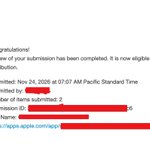
> I literally just posted on X about the app I submitted last night.
> 15 minutes later, Apple's approval email landed in my inbox. 😅
> Less than 24 hours for review. Approved on the first try.
(This has NEVER happened to me before. I usually get at least one rejection.)
Haha, is this a lucky omen for my new app??? 😍
☕ Build. Fail. Learn. Repeat.

2
41
Finally shipping after a month of procrastination!!! 😅
> Tonight, I finally finished my utility app and submitted it to the App Store.
> It was already 80% complete, but my 9–5 job and family responsibilities delayed it for over a month.
> Just another app submission, like many before. But this one feels different...
...I managed to overcome that after-work exhaustion and procrastination to actually get something done.
It feels less like a product milestone and more like a personal victory. 🥰
What about you? What are you getting ready to ship?
☕ Build. Fail. Learn. Repeat.

1
2
41
Why is Claude Max unavailable for Teams??? 🤔
> While researching AI plans for my team, I noticed something strange.
1. Claude Team’s highest tier is a Premium seat at $125/month.
2. Meanwhile, individual users can get Claude Max 20x for $200/month. ☹️
> Why isn’t there a Max tier for Teams?
> Is Anthropic trying to push businesses into buying extra usage credits, or is there another reason?
☕ Build. Fail. Learn. Repeat.
High sign-ups, low engagement, and almost no paid conversions??? 😩
> I'm experiencing this with one of my SaaS products and suspect trial farming might be part of the problem.
> Some users may be repeatedly exploiting free trials instead of becoming paying customers.
How do you distinguish genuine potential customers from trial abusers??? 🤔
> What metrics do you track to detect this behavior?
> How do you prevent trial abuse without hurting legitimate sign-ups?
(I'd love to hear what's actually worked for other SaaS founders.)
☕ Build. Fail. Learn. Repeat.
7
3
91
🚨🚨🚨 Ignoring GitHub licenses could be your SaaS's biggest legal mistake!!! 😬
Here's a quick license cheat sheet for SaaS founders, ranked from most to least friendly for closed-source commercial products:
🟢 Permissive licenses:
1. Unlicense / CC0: Use, modify, distribute and sell the code with virtually no copyright-related obligations.
2. MIT: Use, modify and sell the software without revealing your source code, but retain the original copyright and license notices.
3. BSD-2-Clause: Similar to MIT, with minimal notice requirements.
4. BSD-3-Clause: Similar to BSD-2, but you cannot use contributors' names to endorse your product without permission.
5. Apache 2.0: Build and sell closed-source products with explicit patent protection, while preserving required notices and documenting modified files.
🟡 Weak copyleft licenses:
6. MPL 2.0: Keep your proprietary code private, but share the source of MPL-covered files when distributing them.
7. LGPL 2.1/3.0: Use the library inside proprietary software, but respect library source-sharing and replacement requirements when distributing it.
🟠 Strong copyleft licenses:
8. GPL 2.0/3.0: Commercial use is allowed, but distributing a derivative or covered combined product requires providing its corresponding source code under GPL.
9. AGPL 3.0: Similar to GPL, but users interacting with your modified software over a network must also be offered its corresponding source code.
🔴 More restrictive terms:
10. BSL 1.1 (Business Source License): Source code is available, but production or commercial usage may be restricted until a specified change date.
11. SSPL: Commercial use is possible, but offering the software as a service may require releasing the source code of your supporting service infrastructure.
12. No License: Publicly visible code does not automatically grant permission to reuse, modify or commercialize it.
> Remember:
Public code ≠ Open-source software.
Open-source software ≠ Unrestricted commercial use.
> Always check the LICENSE file and dependency licenses before letting your AI coding agent integrate someone else's work.
(Save this for your next SaaS project.)
☕ Build. Fail. Learn. Repeat.

2
1
59
Elon Musk envisioned X Money over 25 years ago!!! 🤯
> This reminds me of a powerful saying: "Everything is created twice. First in the mind. Then in reality."
> To all SaaS founders: "keep dreaming, exploring, and coming up with crazy ideas." 🙂
> What exists only in your imagination today could become reality one day.
☕ Build. Fail. Learn. Repeat.

36
Apple just unlocked a new opportunity for ASO!!! 🤯
> App Store Connect now lets developers upload custom creative assets for both product page headers and search results.
> More room for eye-catching visuals, motion graphics, and creative storytelling.
"This could significantly boost CTR and ultimately drive more app downloads!!!!"
(It looks like Apple wants to make browsing the App Store as addictive as scrolling through Instagram. 🤣)
> Indie app developers, don't sleep on this update!
☕ Build. Fail. Learn. Repeat.

4
2
107
Is Codex Sol 6.2 burning through usage limits faster than Sol 6.1??? 🤔
> I've been using Sol 6.2 Medium on a relatively simple app.
> No new features. Just code reviews, bug fixes, some content writing, and market research.
Sunday night: 5 hours.
Last night: 2 hours.
> That's it. Already consumed 20% of my weekly limit. 😳
"Sol 6.2 seems significantly more expensive to run than Sol 6.1."
Is anyone else experiencing the same thing?
☕ Build. Fail. Learn. Repeat.

6
4
181
We have #4 powerful AI models. But which one should handle which task??? 🤔
Claude Opus 5.5
Fable 5.2
GPT Sol 6.2
Gemini Neon
> For those using multiple models, how do you split your workload?
> Which model is best for coding, reasoning, writing, research, and debugging?
I’m trying to maximize productivity without wasting tokens or money. 😅
☕ Build. Fail. Learn. Repeat.
1
1
70
Imagine you need help with a SaaS product. Which option would you prefer? 🤔
🤖 A chatbot that answers instantly, even at 2 AM
📞 A phone call answered by a real human immediately
💬 Live chat with a human agent
📩 An email response within a few hours
🔄 A callback instead of waiting on hold
📚 A help article that solves your problem in seconds
> Drop your MOST and LEAST favorite options, SaaS founders. 😙
☕ Build. Fail. Learn. Repeat.
3
2
111
If you could only keep ONE B2B SaaS acquisition channel in 2026-2027, which would it be??? 🤔
1. Cold email reply rates are dropping.
2. LinkedIn DMs are getting ignored.
3. Paid ads are burning budgets with painfully slow conversions.
4. Meanwhile, some founders are finding traction through personal branding, niche communities, and partner referrals.
> So what's actually bringing you PAYING customers, not just traffic or free signups?
"SEO, outbound, paid ads, founder-led content, or something else?"
☕ Build. Fail. Learn. Repeat.
4
3
133
"30 AI-generated articles" a month OR "5 deeply researched ones"??? 🤔
> Today, I trained a new SEO team member at my B2B company.
> Our website is still struggling after being hit by several major Google updates in 2025. (I just took over, less than 1 month)
> The new hire proposed replacing our current freelance content writers with an automated Claude + n8n workflow:
- It would include keyword research, content structuring, and human review before publishing.
- Target: 30 articles/month. 😐
> My approach is different:
- I'd rather publish fewer, much deeper articles featuring real case studies, expert advice, and proprietary insights from our business.
- I want genuine information gain. Content that adds something new to the internet, not another rewritten version of what's already ranking.
> Assuming our backlink strategy stays exactly the same, which approach would you choose?
P.S: I'm looking for real-world SEO experience, not textbook theories.
☕ Build. Fail. Learn. Repeat.
3
1
104
Can AI search actually bring more SaaS signups than Google??? 🤯
> Just found an interesting case study from a solo SaaS founder.
"5 months in: 5,000 users, $200 MRR.
Yesterday, 34 out of 86 signups came from AI assistants like ChatGPT and Perplexity."
(That's more than Google organic!)
Here's what worked:
1. Build pages around real user questions, not product features.
2. Answer the question in the first two lines. Skip the marketing fluff.
3. Write honest competitor comparisons, including where competitors win.
4. Don't ignore SEO. His pages started appearing in AI answers after ranking on Google.
SaaS founders, are AI referrals converting better than Google for you?
☕ Build. Fail. Learn. Repeat.
Is Codex getting dumber while burning more tokens??? 🤔
Question for SaaS builders using Codex:
> Why does Sol 6.2 Medium feel less intelligent than Sol 6.1 Light, yet consume MORE tokens? 😅
> Is anyone else experiencing this?
> Which Codex model and reasoning level gives you the best balance of coding quality, speed, and token efficiency right now?
☕ Build. Fail. Learn. Repeat.
5
5
82
Can Private-blog-network (PBNs) still help you rank on Google in 2026??? 🤔
SaaS founders, here's something worth knowing:
> SEO has changed dramatically. Content is now more important than ever: "search intent, depth, originality, and information gain."
> But in highly competitive niches, backlinks still play a crucial role in rankings.
> And Private Blog Networks (PBNs) remain a powerful, controllable, but risky link-building tactic.
I've spent 12+ years working with SEO and PBNs, including building my own networks.
> Ask me anything about PBNs: "how they work, what I've learned, their risks, and whether they're still worth considering today."
☕ Build. Fail. Learn. Repeat.
1
67
Is AI-generated code slowly destroying software companies from within??? 😨
(*) I just watched a video of a senior software engineer in China. His prediction: "the collapse of internet companies, small and large, is inevitable. It's only a matter of when."
> Before 2026, AI wrote 50% of his code. He wrote the other half and understood the entire project. Since Lunar New Year (around Feb 2026), AI has been generating 99% of his code.
>He admits he no longer fully understands the system he's building. Every time he submits code, he feels anxious and uncertain. 😅
(**) But he can't stop!!!
> Just last week, a colleague faced serious consequences when AI-generated code caused major issues for a customer.
> He was responsible for that code but couldn't explain its logic. Now he's facing a poor performance review, possibly even losing his job. 🥲
> And here's the terrifying part: "Nobody can realistically review every line of AI-generated code anymore."
> Companies demand faster development, more features, and constant releases.
> Engineers are shipping code they don't fully understand, taking responsibility for decisions they didn't make, and feeling powerless to slow down.
(***) Is this really where the software industry is heading? Are we sacrificing long-term reliability for short-term productivity? 😨
☕ Build. Fail. Learn. Repeat.
1
3
78
Why are OpenAI and Anthropic cracking down on reverse engineering??? 🤔
> Both seem increasingly strict about reverse engineering requests.
> Many get rejected immediately.
> Even if you find a workaround, Claude might complete a few steps before silently terminating the process.
I understand the safety & copyright concerns, but where's the line between legitimate reverse engineering and prohibited activities? 😅
> Could these restrictions make it harder for SaaS founders to build and innovate?
☕ Build. Fail. Learn. Repeat.
1
61