





Shangeth Rajaa retweeted

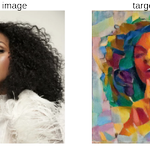
Introducing RL with Neural Feedback (RLNF). We have found reliable ways to train AI models to respond to human preferences purely from brain signals.
The example below is a picture of a face that self-transforms into a more attractive version for the subject as they are looking at it.
Shangeth Rajaa retweeted

Anyreach trained DualTurn, a turn-taking model, with otoSpeech 280h and released the weights and labels.
Nine projects have built on it since, including TurnNat and SPEARBench (researchers at JHU and Amazon), MultiPartyTurnBench (UMD) and FrontierML (Induction Labs).

Shangeth Rajaa retweeted
we've raised $50M from Khosla Ventures, Accel, Initialized, Kevin Weil, DST Global
to build the world's most wearable BCI cap at Sabi
read more here:
forbes.com/sites/rashishriva…
Writeup on the DualTurn deployment, the zero-label training loop, and why smaller model won here 👇
shangeth.com/posts/dualturn-…
#Interspeech2026 #VoiceAI #FullDuplex #TurnTaking
A quick update on where DualTurn has gone since our #Interspeech2026 paper. Over the last few months we've taken it from a research model into a real production turn-taking component, and the early results have been very encouraging.
#TurnTaking #VoiceAI #FullDuplex

1
2
86
And we got here training on dual-channel audio with no manual tagging at all. The generative pretraining does most of the heavy lifting, so pointing it at a new domain doesn't need a giant labeled dataset.
1
8
This is part of the work we're doing at Anyreach AI on making production voice agents feel more natural to talk to.
Paper: arxiv.org/abs/2603.08216
(Early numbers from our own testing, not a formal benchmark. Real calls, same pipeline throughout.)

25
What makes it practical to run is how small it is. We train around 1.45M parameters, and it runs on CPU in real time with the smallest compute and memory footprint of anything we tested, even though it's working in the background on every turn.
1
5