

PhD Researcher in Sport and Exercise Nutrition
Melbourne, Australia
Joined December 2016
- Tweets1.4K
- Following184
- Followers144
- Likes2.6K

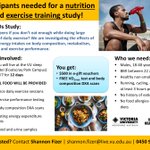




Get paid to participate in groundbreaking sports science research! What happens when someone increases their training without increasing the amount of food they are eating? We are looking for men 18 to 40 who are cycling/running 3 hours per week to take part in this study.

28
Shannon Fizer, M.Sc. retweeted

No single diet is best for weight loss ⚖️
This 2026 ISSN position stand reviewed major dietary approaches for reducing body weight and fat mass in healthy, active and athletic adults 🔍
Here are the key findings ⬇️
🔥 A sustained energy deficit is the primary requirement for weight loss, with the size of the deficit matched to goals, body composition and lean-mass preservation
⚠️ Very-low-energy (<800 kcal/day) and low-energy diets (800–1200 kcal/day) produce faster short-term loss, but offer no clear long-term advantage and increase the risk of lean-mass and nutrient loss
⏱️ Intermittent fasting is not inherently superior to continuous calorie restriction when energy intake is comparable
🍽️ Meal frequency has little independent effect on fat loss, although ≥3 protein-rich meals/day may help preserve lean mass in active people
🏋️ Resistance training + sufficient protein are central to protecting lean mass during a calorie deficit
🥩 Protein targets are ~1.2–1.6 g/kg/day for the general population, 1.6–2.2 g/kg/day with resistance training, and potentially 1.9–3.2 g/kg/day in lean, resistance-trained people dieting
🥑 The carb-to-fat ratio can largely be individualized: low-fat, low-carb and ketogenic diets can all reduce weight when calories and protein are controlled
🥓 Ketogenic diets may reduce weight and fat effectively, but can also produce greater fat-free-mass losses, particularly in shorter studies
📉 Weight loss can reduce energy expenditure and increase hunger, but adaptive thermogenesis is usually modest and may diminish once weight stabilizes
📊 Plateaus are normal and may reflect a new energy equilibrium, reduced adherence, short-term fluctuations or body recomposition
For athletes and active people, effective fat loss is less about finding a “best diet” and more about creating a sustainable deficit while preserving training quality, protein intake, lean mass and long-term adherence ✅
Reference:
tandfonline.com/doi/full/10.…
Subscribe to performancenutritiondigest.c… FREE to receive your daily study breakdown, straight to your inbox or via the Substack app 📥
Powered by healthspanelite.co.uk⚡️

Shannon Fizer, M.Sc. retweeted

Free access to my first editorial for npj Exercise Medicine & Health
buff.ly/d1GEaq6
Submissions tripled last month...exciting times for this new journal and the field!

The REDs study is back and recruiting! What happens when someone increases their training without increasing the amount of food they are eating? We are looking for men 18 to 40 who are cycling and/or running at least 3 hours per week to participate in this groundbreaking study.

The REDs study is back and recruiting!
What happens when someone increases their training without increasing the amount of food they are eating? We are looking for men 18 to 40 who are cycling and/or running at least 3 hours per week to participate in this groundbreaking study.

Shannon Fizer, M.Sc. retweeted

How accurate is the VO₂max number on your watch? Help me find out properly.
I’ve been digging into what VO₂max really tells us about performance and longevity, and why the number on a wearable is ultimately an estimate built on a chain of assumptions.
I’ve written up what I’ve learnt. But rather than stopping at the theory, I want to run an open VO₂max experiment.
You can connect your wearable data, see different VO₂max estimates, and help me understand how these methods perform across lots of real people and real-world data.
I’m especially looking for people who have had a proper CPET with a measured VO₂max in the last six months. If that’s you, you can add your lab result so we can compare the wearable estimates against a genuine physiological measurement.
All data used in the analysis remains anonymous.
If you’re curious about your own numbers, or you’ve recently suffered through a VO₂max test in a lab, I’d love you to take part.
I’ve added the article and experiment links below.
You get to see your numbers. I get some data to do science with. Hopefully we all learn something.
@TerraAPI
Shannon Fizer, M.Sc. retweeted
New ARC Research Fellow position available in my lab.
We're looking for a molecular biologists to discover new biological roles for lactate as a regulator of skeletal muscle adaptations.
Closing date: 10 Jul 2026
More info here: fa-ercy-saasfaprod1.fa.ocs.o…

The REDs study is back for 2026!
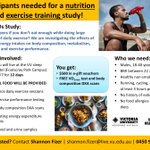
What happens when someone increases their training without increasing the amount of food they are eating? We are looking for men 18 to 40 who are cycling and/or running at least 3 hours per week to participate in this groundbreaking study.

28
Shannon Fizer, M.Sc. retweeted
We're recruiting a part-time (4 days/wk) Research Fellow for an NHMRC-funded project “Discovering the neuroprotective potential of exercise in individuals with Motor Neuron Disease”.
More info here: bit.ly/4nIbYh6

Shannon Fizer, M.Sc. retweeted
Great day supporting @MNDVic & the Great MND Relay with colleagues & family.
Amazing effort by the “VU research in MND team”, with our own @Andrew7Barrett finishing second for number of laps completed.


Shannon Fizer, M.Sc. retweeted
Nutritional considerations across the menstrual cycle and for hormonal contraceptive use 📝
This new review highlighted the key scientific literature on nutrition for female athletes…
…distinguishing important differences between eumenorrheic menstrual cycles and hormonal contraceptive users
Here are the key takeaway points ⬇️
ENERGY INTAKE 🔥
🩸 Eumenorrheic
Intake may increase in the luteal phase (+100–300 kcal/day)
Target: >45 kcal/kg FFM/day
💊 Hormonal Contraceptive Use
Energy intake may appear more stable but remains individualised
Target: >45 kcal/kg FFM/day
CARBOHYDRATE 🍞
🩸 Eumenorrheic
Possible luteal-phase alterations in glycaemic regulation
Post-exercise: ~1.2 g/kg; During exercise: 30–60 g/hour to compensate for reduced gluconeogenesis in luteal phase
💊 Hormonal Contraceptive Use
Glucose handling may vary by formulation
Prioritise low-GI carbohydrates where appropriate during active pill weeks to mitigate transient insulin resistance
PROTEIN 🥩
🩸 Eumenorrheic
No meaningful phase-dependent differences in MPS
Target: 1.4–2.2 g/kg/day; Post-exercise: ~0.32–0.38 g/kg
💊 Hormonal Contraceptive Use
No clear differences between active and pill-free phases
Target: 1.4–2.2 g/kg/day; Post-exercise: ~0.32–0.38 g/kg
INFLAMMATION / SYMPTOMS 💥
🩸 Eumenorrheic
Luteal phase may increase fatigue, cravings, and discomfort
Vitamin D, zinc, and curcumin may support symptom management
💊 Hormonal Contraceptive Use
May reduce symptom severity in some individuals; responses vary
HYDRATION💧
🩸 Eumenorrheic
Progesterone-related fluid retention and bloating may occur
💊 Hormonal Contraceptive Use
Fluid shifts and bloating may vary by individual and formulation
GI TOLERANCE 💨
🩸 Eumenorrheic
GI symptoms may fluctuate across the menstrual cycle
💊 Hormonal Contraceptive Use
GI tolerance may improve or worsen depending on individual response
IRON STATUS 💉
🩸Eumenorrheic
Menstrual blood loss increases iron deficiency risk
Estimated requirement in endurance athletes: ~30 mg/day
💊 Hormonal Contraceptive Use
Reduced bleeding may lower deficiency risk
Supplement based on biomarkers; some formulations provide iron
OVERALL PRACTICAL IMPLICATIONS ✅
🩸 Eumenorrheic
Align nutrition with training load, energy availability, and symptom presentation rather than phase-based assumptions
💊 Hormonal Contraceptive Use
Does not guarantee metabolic stabilisation; individualised monitoring remains essential
Reference:
pubmed.ncbi.nlm.nih.gov/4197…
Subscribe to Performance Nutrition Digest FREE to receive your daily study breakdown, straight to your inbox or via the Substack app 📥
performancenutritiondigest.c…
Performance Nutrition Digest is powered by Healthspan Elite⚡️
healthspanelite.co.uk/

Shannon Fizer, M.Sc. retweeted
Come join us to support MND Victoria by joining us for the relay on Saturday the 16th of May or donating to our “VU research in MND team” bit.ly/47tgTvD
.

Shannon Fizer, M.Sc. retweeted

1/
Big update in exercise science: ACSM has revised its resistance training Position Stand for the first time since 2009. That is a 17-year gap, and a lot has changed. 🧵pmc.ncbi.nlm.nih.gov/article…

For those who missed it, the REDs study has been featured in a local newspaper this week!
We're still looking for participants for the Nov and early Dec intakes, so please share with anyone who might be interested!
maribyrnonghobsonsbay.starwe…

31
Shannon Fizer, M.Sc. retweeted
@shannon_fizer is seeking men to take part in a 12-day live-in study into Relative Energy Deficiency in Sport (REDS): bit.ly/42DnPnB
You can sign up here: bit.ly/4nPNh1L
Shannon Fizer, M.Sc. retweeted
Exercise Intensity Terminology is a bit of a mess 😵💫
Our attempt to try & summarise some of the different approaches, and make some recommendations going forward, has finally been published in both MSSE: bit.ly/4nT7Pq5 & JSaMS: bit.ly/46U7ptq.

Happy to say that the REDs study has been featured in a local newspaper this week!
We're still looking for participants so please share with anyone who might be interested, particularly runners, cyclists, and triathletes.
maribyrnonghobsonsbay.starwe…
The REDs study is coming to a close at the end of 2025! Looking for participants for the October, November, and early December intakes - last chance to be a part of groundbreaking research! Please share with anyone who might be interested, particularly cyclists and triathletes.

49
Shannon Fizer, M.Sc. retweeted
Latest from our group bit.ly/4oDKCJ6
highlighting how inhibitor contamination may affect the measurement of mitochondrial respiratory function when experiments are conducted in close succession.

Shannon Fizer, M.Sc. retweeted
🧑🔬 NEW PhD scholarship available in my lab to investigate:
"Mitochondrial Adaptations to Exercise" 🚴
🗓️ Applications close: 14 September 2025 ;
✅ Eligibility: Open to Australian & International students
More info here: bit.ly/40PFiIq
