





shripad శ్రీపద్ retweeted

The Supreme Court on 16 November suspended the life sentences of two convicts in the Bilkis Bano case from the 2002 Gujarat riots and granted them bail. Bilkis Bano was gang-raped, and seven of her family members – including her three-year-old daughter, Saleha – were killed.
In 2024, the Supreme Court reversed the Gujarat government’s remission to all 11 convicts. Two of them, Bipinchand Kanaiyalal Joshi and Pradip Ramanlal Modhiya, have now got bail. In August 2022, the Gujarat government had released the convicts under its remission and premature release policy. But in January 2024, the Supreme Court quashed the remission, holding that the Gujarat government lacked jurisdiction to pass such orders. The court had said that, as the Bilkis Bano case was heard in a court in Mumbai, it was the Maharashtra government that had the power to grant remission, and Gujarat could not “usurp” it. In its order on October 28, the Supreme Court directed that the duo’s appeal, challenging the Bombay High Court’s May 2017 order upholding their conviction and sentencing, be listed for hearing in due course.
BJP’s long-lasting legacy, which goes beyond any liberal strategy of defeating it, is to make violence the ambience in the country. The news of vigilantism and atrocities has become so banal, forget mobilising politically, it barely evokes any personal sympathy. But a bench of Justices MM Sundresh and PB Varale was exceptionally not indifferent for once, it noted that the two men had spent more than 17 years in prison – it also took note of the fact that one of them had a severe disability, which comes as a selective display of sympathy considering Father Stan Swamy, with Parkinson’s disease, falsely arrested in connection with the Bhima-Koregaon case was denied a straw and sipper; GN Saibaba, sentenced to life imprisonment, died shortly after being released after 10 years. This exercise of judicial sympathy for the two Gujarat riots convicts warrants closer scrutiny.
According to The Telegraph, Joshi spent 1,079 days and Modhiya 1,234 days outside prison on parole and furlough – nearly three and over three years, respectively; all 11 convicts were prematurely released on August 15, 2022, under Gujarat’s remission policy – remaining free until January 21, 2024, when they surrendered following the Supreme Court’s quashing of their remission orders. As the bench decides that 17 long years of incarceration suffice, it pays little mind to Bilkis Bano’s safety. Her uncle, Razzak Mansuri, said that while the family had previously periodically changed residences within Gujarat out of fear, the Supreme Court’s October 28 bail order forced them to leave the state altogether around November 2-3. He added that the family learnt of the decision through social media, without prior intimation, and that the convicts’ repeated visits to their village while on parole had kept them under constant fear.
The court has acted as a stooge of the majoritarian state and has now been implicated in the historical injustice inflicted on Bilkis Bano. Its conception of justice is no different from the rationale with which crimes are committed. The crime outlives the years that pass in imprisonment, and the fear persists in the rememory of those who endure it

shripad శ్రీపద్ retweeted
Ankush Nirmalkar, in his essay “Finding a Politics of Our Own: Why I Choose ASA Beyond Right and Left”, writes about his experience with student organisations as a first-generation learner and the General Secretary of ASA Pondicherry.
He writes: “This is not a personal problem with the Left; it is a position that Ambedkar laid out in precise detail nearly ninety years before SFI ever set foot on PU campus. In Annihilation of Caste (1936), he criticized the socialists of his time, arguing that they assumed property was the source of power in India as it was in Europe at the time but that this was a mistake. Caste, he said, was a system of power in itself, one that shaped work, respect and relationships long before capitalism existed. A politics that treats caste as part of class, to be dealt with after economic issues are solved, repeats the mistake.
At PU, that error is not theoretical. SFI has led the students’ council for most of the years PU has run elections, yet that leadership has rarely translated into real representation for Dalit and Adivasi students: Departments still can’t fill their SC/ST seats, partly because the reservation rule itself works against them: an SC seat only kicks in at the fourth admission, an ST seat at the eighth. The tuition fee used to be the first wall, PU collecting the full amount on the spot, UGC rules about waiting for scholarships ignored. That wall came down only because ASA fought for and won a three-month relaxation, not because SFI’s council ever raised it. The hostel hasn’t come down the same way; advance mess and hostel charges still come in before the scholarship does; none of these has ever been SFI’s central demand, even in the years it held the numbers to make them so.
On ideological questions, SFI has been no more consistent. It organises religious and Brahminical festivals on campus under the label of "cultural" or "regional" programming, and it has never systematically opposed the RSS, ABVP, or ABRSM activity that runs through the campus temple year-round: Ram Navami, Ganesh Chaturthi, Holi, and the rest come and go largely unchallenged. What opposition SFI does offer tends to surface around election season, as visible but short-lived protests pitched at the general student body, rather than as a sustained position held between elections. AISA and AISF, which might have offered a different kind of Left politics, have no real presence at PU at all, which leaves SFI as the only Left option on campus, and leaves Dalit and Adivasi students choosing, in effect, between SFI and ABVP, with no Left alternative that puts caste at the centre.”
theambedkarianchronicle.in/f…

shripad శ్రీపద్ retweeted
Ila Gaikwad, in her article “Building mass institutions in the age of McUniversities” for @TheAmbedkarian Issue 07, writes:
What is a student movement? Is an organization that frequently raises the issues and concerns of students by virtue of becoming a student movement? It could be a part of a larger students’ movement, but then it will be limited in its form, impact, and scholarly discourse as an interest group alone.
Kuffir Nalgundwar, a prominent anti-caste activist, writer, and the founder-editor of Round Table India, tells us, loudly and clearly, the state of the current student protests: “The university is not the place where revolution begins; it is where revolution goes to die.” One of the reasons for this is that we treat the student activist as a morally shielded person, which masks how an undercurrent of the student movement recognizes its own internal limitations. When student figures like Kanhaiya Kumar emerge into national prominence, their speeches and charisma are quickly absorbed into mainstream electoral politics or liberal rhetoric, turning potential systemic critique into a performative spectacle. Conversely, the institutional murder of Rohith Vemula highlights how radical anti-caste voices are branded as mere rabble-rousers and systematically suppressed rather than truly integrated into the movement's leadership.
The liberal rhetoric also heavily appreciates the politically correct talk of APU, Ashoka, JNU, among others – very similar to what Lenin would liken to the academics/“uplifters”. The seemingly anti-caste narrative rising from these spaces sounds sharp yet ungrounded, distant from the radical politics. This is a consequence of the aggressive privatization of education – that radical thought itself has become a commodity. What are the underlying reasons behind this outcome? What interest does the State have in enabling such a system? In the present context, it no longer serves the traditional role of providing for industrialization either. Then why does the State want to do it? It is very clear that the State’s focus has shifted away from educating the masses for social progress. Its role is now limited to creating cheap labour in the garb of education – and this cheap labour comes from Dalit masses in India. From a sociological angle, it is only natural to conclude that with such institutional withdrawal in the largely privatized education system, normalization of computer-graded exams, we are witnessing the McUniversities of our times, where the students continually consume the pre-packed products of education, turning learning into a standardized, assembly-line commodity rather than an open pursuit of knowledge. And the anti-caste spaces in private universities create the perfect performance space to sell the commodity: radical thought – but within the limits that privatization allows. Alas, the McUniversitification of anti-caste radical thought itself!
Read the full article at theambedkarianchronicle.in

shripad శ్రీపద్ retweeted

Just realised. Everyone go read Akhil Kang


Me and oomf (@AasthaPilania ) were discussing how Dalits falling for Brahmins in urban areas is an epidemic and we need some academic term for this degradation ritual
shripad శ్రీపద్ retweeted

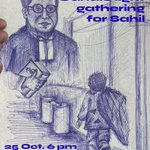
In the two months I’ve spent sitting at Azad Maidan, I’ve spoken to so many different people, each battling their own miscarriages of justice. This is @rajendr16437091’s heartbreaking story. Despite his own struggles, he stands in solidarity with Sahil Wakode’s parents.
shripad శ్రీపద్ retweeted

I felt so bad for Rihanna as a kid. She killed a man who assaulted her, cheated on her partner and regretted it, went insane, was forced to play Russian Roulette, had monsters under her bed, and didn’t know what to do when a lesbian confessed her feelings to her.


Deepali has been working on ground for as long as I remember, all I remember of her when I first met her is her generosity & warmth with which she treats others. So happy to see someone who is so deeply loved & respected in our bastis being celebrated so widely.

Now streaming!
Against All Odds: @deepali_writes
youtu.be/SgD-g_ydlts?si=jB4n…
shripad శ్రీపద్ retweeted
The 1927 protest by Dalit students in Bombay exposed how caste discrimination persisted in municipal schools despite official promises of equality. Sara Shadab Arab writes about Casteism in BMC schools for our issue 07 of Students’ Movement and Anti-caste Politics.
"In 1926, the Bombay Municipal Corporation (BMC) passed a resolution that no distinction should be made in allotting school buildings or in regulating admission conditions based on caste. But the subsequent debate over common pots, cups, and lotis revealed the limits of this formal commitment. In the following year, a group of Dalit students from a municipal school responded by drinking water from cups meant for caste-Hindus. Their act of resistance irked the school authorities, who barred them from the school premises the next day.
Upper castes vehemently opposed the sharing of drinking water and food with Dalits in schools, citing the fear of being polluted or even losing their caste. An investigating committee clarified that the school headmaster had not violated any rules, since the two pots placed at different locations within the school were open to everyone. In practice, Dalit boys used one pot exclusively, while upper-caste students used the other. Interestingly, although the policy technically permitted access to both pots, they remained segregated in practice, and the headmaster may have been complicit without technically violating any rules. Hence, the committee observed that the Corporation or the school headmaster is barely responsible if students themselves decide to use different pots.”
Read the full article at theambedkarianchronicle.in


shripad శ్రీపద్ retweeted

उत्तर प्रदेश के लखीमपुर खीरी मैगलगंज कोतवाली क्षेत्र के एक गाँव में 3 नवंबर को 16 वर्षीय किशोरी और 17 वर्षीय किशोर के शव एक ही पेड़ से लटके मिलने की घटना बेहद दुखद, गंभीर और चिंताजनक है।
मृतका के परिजनों का कहना है कि दोनों की हत्या कर उनके शव पेड़ से लटकाए गए हैं। परिजनों के मुताबिक, बिटिया आरुषि के कपड़े खून से लथपथ थे। इसके बावजूद घटना के छह दिन बीत जाने के बाद भी अब तक किसी की गिरफ्तारी नहीं होना पुलिस की कार्यप्रणाली और जांच की निष्पक्षता पर गंभीर सवाल खड़े करता है।
इस मामले का सबसे गंभीर पहलू यह है कि मृतका के पिता काली चरण यादव जी करीब आठ महीने पहले संदिग्ध परिस्थितियों में लापता हो गए थे। उन्होंने कुछ समय पहले ही बसपा छोड़कर सपा की सदस्यता ली थी। परिजनों ने जमीन पर कब्जा करने की नीयत से उन्हें लापता किए जाने का आरोप लगाते हुए मुकदमा भी दर्ज कराया था। इसके बावजूद आज तक उनका कोई सुराग नहीं मिला। अब उनकी बेटी की हत्या ने पूरे मामले को और भी गंभीर बना दिया है और कई सवाल खड़े कर दिए हैं।
मुख्यमंत्री @myogiadityanath जी, काली चरण यादव जी आठ महीने से लापता हैं, लेकिन समय रहते प्रभावी कार्रवाई नहीं हुई। अगर प्रशासन ने उसी समय गंभीरता दिखाई होती, तो शायद आज इन दोनों मासूम बच्चों की जान बचाई जा सकती थी।
@UPGovt से हमारी मांग है कि दोनों नाबालिगों की हत्या के मामले की उच्चस्तरीय और निष्पक्ष जांच कराई जाए। पोस्टमार्टम रिपोर्ट, फॉरेंसिक साक्ष्यों और घटनास्थल से मिले सभी सबूतों की गंभीरता से जांच हो। काली चरण यादव जी को शीघ्र तलाश किया जाए और उनके लापता होने तथा जमीन विवाद से जुड़े मामले में भी प्रभावी कार्रवाई सुनिश्चित की जाए।
दो नाबालिगों की मौत और एक पिता के आठ महीने से लापता होने के मामले को किसी भी कीमत पर नजरअंदाज नहीं किया जा सकता। पीड़ित परिवार को न्याय मिलना चाहिए और दोषियों के खिलाफ कड़ी कानूनी कार्रवाई होनी चाहिए।
भीम आर्मी-आजाद समाज पार्टी (कांशीराम) की स्थानीय टीम ने जब पीड़ित परिवार से बात की तो उन्होंने बताया कि उनकी हालत ऐसी नहीं है कि वे न्याय के लिए आवाज भी उठा सकें। उन्होंने कहा, “आप देख लो, कुछ कर सकते हो।”
हमारी गहरी संवेदनाएं शोकाकुल परिवार के साथ हैं। प्रकृति उन्हें इस अपार दुःख को सहन करने की शक्ति प्रदान करे। हम इस दुःख की घड़ी में पीड़ित परिवार के साथ खड़े हैं और उन्हें न्याय दिलाने के लिए हरसंभव प्रयास करेंगे।


shripad శ్రీపద్ retweeted

“The place in which I'll fit will not exist until I make it” - James Baldwin
shripad శ్రీపద్ retweeted
AIISCA organises Janta Adalat to hold institutions accountable for caste atrocities.


shripad శ్రీపద్ retweeted

Samiiiii @karthiksubbaraj
Goosebumps here.. why was this cut from the movie ?
😌😌😌