

Twitter account for the Safe Independent Mobility Lab at KITE-Toronto Rehabilitation Institute, University Health Network.
Toronto, ON
Joined January 2014
- Tweets721
- Following308
- Followers645
- Likes50




SIMbL Toronto retweeted

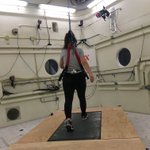
Today, Her Royal Highness, The Duchess of Edinburgh visited @UHN’s Toronto Rehab & KITE Research Institute where Here Royal Highness participated in The Movement Evaluation Lab, that aims to improve the control of movement and mobility.
@TorontoRehab @KITE_UHN @RoyalFamily
It was great to have the Duchess of Edinburgh visit our lab and experience some reactive balance training with Cynthia!

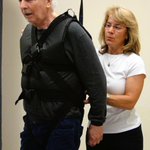
The Duchess of Edinburgh tests out a reactive balance training frame and harnass for stroke and brain injury patients in the movement evaluation lab at @UHN during her trip to Ontario @uhnfoundation @KITE_UHN
4
296
SIMbL Toronto retweeted

The Duchess of Edinburgh tests out a reactive balance training frame and harnass for stroke and brain injury patients in the movement evaluation lab at @UHN during her trip to Ontario @uhnfoundation @KITE_UHN
Our new article on reliability of quiet standing balance measures post-stroke is now available - free access for 50 days! authors.elsevier.com/a/1gsOg… @AvrilMansfield @davidjagroop_ @AryanRabea
SIMbL Toronto retweeted

Rather than focus on avoiding tumbles, researchers at the Toronto Rehabilitation Institute are using high-tech, hands-on trials to teach how to fall.
#Opinion by @CathrinBradbury trib.al/DFIFyT7

Can't thank Susan and Roger enough for all they do to keep our research running smoothly!
This Post is from an account that no longer exists. Learn more
5
Publication alert! Updated systematic review of reactive balance training, showing significantly reduced fall risk and rates compared to control interventions #PreventFallsCA academic.oup.com/ptj/advance…

If you're interested in trying reactive balance training in your practice, our clinical toolkit has everything you need! kite-uhn.com/tools/rebal
SIMbL Toronto retweeted

Great talks and lively discussion on clinical application of reactive balance training @AvrilMansfield @DrSturnieks @OkuboYoshiro

Can reactive balance training improve muscle strength and cardio respiratory fitness? @augustinejoshua has the answers! #ISPGR2022

Check out @Azadeh_Barzideh this morning presenting data on muscle strength and reactive balance control post-stroke #ISPGR2022

New preprint! Updated systematic review and meta-analysis of reactive balance training, falls in daily life, and adverse events: doi.org/10.1101/2022.01.27.2… With @augustinejoshua @KyleFarwell @davidjagroop_ @AryanRabea @Tyler_Saumur @AvrilMansfield
From 14 studies, fall risk was reduced by ~25% and fall rates reduced by ~60% for reactive balance training compared to control participants. Adverse events were higher for reactive balance training compared to controls
1
1
We've been discussing ways to better promote our work/selves in our team recently. Does anyone have thoughts to share, particularly for those who are introverts or culturally disinclined to be seen as 'tall poppies'

@AcademicChatter what are some of the tips and tricks for better self-promotion in academia?
1
2
Our new paper on clinician perspectives of reactive balance training is now out! Led by @davidjagroop_, with Stephanie Houvardas, Cynthia Danells, Jennifer Kochanowski, Esmé French, @nancysalbach @scimobilitylab @elizinness & @AvrilMansfield tandfonline.com/doi/full/10.…

We also found that participants were creative in terms of providing perturbations for reactive balance training in practice, without needing any specialized equipment
1
Surprisingly, participants often did not use standardized tools to assess reactive balance control before training, highlighting the need to increase awareness of tools like the Balance Evaluation Systems Test (@kmsibley!)
1
1
How do you provide balance perturbations in reactive balance training? Our new toolkit has lots of information about this, including video demonstrations! kite-uhn.com/tools/rebal We generally classify perturbations as either internal or external
External perturbations are when there is some external force, from a therapist or device, that causes the loss of balance. In this case, the therapist removes force (i.e., support), so the client starts to fall
1
3