

Vision, geometry & information in brains & machines | Guest Research Associate @univkyoto (@ykamit Lab) | PhD @InstVisionParis & @ENS_ULM
Kyoto, Japan
Joined July 2019
- Tweets882
- Following773
- Followers891
- Likes9.3K




Simone Azeglio retweeted

Excited to share our work at #NeurIPS2026! 🎉
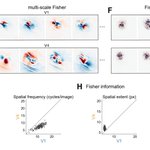
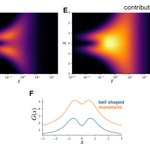
We solve a longstanding challenge: capturing the encoding of multiscale information in neural populations beyond the limitations of classical Fisher information.
Oral in Sydney, Dec 8, 10am–1pm. I'll be there too.
Come meet us! 🇦🇺

A monkey looks at a frog. Which image features does the activity in its visual cortex preserve, and which does it throw away?
In our #NeurIPS2026 Oral, we derive a geometry of stimulus space that is exactly tied to the mutual information carried by neurons. 🧵 1/12

A monkey looks at a frog. Which image features does the activity in its visual cortex preserve, and which does it throw away?
In our #NeurIPS2026 Oral, we derive a geometry of stimulus space that is exactly tied to the mutual information carried by neurons. 🧵 1/12
We will present it as an oral at NeurIPS 2026 (time TBA) and at Poster Session 1 in Sydney, Tue 8 Dec, 10am to 1pm. See you in Sydney! 🇦🇺🦘 11/12
1
10
594
Lastly, spoiler alert! Our longer neuro-preprint (w/ @ari_dibe) goes beyond visual codes: we consider somatosensory and motor too. Towards a single framework that maps the structure of encoded information.
Thread soon: biorxiv.org/content/10.64898… 12/12

Simone Azeglio retweeted

We’re excited to announce DiG-bench, a new benchmark for discovery!
Over the last few weeks we’ve been testing frontier AI models on our novel discovery games and seeing how they score. Each game is a text-based environment, so they probe discovery capabilities in the natural domain of language models, rather than requiring additional, potentially confounding, visual understanding.
TL;DR frontier models have improved a lot over the last few months. But they are still stumped by some surprisingly simple problems, even in their native text domain.
With
@cocosci_lab (@Princeton) @MITCoCoSci (@MIT) @SchmidhuberAI (@KAUST_News) @misovalko (@Inria) @tri_dao (@PrincetonCS) @RMBattleday @zebkDotCom @FraserGreenlee @akaijsa @ClareMaguire @TimMuller1 @kubicek_ales @physicscat0x7d @SukritSumant @thoughtchannel_
(1/5)

Simone Azeglio retweeted

🚨1 week away!🚨
The submission deadline for NeurReps 2026 is 1 week away (Monday, August 24th)
Submit your work: neurreps.org/#cfp
Simone Azeglio retweeted

Signals of physical plausibility are hiding in the geometry of frozen image encoders. No video training. No physics supervision.

Simone Azeglio retweeted

🧠 Mechanistic interpretability for the brain 🧠
Early visual neurons have had a clean mathematical description for decades (Gabor functions), while higher visual areas have remained notoriously hard to characterize.
Our new paper, led by @vedanglad, shows that natural language can provide that missing framework: concise, human-readable, verifiable descriptions of what higher visual neurons encode.
To get there, we pair neural digital twins with vision-language models to run virtual neuroscience experiments at scale.
Check out the full paper below.

Simone Azeglio retweeted

Where does agency come from in a neural network?
We trained RNNs to chase a moving target. Some learn to react. Others learn to predict, anticipate, and even wait (schematic gif attached)
The difference comes down to the dimensionality of the neural code. 🧵 (1/7)
Simone Azeglio retweeted

🧠Introducing OmniMouse: One of the largest datasets in neuroscience ever assembled along with a systematic study of scaling properties of brain models
Co-led with🤩@pollytur1 @alexrgil14
3M neurons, >150B tokens from @AToliasLab @stanford, @alxecker @sinzlab @uniGoettingen
🧵
Simone Azeglio retweeted

Applications are open for the Junior Theoretical Neuroscientists Workshop which will take place July 21-24, 2026 at the Center for Computational Neuroscience, @FlatironInst
Travel, lodging, and meals will be covered for accepted participants.
Apply by April 15, 2026
