


sj0007 retweeted

In a world of boring international teams, TheMongolz are making cs fun again
Mouz may have won Beijing, but TheMongolz won our hearts
sj0007 retweeted

🔥 Ulaanbaatar, we're coming!
📅 15-25 April 2027
📍 Ulaanbaatar, Mongolia 🇲🇳
👥 16 elite CS2 teams
💰 $1,000,000 on the line
🏆 $300,000 VRS Invite Bonus for the top-ranked teams
Everything you need to know:
news.pglesports.com/news/179…
#PGLUlaanbaatar

sj0007 retweeted

STOP TRYING TO BE CONTENT CREATORS !!!
WE NEED PLUMBERS, WELDERS AND ELECTRICIANS !!!!!
sj0007 retweeted

I’m a beginner in English…🥹
What’s the difference between “I must go” and “I have to go”?😵💫

sj0007 retweeted

台积电把顶级晶圆厂搬到美国,连合格的产线工人都招不够。
黄仁勋聊到美国建半导体制造时说:
在美国建世界级的芯片制造厂太难了。
原因就是:
没有足够的人。
本地根本凑不齐合格的产线人才,
最后只能整批整批地从台湾把工程师派过去,
一边顶在产线上一边培训新人。
造芯片可不是装电脑。
就算把 ASML 的顶级光刻机买回来,厂房通上电,配方输进电脑,晶圆也不会自己滚出来。
走进去看一眼就知道完全是两码事。
一块晶圆做出来,要在无尘室里转上三个月。
经历一千多道工序。
光刻、刻蚀、离子注入、薄膜沉积、化学机械抛光。
每一步都在几个纳米的尺度上操作。
这相当于在高速飞行的飞机翅膀上雕刻微雕。
中间只要有一道工序气压漂了万分之一,
或者某个反应室温度偏差了半度,
整批价值几百万美元的晶圆,当场报废。
最贵的机器,只要有预算谁都能买。
但半夜报警器响的时候,谁能一眼看明白是哪里的问题?
全靠产线上的工程师。
先进芯片的良品率根本无法靠理论算出来,全是工人在机台前一遍遍抠出来的。
哪个机台要微调零点几个微米,
哪道化学清洗液的配比要根据批次修正,
哪个阀门的垫圈在高温下容易形变。
这些细节全靠工程师常年泡在车间里摸索。
台积电在台湾能把良品率做到九成以上,
靠的是几万名优秀的工科生在无尘室里日夜轮班,摸透了每一台机器的脾气。
那美国为什么找不齐这批人?
看过去三十年的人才流向就明白了。
全美最顶尖的理工科毕业生,
要么去华尔街做高频量化交易,
要么去硅谷写人工智能算法、做软件开发。
坐在办公室敲键盘年薪几十万美元,
谁愿意穿上密不透风的防尘服,在封闭无尘室里倒三班?
几十年的外包把这套制造生态给切断了。
大学里教芯片设计的人很多,教先进制程工艺的人极少。
搞芯片设计,一台电脑几套软件就能做;
搞芯片制造,需要的是成千上万愿意天天盯在机台前、对工艺死磕到底的熟练工人和工程师。
黄仁勋说,从技术角度看,台湾是美国真正的战略伙伴。
这是大白话。
你可以砸出几百亿美元补贴把厂房盖起来,
但几十年来靠无数工程师在产线上堆出来的工艺经验和工匠习惯,
靠钱在一夜之间砸不出来。
先进制造的最后一道护城河,永远在机台前站着的那群人身上。
sj0007 retweeted

Charlie Munger: “Hay un viejo proverbio alemán que siempre me ha gustado: 'El hombre envejece demasiado pronto y se vuelve sabio demasiado tarde'. Y eso es verdad seas Benjamin Franklin o un cualquiera. Todos convivimos con ese problema.”
“Si tuviéramos la oportunidad de vivir [nuestra vida] otra vez, lo haríamos mejor. Sin embargo, el número de personas que han tenido esa oportunidad es cero.”
sj0007 retweeted

If you’re a world-class chip design or production engineer, consider joining SpaceX or Tesla.
How cool would it be to iterate on designs and customize production machines at lightning speed?

Elon Musk wants to do 10 chip designs a year with Terafab compared to 1 every 2 years:
"The advancement of any given technology is how many iterations, and how much progress per iteration. How many chip designs can you do, make and test in a year? These days it's typically 2 years for even 1 significant chip design, and that's kind of going from start of design to volume fabrication...we want to do more like 10 designs per year."
Via @teslaownersSV
$SPCX $TSLA
sj0007 retweeted

In 1995, Elon Musk enrolled in a physics PhD at Stanford.
He quit after two days.
He was 24, and he had figured out his list.
In college he asked himself one question: what will most affect the future of humanity? He came up with five things. Not in a lecture hall. Standing in the shower.
The internet. Sustainable energy. Making life multiplanetary. Genetics. Artificial intelligence.
Three of them he saw as clearly positive. Two had a question mark - they could go either way.
He picked the internet first. Not because it was the most important, but because it was the most urgent. The wave was happening right then, and he couldn’t just watch.
The clip is from a conversation with Steve Jurvetson at the Churchill Club. Musk walks through the list he made as a student and explains the logic behind it.
“The internet is like humanity acquiring a nervous system.”
“Sustainable energy - it’s not a question of if, it’s a question of when.”
“Making life multiplanetary - it’s a fundamental step in the evolution of life itself.”
That is Musk explaining how a kid from Pretoria, South Africa, decided what to spend his life on - before he had a company, before he had money, before anyone was listening.
The framework he used fits on a napkin.
Ask what matters at civilization scale, not career scale. He didn’t ask “what job pays well.” He asked “what changes the future.”
Pick the one with a deadline. The internet was exploding in 1995. If he waited, the window would close. Sustainable energy and space could wait. The internet couldn’t.
Don’t wait to feel ready. He dropped out of a Stanford PhD after two days. He started Zip2 with his brother and $28,000. They slept in the office and showered at the YMCA.
Sort your list by certainty, not excitement. Three of his five were clearly good. Two - AI and genetics - he filed as unknowns. He didn’t chase the most thrilling problem. He chased the clearest one.
Let the list compound. Zip2 sold for $307 million. That funded X.com, which became PayPal. PayPal funded SpaceX and Tesla. Each company checked off a different item on the same list he wrote in college.
Most people never write the list. They pick a major, take the first job that calls back, and spend decades optimizing inside someone else’s framework.
Musk wrote five lines in a shower at 19 and has been executing them for 30 years.
Write your list. Not your goals - your problems. The ones big enough that solving them would matter whether you succeed or not. You won’t get to all five. He hasn’t either. But the list decides everything that follows.
sj0007 retweeted

🚨 Elon Musk, asked what it is like to be the richest person alive.
ELON: “I don’t really know. I don’t think about it much. I’m a technologist.”
ELON: “I don’t live a hedonistic life. I don’t have a yacht. I like building things, I like playing video games, hanging out with friends.”
His point: the fortune is a scoreboard on the companies, not a lifestyle. No yacht. No second act of spending it.
Most people who hit this number buy the boat. He bought more factory.
The US just watched that number cross $1 trillion again. China is still building the rival stack. Europe is still debating the tax.
The money is the side effect. The build is the point. 🛠️ nitter.cf/Adams_Tech_AI/status/2…
sj0007 retweeted

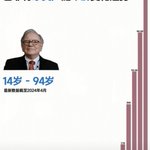
This is crazy. Warren is just like us.
WSJ: "In August, Osberg visited Buffett’s home in Omaha. They spent hours on YouTube."
"At the office, he’s known for poring over annual reports, searching for nuggets that can lead to a profitable investment. Mornings are dedicated to CNBC. Evenings, though, are all about YouTube. The content is hardly ever related to investing or finance" wsj.com/lifestyle/warren-buf…

sj0007 retweeted

You need to realize that there is almost no competition right now. More and more people are drawn to escapism. Dopamine traps such as TikTok and Reels have effectively fried about 70% of humans. Attention spans decrease; ambitions drown. You have no competition. In a few years, you will be able to see a clear elite.
sj0007 retweeted

"Greatness does not come out of intelligence, it comes from character.
Character is not formed out of smart people: it is formed out of people who have suffered."
— Jensen Huang, Nvidia CEO Hu


sj0007 retweeted

马云在斯坦福的演讲🎤💐
国内基本被封杀了
我从来没有刷到过这部分演讲
我也是第一次看到,果断分享!

很推薦大家試一下 RelaxView
它不只是看 K 線,而是把 智能指標、智慧模型、智能週期、鏈上資金、金融日曆和交易系統 整合在一起,幫你更快看懂市場。
基礎常用功能分屏,篩選大額單,很多專業數據
等功能永久免費使用。
大家用我的邀請連結註冊,
還可以獲得 14 天軟體 VIP 完整體驗,
先把進階智能功能完整試一遍。
有興趣可以直接體驗:
relax.tianjifiles.com/chain/…


sj0007 retweeted

I've said it for years: video games are massively underrated. Unlike TV or phones, the data on people who play videos games casually is surprisingly good.
It's people who are addicted to them and play them compulsively that give them a bad reputation.

Playing Super Mario 64 for 30 minutes a day for two months physically grew the brains of the people who played it. A 2014 study in Molecular Psychiatry scanned participants before and after two months of daily play and found increases in grey matter in three regions involved in memory, planning, and fine motor control.
The study was led by Simone Kuhn at the Max Planck Institute in Berlin. She gave 23 adults a Nintendo DS and told them to play Super Mario 64 for at least 30 minutes a day for two months. A control group played nothing. MRI scans taken before and after showed that the Mario group had measurable increases in grey matter in the right hippocampus, the right prefrontal cortex, and the cerebellum, and the increases were not found in the control group.
The hippocampus is where the brain stores spatial maps. Super Mario 64 is a game built entirely around navigating three-dimensional space, jumping between platforms, remembering which doors lead where, and building a mental model of a world that does not exist. The brain treats a virtual world the same way it treats a real one: it maps it, stores it, and grows to accommodate it.
The prefrontal cortex handles planning and strategy, which the game demands constantly. The cerebellum handles timing and coordination, which every jump requires. The brain was not just entertained. It was being trained, and the tissue responded the same way muscle responds to a weight: it got bigger.
Kuhn said the results suggest that video game training could be used as a therapy for conditions where these brain regions are reduced, including post-traumatic stress disorder, schizophrenia, and age-related brain shrinkage. The prescription is a plumber in a red hat, 30 minutes a day. pubmed.ncbi.nlm.nih.gov/2416…


sj0007 retweeted

1. Elon Musk: College won't make you rich. Curiosity and technology will.
2. Naval Ravikant: Turn yourself into a product. If it feels like play, you'll outwork everyone.
3. MrBeast: Live broke, build big. Reinvest. Money is fuel, not flex.
4. Warren Buffett: Get so good they can't ignore you. Your skills are your fortress.
5. Michael Jordan: Fail loudly. Miss more shots. That's how you win.
6. Taylor Swift: The dumb ideas are what lead to the genius ones. Try more.
7. Mark Cuban: Read like a maniac. knowledge compounds faster than money.
8. Jeff Bezos: Obsess over the customer, not the competition.
9. Charlie Munger: No one's handing you the map. Build your own route.
10. Peter Thiel: Stop stacking resumes. Start stacking value.