

Mentor, scientist & engineer. Director of @ParallelSqTech. Having fun in @SlavovLab with single-cell proteomics & ribosomes. Organizer of @SCP_meeting
Cambridge, USA
Joined April 2014
- Tweets11.2K
- Following277
- Followers56.9K
- Likes8.4K




Pinned Tweet
Parallel Squared Technology Institute aims to scale the throughput of sensitive proteomics without compromising quantitative accuracy, depth or specificity.
Today, we share a step in this direction:
🔹 A workflow supporting the analysis of 1,130 single-cell samples per day (SPD) while preserving depth and quantitative accuracy.
1/
biorxiv.org/content/10.1101/…

This is a step forward. We are exciting to soon share additional advances from @ParallelSqTech, making larger steps and bringing us closer to exploring proteomes at scale with high specificity, sensitivity, and quantitative accuracy 🚀
4/
Thanks to all collaborators and colleagues who made this progress possible and to @Convergent_FROs for supporting our vision and helping realize a bold proposal.
5/
Easy-to-estimate metrics are easy adopted and overextended.
Repeatability of protein measurements is a good example: It's useful but not a measure of accuracy.
When treated as an accuracy measure, repeatability becomes a problematic benchmark.
nature.com/articles/s41592-0…

An excellent discussion on building bio models by @alexrives on the @CogRev_Podcast
The emphasis on data -- not just volume but also type and quality -- resonates with our view and the approach @ParallelSqTech is taking.
youtu.be/l6DPAwgUr-8?si=koao…
Glycosylation is among the most important modifications in biology.
We know relatively little about glycobiology, because it is hard to study.
This Nat Rev Methods primer describes our best tools for analyzing glycosylation 🔽

This primer outlines the current technologies, persistent challenges and recent advances in the exciting field of glycoproteomics.
nature.com/articles/s43586-0…

A single mind can hold both brilliance and utter stupidity, often at the same time.
Remarkable.
It almost questions the generality of human intelligence.
This was a fun conversation with @ARKInvest
Unveiling Proteins: The Future Of Single-Cell Proteomics
youtu.be/sGW4cFee1IY?si=tFOq…
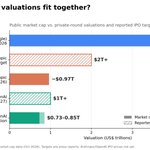
It’s interesting to think about the valuations of tech companies with
comparably performing AI models.
How do you reconcile these valuations?
Curious how others see it.

Both science and researchers can benefit from a robust Publish-Review-Curate ecosystem.
How do we support it at systems-level ?

Heterogeneity is easy to find, but the coherence and order are more interpretable.

Beyond heterogeneity, single-cell analysis can reveal functional coherence.
Coherence, regularity and principles advance science.
Full recording: youtube.com/watch?v=z0dIhG4C…
Prof. Nikolai Slavov retweeted

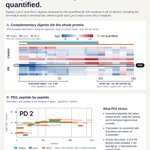
Protein functions depend on the full amino acid sequence, including isoforms, cleavage products, and modified residues that distinguish proteoform states.
To capture these modifications, we and @ParallelSqTech introduce multiDIA to increases proteome sequence coverage.

Proteomics has long faced a choice: Go deep, or go fast.
Deep, high-confidence coverage of protein sequences has traditionally required extensive chromatographic fractionation, large sample inputs and data acquisition times too long to be practical for analyzing human cohort scale samples. Scalable data-independent acquisition (DIA) workflows handle many samples quickly, but detect less of each protein and with lower confidence.
Our new preprint introduces multiDIA: It gets more from each sample without fractionation.
1/
doi.org/10.64898/2026.10.16.…

The title "𝑝𝑟𝑖𝑛𝑐𝑖𝑝𝑎𝑙" seems to denote different rights and responsibilities in industry and academia.
𝐖𝐡𝐚𝐭 𝐝𝐨 𝐲𝐨𝐮 𝐭𝐡𝐢𝐧𝐤 𝐚𝐛𝐨𝐮𝐭 𝐭𝐡𝐢𝐬 𝐋𝐋𝐌 𝐬𝐮𝐦𝐦𝐚𝐫𝐲 ?
Industry cannot afford PI-level autonomy at scale. Structural differences force different meanings of “principal.”
The academic PI role is exceptional, not the norm. Industry titles reflect rank and trust, not autonomy

Just a periodic reminder:
RNA abundance ≠ transcription activity.
RNA abundance is also regulated by RNA degradation.
Proteomics has long faced a choice: Go deep, or go fast.
Deep, high-confidence coverage of protein sequences has traditionally required extensive chromatographic fractionation, large sample inputs and data acquisition times too long to be practical for analyzing human cohort scale samples. Scalable data-independent acquisition (DIA) workflows handle many samples quickly, but detect less of each protein and with lower confidence.
Our new preprint introduces multiDIA: It gets more from each sample without fractionation.
1/
doi.org/10.64898/2026.10.16.…
Why it matters: more of each protein’s sequence means we can start resolving proteoforms rather than averaging over them. This is exemplified with α-synuclein, a key protein in Lewy body disease (LBD), including Parkinson’s disease.
For α-synuclein, we quantified all 140 residues in all 12 brain samples. In some Parkinson’s donors, the N-terminal peptides were depleted while the rest tracked controls, a pattern consistent with truncation (a lead for validation, not a conclusion).
Preprint: biorxiv.org/content/10.64898…
Data and code: multidia.slavovlab.net
3/

These results were enabled by a collaboration between Parallel Squared Technology Institute (@ParallelSqTech), Slavov Lab (@slavovLab), Brad Hyman's team at MGH and @BrukerMassSpec.
We are excited to share more soon 🚀
4/