

Now https://nitter.cf/t.co/TFPgwTkKAo (workflow automation + ai for accounting, tax & audit firms). Looking for a tech co-founder. Ex @Paytm @JioHotstar @Cleartrip @bloomberg
Bengaluru, India
Joined August 2008
- Tweets2.2K
- Following1.2K
- Followers432
- Likes1.1K



Some non-fiction 📚 books are challenging to read, for example dense prose like The wealth of nations; or deep concepts like Thinking Fast and Slow.
I used to screenshot pages 📷 and upload to ChatGPT or Claude and ask it to explain. Back and forth to understand deeper burned 🔥 my frugal token budget, leaving little for actual work.
Now, I ask my local AI 🤖 to explain, simplify or help connect the dots with my startup context without worrying about token budget. Unlimited & free is priceless :)
Now, I am reading more 📖; understanding more 🧠; and having more aha 💡moments. Cherry on the cake 🎂: access the local AI on my Macbook via mobile.
10x unlock for sure. You got to experience it to believe it.
1
63
Paying frontier models for a not-so-complex-but-repetitive job is painful.
Being able to fine-tune an open-weights model to do it for free is priceless 😀.

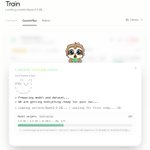
ALT Training a Qwen 3.5 2B open weights model using Unsloth desktop app
34
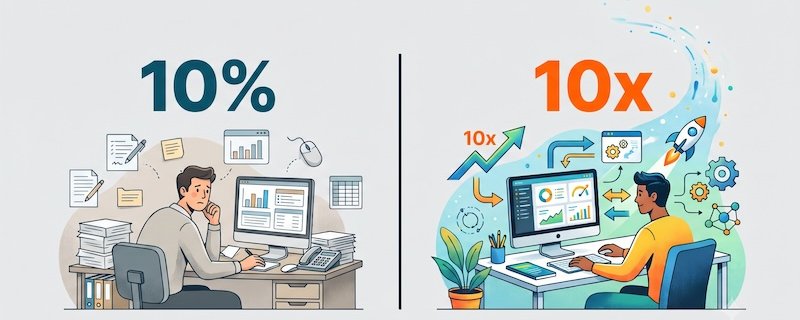
In a workflow, number of steps that are AI enabled is NOT as important as clustering & sequencing them to derive exponential value.
52
Been playing around with local AI using LM Studio and Unsloth.
Primary drivers are:
1. Qwen 3.8 27B (when thinking > speed)
2. Qwen 3.5 9B (when speed > thinking)
3. Gemma 4 12B (experimental; summarizing long-form content)
* Still waiting for a usable DeepSeek, GLM and Bonsai model that can run locally efficiently.
LM Studio: Good interface, but tool calls & file uploads fail often; machine seems to run hot
Unsloth: Seamless local AI + web-search; deep research is simply mind-blowing 🤯. My end-goal is to tweak & fine-tune local AI models for domain specific use.
If you haven't yet tried, give Qwen 3.8 27B + Unsloth a shot. You will not be disappointed with the access to free + unlimited AI. Your imagination is the only limiting factor 🚀.

2
221
Power of local AI
Once you see & taste the power of local AI, can't unsee the possibilities.
Paid subscriptions quickly add up. So I decided to optimise a little.
Use-case: Meeting notes summary & action items
Earlier: read(dot)ai
Now:
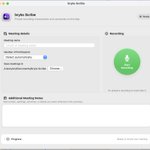
- we built a native mac app
- it records the Meet/Teams call
- uses (local) Whisper V3 model to transcribe the call
- uses (local) Pyannote Community model for speaker diarization
- uses (local) Qwen 3.5 9B model to summarise
- outputs a beautiful PDF with summary, decisions, action items, next steps
- time taken: < 1-3 mins depending on length of the call.
- price = $0 (Priceless; pun intended 😀)

2
115
Until now, I had been using ChatGPT and Claude to design interfaces & build but never to setup the underlying infra itself. Typically, I default to latest-1 gen model (for affordability reasons). Starting GPT 5.6 Sol, there a noticeable order of magnitude improvement in agentic capabilities.
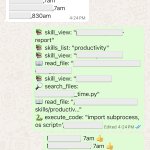
I connect to my Hermes agent running on an EC2 instance via Slack / Whatsapp. I asked GPT 5.6 Sol to help me setup Buzz. Interestingly this time, instead of just giving me a step-by-step guide:
- it SSH'd to my VPS (with my permission of course)
- downloaded Buzz CLI with dependencies, installed & configured it
- created agent identity keys, configured Buzz
- ran into issues, debugged & fixed it
- completed the setup & tested the pipeline with a "hello"
- all in under 10 mins.
Imagine what GPT Astra can achieve.
PS: If you haven't yet tried Buzz, worth it. All your agents get a seat at the table alongside you.
93
Sudhir Mantena retweeted

For my first post, I’m sharing a letter @NVIDIA signed on why open models matter.
AI will transform every industry, power every company, and be built by every country.
Open models strengthen safety and cybersecurity, accelerate innovation and diffusion, and enable sovereignty.
The world needs both frontier closed models and frontier open models.
images.nvidia.com/pdf/Open-W…


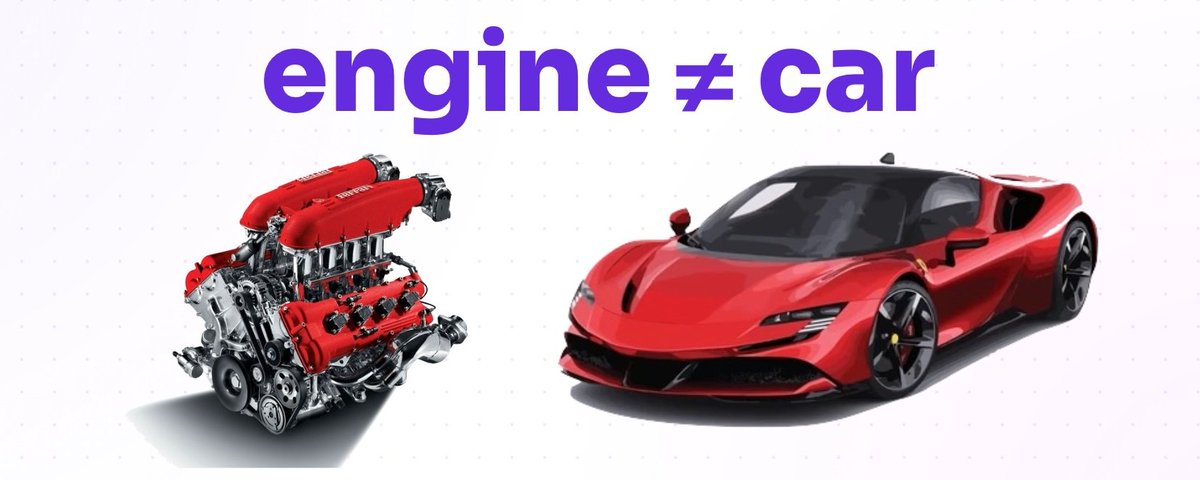
A senior partner at a CA firm (since 50yrs) said - they want to replace a SaaS they subscribe to with custom built tool; whitelabel and bundle it as value-add along with their advisory service.
AI is pushing conservative traditional firms to rethink their biz model 🫡.
51

If you are pitching "Set up Hermes Agent" to customers, read this first.
nitter.cf/smantena/status/206206…

Learnings from pitches to Partners at mid-large accounting, auditing, and advisory firms about Automating manual workflows.
These may seems obvious to most of you, but might be insightful for newcomers.
Summary in 3 words: Avoid AI theatre.
Most “AI solutions” are not what these firms actually need.
They do not want generic copilots.
They do not want broad AI transformation decks.
They do not want another SaaS tool that looks clever in a demo and fails in practice.
They want one thing: A very specific workflow fixed, safely, inside their environment.
And that requirement is not negotiable. Why?
Constraints
- most firms live in a Microsoft enterprise stack.
- many operate under unlimited liability clauses.
- client data security is not a policy preference, it is a survival issue.
- they cannot afford model hallucinating with confidence and ships garbage downstream.
- 1% error rate is a legal and reputational risk and may lead to them loosing the client forever.
And it explains why many firms have already tried:
- Claude
- ChatGPT
- Microsoft Copilot
- SaaS point solutions
- bespoke AI builds
AI Slop
- Bespoke AI implementations burned through budgets without results.
- Claude, ChatGPT, Copilot were either too generic OR output was not safe enough to trust.
- One Partner told me ChatGPT returned 8 references, of which 6 were fake. That is not a funny AI story. That is a liability event waiting to happen.
Buying criteria:
- Secure deployment
- Client-data isolation
- Microsoft-native integration
- Workflow specific value
- Auditability
- Predictability
In other words:
No generic AI.
Will invest in AI automation if it guarantees 0% error.
If you are also build AI solutions for enterprises:
Specificity > Big claims
Avoid AI theatre.
If you would like to exchange notes and learn together, please DM.
222
Learnings from pitches to Partners at mid-large accounting, auditing, and advisory firms about Automating manual workflows.
These may seems obvious to most of you, but might be insightful for newcomers.
Summary in 3 words: Avoid AI theatre.
Most “AI solutions” are not what these firms actually need.
They do not want generic copilots.
They do not want broad AI transformation decks.
They do not want another SaaS tool that looks clever in a demo and fails in practice.
They want one thing: A very specific workflow fixed, safely, inside their environment.
And that requirement is not negotiable. Why?
Constraints
- most firms live in a Microsoft enterprise stack.
- many operate under unlimited liability clauses.
- client data security is not a policy preference, it is a survival issue.
- they cannot afford model hallucinating with confidence and ships garbage downstream.
- 1% error rate is a legal and reputational risk and may lead to them loosing the client forever.
And it explains why many firms have already tried:
- Claude
- ChatGPT
- Microsoft Copilot
- SaaS point solutions
- bespoke AI builds
AI Slop
- Bespoke AI implementations burned through budgets without results.
- Claude, ChatGPT, Copilot were either too generic OR output was not safe enough to trust.
- One Partner told me ChatGPT returned 8 references, of which 6 were fake. That is not a funny AI story. That is a liability event waiting to happen.
Buying criteria:
- Secure deployment
- Client-data isolation
- Microsoft-native integration
- Workflow specific value
- Auditability
- Predictability
In other words:
No generic AI.
Will invest in AI automation if it guarantees 0% error.
If you are also build AI solutions for enterprises:
Specificity > Big claims
Avoid AI theatre.
If you would like to exchange notes and learn together, please DM.
2
71
Learnings from pitches to Partners at mid-large accounting, auditing, and advisory firms about Automating manual workflows.
These may seems obvious to most of you, but might be insightful for newcomers.
Summary in 3 words: Avoid AI theatre.
Most “AI solutions” are not what these firms actually need.
They do not want generic copilots.
They do not want broad AI transformation decks.
They do not want another SaaS tool that looks clever in a demo and fails in practice.
They want one thing: A very specific workflow fixed, safely, inside their environment.
And that requirement is not negotiable. Why?
Constraints
- most firms live in a Microsoft enterprise stack.
- many operate under unlimited liability clauses.
- client data security is not a policy preference, it is a survival issue.
- they cannot afford model hallucinating with confidence and ships garbage downstream.
- 1% error rate is a legal and reputational risk and may lead to them loosing the client forever.
And it explains why many firms have already tried:
- Claude
- ChatGPT
- Microsoft Copilot
- SaaS point solutions
- bespoke AI builds
AI Slop
- Bespoke AI implementations burned through budgets without results.
- Claude, ChatGPT, Copilot were either too generic OR output was not safe enough to trust.
- One Partner told me ChatGPT returned 8 references, of which 6 were fake. That is not a funny AI story. That is a liability event waiting to happen.
Buying criteria:
- Secure deployment
- Client-data isolation
- Microsoft-native integration
- Workflow specific value
- Auditability
- Predictability
In other words:
No generic AI.
Will invest in AI automation if it guarantees 0% error.
If you are also build AI solutions for enterprises:
Specificity > Big claims
Avoid AI theatre.
If you would like to exchange notes and learn together, please DM.
Hermes Use-case: Browse, find prospects, save to Google sheets, automatically to help your sales & go-to-market team scale faster.
nitter.cf/smantena/status/205749…

2
2
137