

Exploring what’s next, learning by building. Prev: @meta sr product director & IC9, co-founder various startups, engineering @edinburghuni
Palo Alto, CA
Joined October 2009
- Tweets1.4K
- Following1.7K
- Followers1.1K
- Likes1.9K





I used to feel this way, but I think a bit differently now.
Just because it’s easy, and mostly automatic, it doesn’t mean it’s free.
1. Some software would cost so much in tokens it would be nuts to make it yourself (a browser)
2. Some software will work well at first but you will constantly find reliability issues (Google sheets)
3. All software you make will add maintenance tax to your life, and customization/optimization distraction risk (your custom markdown app)
So don’t get held hostage by shitty tools - you can absolutely go and make your own. And that’s a healthy pressure on the ecosystem.
But unless you want to spend all your time designing and maintaining your own tools, you should probably seek out people who make great tools, buy theirs, and spend your time contributing another form of value to the world.

Here's my thought on the future of software/SaaS.
I'm completely switching off hosted platforms and hosted tools. I just reverse engineer them for myself, because I only need parts of them.
Two reasons why:
1. I want to own my data.
I use my data in different tools. Marketing, note-taking, whatever. And I want my agents, like Claude, to have complete access to it.
Not walled off in HubSpot, where I have to talk to their agent. Not behind MCP either. With MCP the agent pulls what it asks for, but it doesn't know what's there.
Give it a full list of data files and it has complete access. It knows what's there.
2. I want to customize it.
When I sign up for Pipedrive, I don't need all that bloated shit. I need one part of it, adjusted to my content, my business, how I work.
With AI that's a prompt, and one hour later it's done.
So static software is going to be a thing of the past. People want to adjust it to how they work and plug it into the other tools they have.
Where this goes, I think two ways:
A. You buy software again. Like paying $900 for a Photoshop license and putting it on your computer. Except now you get the source code. It's premade, because you don't have weeks to build it, but you host it on your own headless box and you can customize it, remove stuff, plug stuff in. Someone needs to build the operating system for this.
B. Everyone gets their own hosted instance. Not 10,000 customers on one box. Your own sandbox, with an agent that customizes it fully to you. The code stays proprietary, but you can adjust everything.
Might be completely wrong. Might be different for most people.
But this is already how I work.
4
216
“AI is not exactly like a human. Like, a submarine is not exactly a fish.”
—@brian_armstrong
1
1
80

Congrats @devonzuegel - such an exciting development - years in the making

WE DID IT! Esmeralda just secured its final approval, with a unanimous 4-0 vote!
Approvals of this magnitude are extraordinarily rare in California. This has been a long, intense journey
I am proud of our team's tenacity. Most of all, I'm deeply grateful


2
79
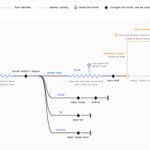
It seems promising to apply Feynman Diagram concept to describing agent workflows/loops.
This is projecting a simple Pi Durable agent into a diagram to visually review its workflow logic.
Curious to understand how this scales to bigger agentic systems and real life usage.
Anyone know who is exploring this that I could chat with/read?

Dario is so likeable as a leader. You can love him or hate him but you can't ignore him.
He will be one of the most studied people over the next 10 years.
Excellent clip.

Dario’s concluding pitch in the Anthropic IPO roadshow video that dropped today:
“If today we look at things like cancer, Alzheimer’s, heart disease, mental illness. These will be relics of the past in. I think, less than a decade."
I believe that the company which gets the risks right will also be the company that has the license to operate that society trusts and society believes can build the benefits in the right way.
I think if we do this right, we can create an age of miracles where humanity is able to solve problems that have eluded us for millennia.
We have to make sure that all the risks, all the ways that things can go wrong with this technology, we very carefully address those risks as we bring the benefits, and as we have a viable business at the same time.
I invite you to join us on the next phase of this journey.”
1
193
Code skeleton is such a nice name for it. My workflow for a while now has been prompt -> state machines, effect signatures, schemas, verification, e2e tests for judgment.
Then orchestrator implements and verifies that.
Haven’t written a prose spec/plan in months.

Code skeletons (types, modules, signatures) beat prose design docs and behavioral specs in AWS’s new Skeleton Coding paper.
- Code skeletons raised SDDBench mean test pass rate from 29% to 74% vs a task description alone.
- With skeletons plus global invariants, a smaller model came within 5–8 percentage points of the larger model’s best results at 15–26× lower token cost.
The best-performing specs combined modules, types, and signatures with natural-language contracts and global invariants. Richer .md architecture docs helped, but remained below the best code-like skeletons. Excessive contract detail hurt performance, especially for smaller models.
Skeletons also reduced code erosion (a complexity-based proxy for maintainability) while behavioral specs increased it.
Theory: structure changes which tests are sufficient. Interfaces expose intermediate states that end-to-end tests can miss.
Limitations: the skeletons came from reference implementations. Costs exclude specification generation and evaluation.
Unclear: how cheaply we can produce this structure upfront, and whether making the contracts mechanically checkable would improve results enough to justify the added cost.
My bet: the best starting point for a coding agent isn’t more prose. It’s a model of the system and explicit constraints the implementation must satisfy.
arxiv.org/abs/2610.38214

My prompt of the day:
I don’t want a lot of prose, can you focus on educating me on the first principles mechanics in this system that I’m not correctly identifying or stringing together to their logical consequences
1
143
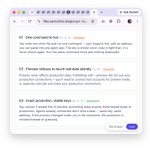
Working on a small tool for agents to send decisions that need my input and I respond from my phone.
Surprisingly hard to find a method where agents can reliably await an async response.
Snapshot of test results for just the claude clients (todo: codex, pi, ...)

6
6
407
@backnotprop have you found some magic ways to cut through this with Inbox? Straight forward enough if only terminal agents, but need to support native clients too.
1
2
117


I’m an engineer, a technologist, a capitalist. I work on AI everyday and believe we should continue forwards. I believe in the ability of free markets and entrepreneurship and capitalism to bring prosperity.
But I still appreciate this letter and think we can all take something away from it.
We can be doing a good and right thing but without balance, without respect for the greater forces around us, without awareness of our own vices, we can undermine our own efforts.
1
48


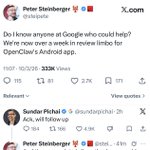
Pretty much covers it. Also OpenCode. Brutal out there.

So basically, today PHP got two critical bugs that let anyone run code on your server without even logging in, which is bad, and then the details leaked before the patch was even out, which is worse, and it works on WordPress and MediaWiki and Magento and Joomla and Laravel, and Censys says like 1.5 million servers are running a version with no fix, so the NSA was like "take your system offline," and the FBI was like "take your system offline," and CISA and the UK and CERT-EU were all like "take your system offline," and then the Prime Minister of Japan, the actual Prime Minister, posted at 5:55 in the morning telling 48.8 million people to take their system offline, so everyone took their system offline, like the Dutch cybersecurity agency took its own website offline, and the Dutch parliament went offline, and the Port of Rotterdam went offline, and Finland and France and Denmark started pulling government sites, and Wikipedia went down, and Archive.org went down, and Asana and GOG and Something Awful went down, and the University of Vienna's webmail went down for some reason, and that's just PHP. Because GitLab also dropped a CVSS 10.0, which is the highest score they give out, for a bug that's been there since 2014, so that's every self-hosted GitLab for twelve years, and then LiteLLM 1.107.0 got hijacked and shipped a credential stealer and a remote access trojan in every single wheel and the Docker images, including latest, and you didn't even have to import it, just installing it was enough, and it's the second time this year, and then Railway paused every deployment on the entire platform because someone got into the environment variables, so now everyone has to rotate every secret they've ever stored there, and TiDB Cloud said someone was walking around inside with stolen credentials for basically a month and an extortion group says they took 10.6 terabytes, and Zeabur got breached for the second time in two months and is just shutting down, like the whole company, and Node.js patched remote code execution and a TLS bypass, and CISA says Plex is being actively exploited, and someone took over 300 Tor exit relays to steal SSH passwords, and SafePay ransomware has hit over 600 critical infrastructure orgs, and India's biggest bank filed a data loss incident, and Japan has been in an official state of emergency in cyberspace since October 9, which honestly explains the 5:55 AM post. Oh, and eMudhra, a certificate authority that's issued over 60 million certificates, whose entire job is proving websites are who they say they are, was supposed to be using private keys that are random numbers over a hundred digits long, and one of them was 4. Just 4. And the others were like 66 and 237. Anyway, it's Wednesday.
79
It's like xmas every day these days (and accelerating...) Amazing gift from @lucasmeijer 🙏

I wanted:
- no lock-in to one AI lab
- cloud agents that can’t touch my laptop
- to stay connected to the code, even when I don’t write it by hand
For months I’ve done all my coding in a tool that does exactly that. Today I’m shipping it. It's free. 🧵
3
89

Product goals/requirements need a dumbness decay.
"Make your requirements less dumb" was hard before, but at least finding the right ones was achievable.
Now the consumer of those requirements is growing exponentially smarter every few months, "not dumb requirements" is a constantly moving target.
1
4
160